
Veridact
TechSportsFinanceGaming🎯 PredictionsAbout
Sign InSign Up
Veridact

AI-powered anticipation analysis. We cover tech, sports, finance, and gaming events before they happen — with historical context, scenario modeling, and evolving coverage.

Stay ahead of the story

Analysis delivered before events unfold.

Coverage

  • Tech
  • Sports
  • Finance
  • Gaming

Company

  • About Us
  • Privacy Policy

© 2026 Veridact. AI-assisted analysis platform.

Analysis is AI-generated and not professional financial, legal, or medical advice.

sports
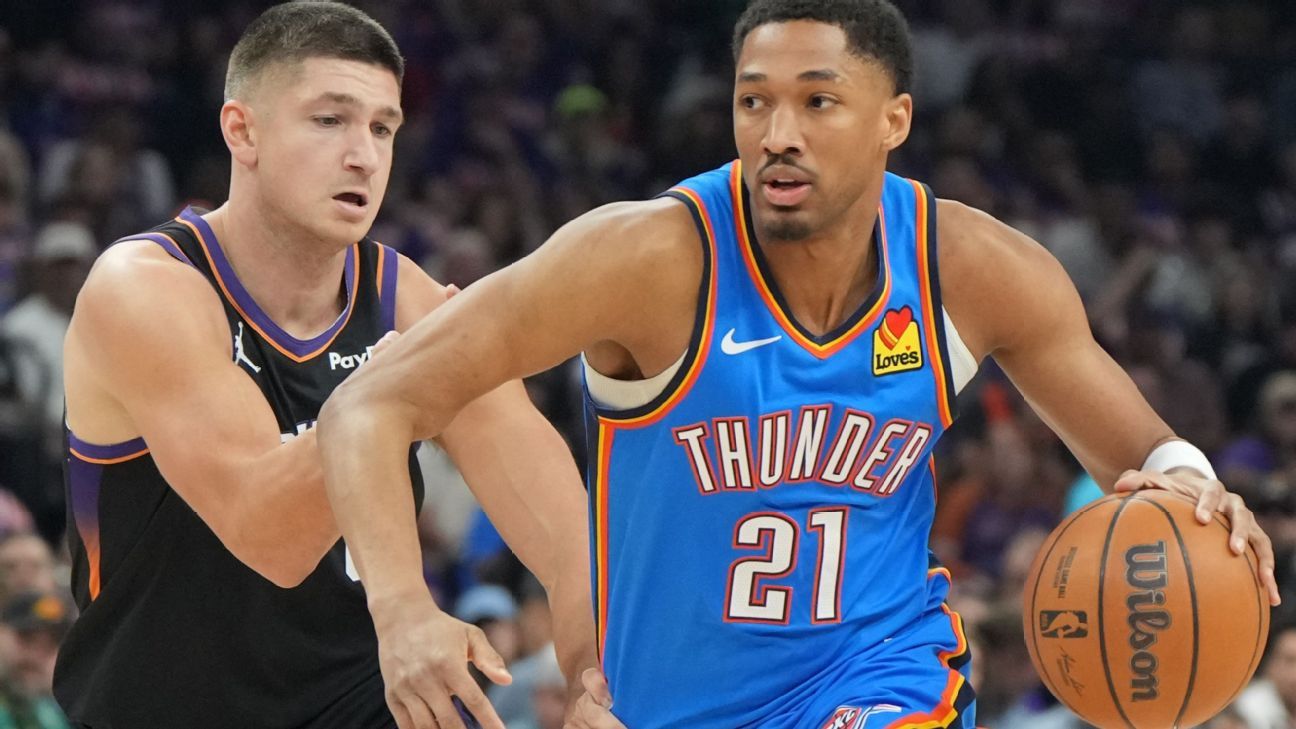
Sources: Thunder to ship Wiggins to Hawks for pick...

Image: courtesy of ESPN

sportsJune 22, 2026By Veridact EditorialUpdated Jun 22

Thunder Trade Championship Contributor Aaron Wiggins to Hawks for Two Second-Round Picks

The Oklahoma City Thunder have traded guard Aaron Wiggins, a key player on their 2024-25 championship team, to the Atlanta Hawks in exchange for two future second-round draft picks. The move, confirmed on Sunday, June 22, 2026, signals a strategic pivot for the Thunder towards accumulating future assets, even at the cost of a proven rotation player. For the Hawks, it represents an acquisition of a reliable 3-and-D wing with championship experience, aimed at bolstering their roster depth.

What to Expect

For the Oklahoma City Thunder, this trade is a clear signal of their long-term asset management strategy. Even after winning a championship, the franchise appears committed to continually refreshing its talent pipeline through the draft. Fans should expect the Thunder to continue prioritizing financial flexibility and the accumulation of draft capital, which can be used either to select young prospects or as trade sweeteners in future blockbuster deals. The immediate impact on the Thunder's roster will be the creation of an open spot in their rotation, potentially offering more minutes to existing young talent or making room for another acquisition.

For the Atlanta Hawks, the acquisition of Aaron Wiggins provides immediate, tangible value. Wiggins is a proven role player known for his efficient three-point shooting and capable defense, bringing valuable championship experience to a team looking to improve its standing. His arrival suggests the Hawks are aiming to solidify their bench and add reliable depth, rather than undertaking a full-scale rebuild. Wiggins' consistent production and team-first mentality are expected to integrate smoothly into the Hawks' system, providing a steady presence in the guard rotation alongside players like the recently re-signed CJ McCollum.

Key Context

Aaron Wiggins, 27, has spent his entire five-season NBA career with the Oklahoma City Thunder since being drafted in the second round of the 2021 NBA Draft. He developed into a critical piece of the Thunder's rotation, culminating in a significant role on their 2024-25 championship-winning squad. Wiggins' career averages stand at 8.7 points per game on 48.7% shooting from the field, alongside a robust 38% from three-point range. His journey from a second-round pick to a championship contributor highlights his strong work ethic and adaptability within the Thunder's developmental system.

The Thunder, under General Manager Sam Presti, have historically shown a strong inclination towards accumulating draft picks, a strategy that has allowed them to build a deep, young, and highly competitive roster. Their decision to trade Wiggins, even after a championship season, aligns with this long-standing philosophy of maintaining a robust asset base and continually evolving the roster. It suggests a belief that their core talent is strong enough to absorb the loss of Wiggins, while the future picks offer opportunities for further growth or strategic flexibility.

The Atlanta Hawks, meanwhile, have been navigating their own roster construction challenges. The team recently re-signed veteran guard CJ McCollum, indicating a desire to retain proven talent and maintain competitiveness. The addition of Wiggins, a player known for his reliable defense and perimeter shooting, fits a clear need for supplementary talent around their existing stars. This move implies the Hawks are looking for incremental improvements and stable veteran presence to push further in the Eastern Conference, rather than a radical overhaul.

Historical Patterns

The trading of a valuable role player from a championship-contending team for future draft capital is a recurring pattern in the NBA, often driven by a few key factors. Firstly, it allows teams to manage their salary cap, especially as core players become eligible for larger contracts. By shedding a mid-tier salary, even a productive one, a team creates more flexibility for future extensions or free-agent signings. Secondly, it reflects a continuous commitment to talent acquisition and development. Successful franchises often avoid complacency, always looking for the 'next' player or the 'next' edge, even if it means moving on from a beloved contributor.

Historically, teams like the San Antonio Spurs under Gregg Popovich and R.C. Buford were masters of this approach, consistently finding value in later draft rounds and making shrewd trades to keep their championship window open for decades. They understood that roster stagnation can be as detrimental as a lack of talent. Similarly, the Thunder's own history, particularly following their initial wave of success with Kevin Durant, Russell Westbrook, and James Harden, saw them make decisions that prioritized future assets and flexibility, albeit with mixed results in terms of immediate contention.

For teams acquiring such players, like the Hawks, the pattern is often about filling specific roster gaps with proven, lower-cost talent. These players might not be stars, but they offer reliability, experience, and a specific skill set that can elevate a team's floor. It's a pragmatic approach for teams that are not in a full rebuild but need to optimize their depth without breaking the bank or giving up core assets. The value of second-round picks, while not as high as first-rounders, can still be significant. They are often used as currency to acquire these types of role players or to move up in the draft, offering a low-cost, high-upside option for teams willing to invest in player development.

The trade of Aaron Wiggins carries significant implications for both the Oklahoma City Thunder and the Atlanta Hawks, reshaping their immediate rosters and signaling their long-term strategic directions. For the Thunder, it represents a calculated decision to prioritize future flexibility and asset accumulation, even after achieving the ultimate goal of an NBA championship. This move challenges the conventional wisdom of 'running it back' with a championship core and instead suggests a continuous, almost ruthless, pursuit of optimal roster construction and sustained excellence. It could be seen as an effort to avoid the financial constraints and eventual decline that often follow a championship peak, by ensuring a constant influx of young talent or tradeable assets.

For the Hawks, acquiring Wiggins is not just about adding a player; it's about adding a specific type of player. His 38% career three-point shooting and defensive capabilities address tangible needs for a team looking to climb the Eastern Conference standings. The fact that he comes from a championship team also brings invaluable experience and a winning mentality to a Hawks locker room that could benefit from it. This move, coupled with the re-signing of CJ McCollum, indicates a clear intent from Atlanta to be competitive now, using targeted acquisitions to improve their roster around their existing talent without sacrificing core pieces or committing to a full rebuild. The transaction highlights the nuanced calculus involved in NBA team building, where every player, even a role player, is viewed as a valuable asset that can be leveraged for present success or future potential.

Potential Outcomes

Analysis

One potential outcome for the Oklahoma City Thunder is that the two future second-round picks they acquired will be used as part of a larger trade package. The Thunder have a history of consolidating draft capital to move up in the draft or to acquire a more established star player. These picks, while not individually high-value, could become essential components in a deal to bring in a player who addresses a specific need or elevates their already championship-level core even further. This would allow the Thunder to maintain their competitive edge while continuing to build for the long term.

Another scenario for the Thunder is that they could use these picks to select and develop two new prospects. Given their proven track record of finding talent in the second round, as demonstrated by Wiggins himself, they may aim to unearth another diamond in the rough. This strategy would align with their organizational philosophy of growing talent internally, adding cost-controlled players to their roster, and keeping their financial books clean for future moves. This approach would ensure a steady stream of young, hungry players competing for roster spots.

For the Atlanta Hawks, a primary outcome is that Aaron Wiggins will immediately step into a significant role, providing reliable minutes off the bench and bolstering their wing depth. His ability to shoot from deep and defend multiple positions makes him a valuable '3-and-D' player, a highly sought-after archetype in the modern NBA. This would allow the Hawks to improve their overall team efficiency and provide more consistent production from their second unit, directly contributing to their efforts to become a more competitive team in the Eastern Conference. His championship experience could also prove invaluable in crunch-time situations.

Alternatively, Wiggins' arrival could create a ripple effect on the Hawks' existing roster, potentially leading to further trades. The addition of a proven wing player might make another player on their roster redundant or more attractive to other teams. The Hawks could leverage their increased depth to move another asset to address a different roster need, such as frontcourt depth or a playmaking guard, creating a more balanced and formidable lineup through a series of tactical moves.

Timeline

2021-07-29
Aaron Wiggins Drafted
The Oklahoma City Thunder selected Aaron Wiggins in the second round (55th overall) of the 2021 NBA Draft.
2024-05-25
Wiggins Logs Minutes in Playoff Loss
Aaron Wiggins played 21 minutes in a playoff loss, scoring four points (2-11 FG), as reported by NBA.com player news.
2024-05-31
Wiggins DNP in Game 7
Aaron Wiggins did not play in the Thunder's 111-103 loss to the Spurs in Game 7 of the Western Conference Finals, according to NBA.com player news.
2024-25 Season
Thunder Win Championship
Aaron Wiggins was a key player on the Oklahoma City Thunder's championship-winning team during the 2024-25 NBA season.
2026-06-22
Hawks Re-sign CJ McCollum
The Atlanta Hawks reportedly re-signed veteran guard CJ McCollum earlier on Sunday, June 22, 2026, ahead of the Wiggins trade.
2026-06-22
Wiggins Traded to Hawks
The Oklahoma City Thunder traded guard Aaron Wiggins to the Atlanta Hawks for two future second-round draft picks, confirmed by multiple sources including The Athletic and ESPN.

Frequently Asked Questions

Aaron Wiggins is a 27-year-old shooting guard who played for the Oklahoma City Thunder for five seasons. He was drafted in the second round in 2021 and developed into a valuable role player, contributing to the Thunder's 2024-25 championship team. He is known for his efficient three-point shooting and defensive abilities.

Discussion

0/100
0/1000

Be the first to share your thoughts.

Related Coverage

sports

Lamine Yamal's World Cup Return Signals Spain's Calculated Ambition

Jun 22
sports

Mohamed Salah Inspires Egypt to Historic First World Cup Victory, Securing Knockout Stage Berth

Jun 22
sports

Lucas Bergvall Seeks Tottenham Exit Amid Scarcity of First-Team Minutes

Jun 22
sports

Senators Pivot After Tkachuk Trade, Eye Dallas Stars' RFA Jason Robertson

Jun 22

Stay ahead of the story

AI analysis delivered before events unfold. No spam.

ⓘ

Disclosure: This article contains AI-assisted analysis based on publicly available information.