
The aftermath of Liverpool's late penalty against Newcastle is likely to see continued discussion among fans, pundits, and former players regarding the application of VAR. The Premier League and its officiating body, PGMOL, may face pressure to offer further clarity on the interpretation of 'clear and obvious errors' and the thresholds for intervention, particularly in high-stakes moments. This incident could also influence future referee training and VAR protocol reviews, as stakeholders grapple with maintaining both accuracy and the flow of the game.
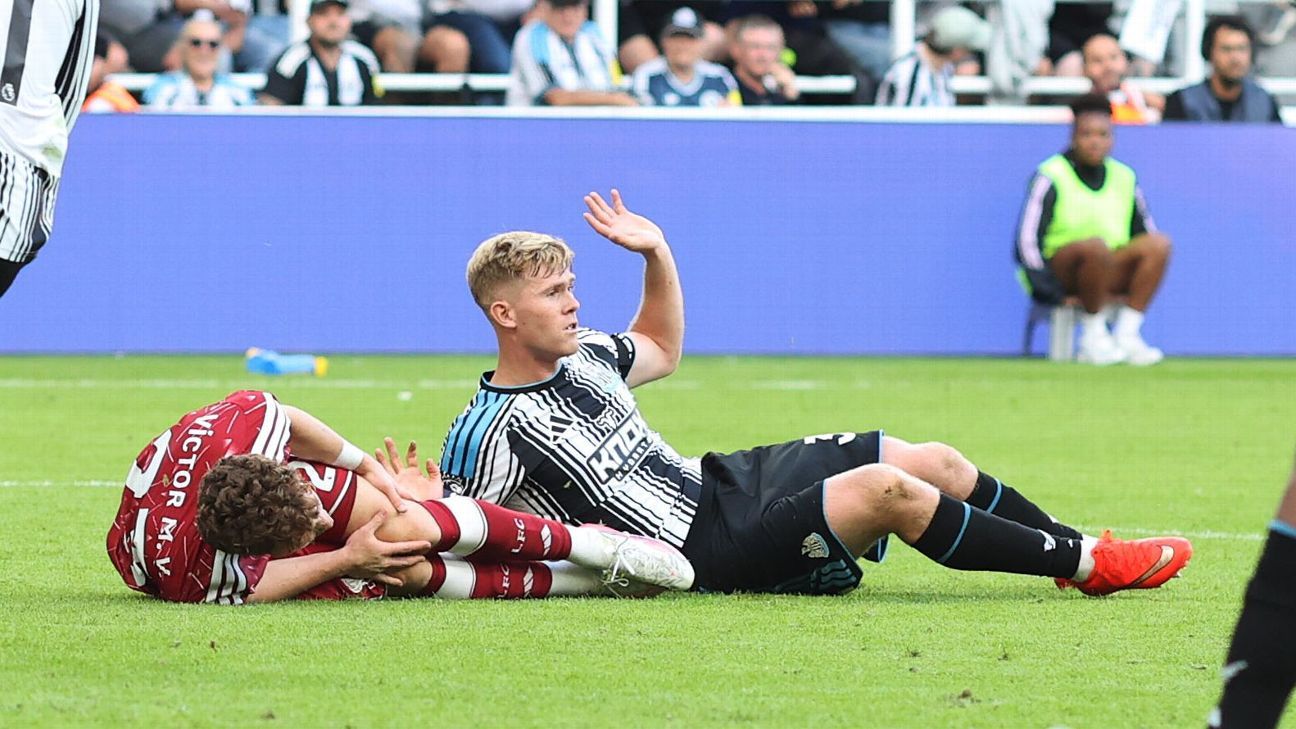
Image: courtesy of ESPN
Beyond the Whistle: How Liverpool's Late VAR Penalty Reignites the Premier League's Officiating Debate
Liverpool secured a dramatic 2-2 draw against Newcastle on August 23, 2026, thanks to a penalty awarded in injury time, confirmed by VAR. The decision, stemming from Hall's challenge on Muñoz, has once again thrown the spotlight onto the video assistant referee system, prompting renewed debate over subjective calls, consistency, and the impact on the spirit of Premier League football. While the penalty was deemed justified by the rules, the timing and consequence of the decision have fueled arguments about whether VAR truly enhances or detracts from the game.
Outlook
Background
The clock had ticked well past the 90-minute mark at St. James' Park last night. Newcastle, having fought hard, held a narrow 2-1 lead over Liverpool. Then, in the 96th minute of added time, Liverpool's forward, Muñoz, drove into the Newcastle penalty area. Newcastle defender Hall made a challenge, bringing Muñoz to the ground, prompting referee Stuart Attwell to immediately point to the penalty spot.
The decision was not without contention, even on first viewing. Such a late call, with the game effectively decided, always carries immense weight. The Video Assistant Referee (VAR) system, led by a team at Stockley Park, then conducted its review. After a brief but intense period of waiting, the on-field decision for a penalty was confirmed. Liverpool converted, leveling the score at 2-2, salvaging a point in a match that had appeared lost.
CONFIRMED: Liverpool's Muñoz was fouled by Newcastle's Hall inside the penalty area in the 96th minute.
CONFIRMED: Referee Stuart Attwell awarded a penalty.
CONFIRMED: VAR reviewed and confirmed the referee's decision.
CONFIRMED: The penalty was deemed justified 'by the rules of the game'.
CONFIRMED: The match ended in a 2-2 draw.
See also
Precedents
The incident involving Liverpool and Newcastle is far from an isolated event when it comes to VAR controversies in the Premier League. Since its introduction, the video assistant referee system has been a constant source of debate, particularly concerning subjective decisions that impact game outcomes.
Liverpool, in particular, has been at the center of several high-profile VAR calls that have either gone in their favor or against them, each sparking its own wave of discussion. For instance, on October 4, 2025, VAR confirmed a referee's 'no penalty' call in a Liverpool match, ruling that contact from Szoboszlai on Garnacho was 'minimal' despite appeals. Earlier that year, on January 5, 2025, VAR intervened in a Liverpool vs. Manchester United game, overturning an initial 'no penalty' call and awarding Liverpool a spot-kick, which Salah converted.
These instances highlight a recurring pattern: VAR's role often feels less about correcting 'clear and obvious errors' and more about re-refereeing subjective moments, leading to inconsistent application and frustration. Critics often point to the system's impact on goal celebrations, game flow, and the very 'spirit' of football, arguing that the pursuit of absolute accuracy often comes at the expense of spontaneity and clear decision-making. The core tension remains between the desire for fairness and the reality that football, by its nature, involves human judgment and interpretation. Each controversial decision, like the one last night, simply adds another chapter to this ongoing narrative.
This latest VAR decision against Newcastle, culminating in a late equalizer for Liverpool, cuts to the heart of several critical issues facing modern football. Beyond the two points gained or lost, the incident strikes at the integrity of the game and the trust placed in its officiating.
For Newcastle, it is a bitter pill – the feeling of a hard-earned victory snatched away by a decision that, while technically correct by some interpretations, felt deeply unfair in the context of the game's flow and timing. This kind of outcome can foster resentment and a sense of injustice among supporters, potentially impacting fan engagement and loyalty. On the other side, Liverpool fans will naturally feel justified, but even for them, the constant reliance on VAR for high-stakes moments can dilute the raw emotion of the sport.
The broader consequence extends to the perceived fairness of the competition itself. When such pivotal moments are decided by slow-motion replays and nuanced interpretations of contact, it raises questions about whether all teams are judged by the same standard, and whether the 'clear and obvious error' threshold is consistently applied. This psychological impact on players, managers, and fans cannot be overstated; it shapes narratives, fuels rivalries, and influences the emotional investment in the Premier League product. If fans begin to feel that results are swayed by arbitrary or inconsistent VAR interventions, it risks eroding the fundamental appeal of the sport.
Scenarios
AnalysisThe fallout from last night's VAR decision could manifest in several ways, shaping the ongoing discourse around officiating in English football.
One immediate outcome is likely to be a renewed call from managers and pundits for greater transparency from the Premier League and the Professional Game Match Officials Limited (PGMOL) regarding VAR's decision-making process. Clubs and fans may push for public access to the audio of VAR conversations, similar to what is seen in other sports, in an effort to demystify calls and build confidence in the system. This could lead to PGMOL issuing more detailed explanations post-match, or even exploring limited live audio broadcasts for specific incidents, though the latter would be a significant shift.
A second potential outcome involves a re-evaluation of the specific guidelines for penalty incidents and the 'clear and obvious error' threshold. The debate around what constitutes a foul versus incidental contact, especially in the penalty area, is perpetual. This incident may prompt PGMOL to refine training for referees and VAR officials, perhaps emphasizing stricter adherence to the 'clear and obvious' principle to reduce interventions on marginal calls, or conversely, clarifying when minimal contact is indeed enough for a penalty. The pressure will be on to find a balance between preventing blatant errors and avoiding the over-analysis of every minor contact.
A third, more speculative, outcome could involve a shift in player behavior. As VAR continues to scrutinize every touch, players may become more attuned to drawing contact in the box, knowing that any perceived foul, no matter how slight, could lead to a review and a potential penalty. This could change the tactical dynamics of attacking and defending in the penalty area, potentially leading to more cautious defending or more aggressive attacking runs designed to invite contact.
Timeline
2025-01-05
Liverpool vs. Man Utd VAR Decision
VAR overturned a 'no penalty' call, awarding Liverpool a penalty against Manchester United, which Salah converted. This incident highlighted VAR's power to change game outcomes.
2025-10-04
Liverpool vs. Chelsea VAR Decision
VAR confirmed a 'no penalty' call, ruling contact from Szoboszlai on Garnacho as 'minimal'. This decision offered Liverpool a reprieve amidst a period of struggle.
2026-08-23
Liverpool vs. Newcastle Match
In the 96th minute, Newcastle's Hall fouled Liverpool's Muñoz in the penalty area. Referee Stuart Attwell awarded a penalty, which VAR subsequently confirmed. Liverpool converted the penalty, securing a 2-2 draw.
Frequently Asked Questions
VAR stands for Video Assistant Referee. It is a system used in football to review decisions made by the on-field referee with the help of video replays. Its primary aim is to correct 'clear and obvious errors' or 'serious missed incidents' in four game-changing situations: goals, penalties, direct red cards, and mistaken identity.
Discussion
Be the first to share your thoughts.