
The immediate aftermath of Tottenham's 3-0 loss to Brentford will likely see intense scrutiny on Roberto De Zerbi's tactical approach and the physical readiness of his squad. Expect the upcoming weeks to be dominated by questions regarding player fitness, defensive solidity, and the team's ability to implement De Zerbi's demanding, high-press system. The manager himself admitted Spurs lacked physical preparation and tactical fight, suggesting a focused effort in training to address these fundamental issues. Fans and pundits will be looking for early signs of adaptation and improvement, particularly in how Spurs manage transitions and cope with sustained opponent pressure. The next few fixtures will be critical in shaping the narrative around De Zerbi's early tenure.
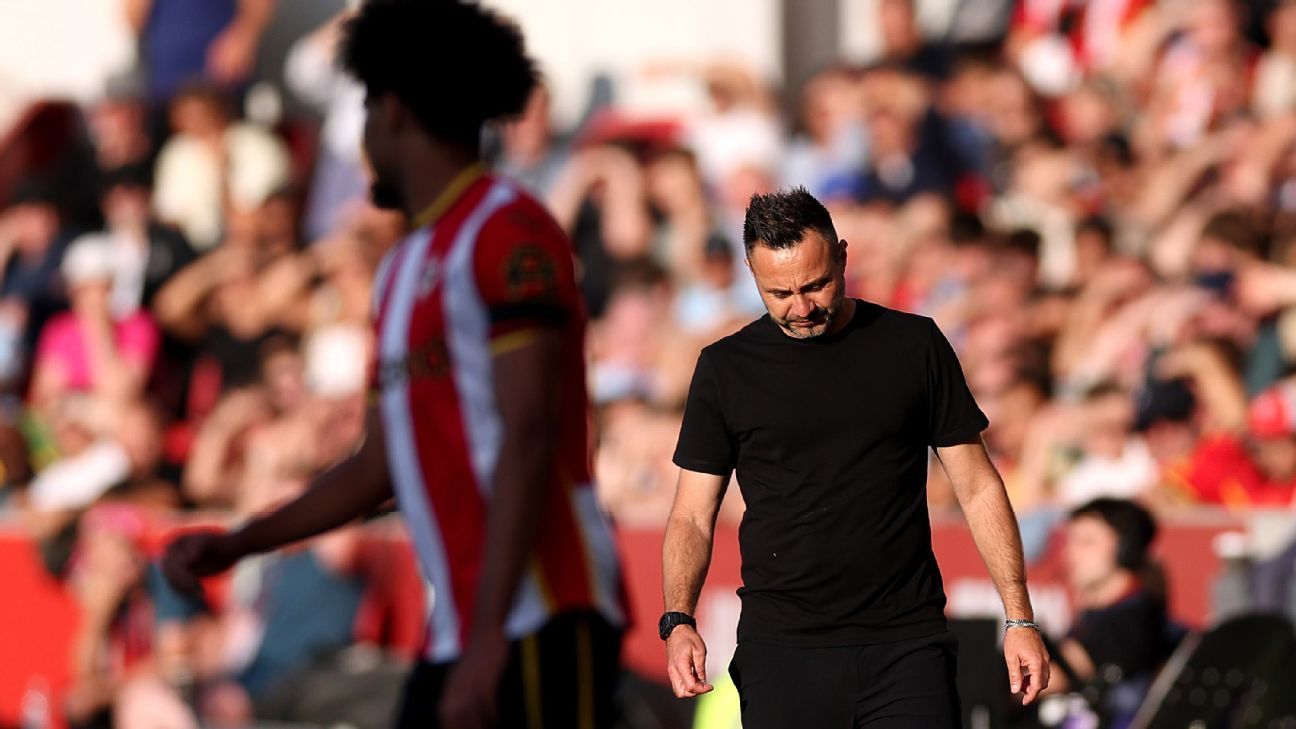
Image: courtesy of ESPN
Tottenham's 3-0 Opening Day Rout: What Brentford's Victory Reveals About De Zerbi's Monumental Task at Spurs
Tottenham Hotspur's 2026/27 Premier League season opened with a stark reality check: a comprehensive 3-0 defeat to Brentford. The result, which saw Brentford outplay Roberto De Zerbi's Spurs in almost every facet, immediately cast a spotlight on the enormous challenge facing the Italian manager as he attempts to rebuild a club that narrowly avoided relegation last season. Brentford, by contrast, demonstrated the very qualities — superior organization, pressing intensity, and tactical cohesion — that Spurs aspire to emulate, making the opening fixture a telling indicator of the gap De Zerbi needs to bridge.
Outlook
Background
Tottenham Hotspur entered the 2026/27 Premier League season under significant pressure, having endured a dismal 2025/26 campaign that saw them finish a mere two points clear of relegation in 17th place. Roberto De Zerbi was brought in to overhaul the squad and implement his distinctive, possession-based, high-intensity football philosophy. To aid this transformation, the club made notable investments, bringing in center back Jan Paul van Hecke, midfielder Sandro Tonali, and fullback Andy Robertson. These signings indicate a clear intent to strengthen key areas and provide De Zerbi with players suited to his system.
Brentford, meanwhile, arrived at the fixture with considerable momentum. They narrowly missed out on European qualification in the previous season on tiebreakers, a testament to their consistent performance and tactical discipline. Their pre-season form, highlighted by a dominant 7-0 victory over Eintracht Frankfurt, signaled their readiness. The contrast between the two clubs' recent trajectories — Brentford's steady ascent versus Tottenham's near-relegation scare — set the stage for a match that was always going to be more than just three points. It was a clash of philosophies and a test of where Spurs truly stand in their rebuilding phase.
See also
Precedents
Tottenham's recent history has been marked by a struggle for consistent identity and a revolving door of managers, each attempting to stamp their authority on a squad often perceived as lacking a cohesive long-term vision. The club has frequently sought quick fixes rather than sustained, patient development. This pattern often leads to initial tactical shifts under new management, followed by periods of struggle as players adapt – or fail to adapt – to new demands. Early season results, particularly against tactically astute opponents like Brentford, have historically exposed underlying issues at Spurs, ranging from defensive frailties to a lack of midfield control.
For managers like De Zerbi, who demand a specific, physically demanding playing style, the initial phase is often the most challenging. Historical examples show that success with such systems requires both significant squad investment and a full pre-season to embed the philosophy. When clubs fail to provide adequate time or player profiles, even highly regarded coaches can struggle. The 2025/26 season's brush with relegation suggests a deep-seated institutional problem that extends beyond any single manager, indicating that De Zerbi is not merely inheriting a team that needs tweaking, but a club that requires a fundamental cultural and structural shift.
The 3-0 defeat to Brentford matters profoundly for Roberto De Zerbi and Tottenham Hotspur because it lays bare the sheer scale of the project he has undertaken. This was not a narrow loss but a comprehensive dismantling, revealing that the gap between Spurs and even established Premier League sides, let alone those challenging for Europe, is substantial. For a manager known for his distinct, high-energy tactical system, the admission of lacking physical readiness and tactical fight is concerning just one game into the season. It suggests a fundamental disconnect between the desired playing style and the current capabilities of the squad, despite new signings.
For Spurs fans, who endured a deeply disappointing previous season, this opening result fuels anxieties about whether the club can truly turn the corner. The investment in players like van Hecke, Tonali, and Robertson signaled ambition, but the performance against Brentford indicates that tactical integration and fitness are still major hurdles. The outcome could set a challenging tone for the entire season, potentially impacting player morale, fan confidence, and the patience afforded to De Zerbi. The club's financial health and ability to attract top talent in future windows could also be affected if the perception of a club in disarray persists. The Brentford game, therefore, is not just a single loss; it is an early, critical barometer of De Zerbi's ability to instigate meaningful change.
Scenarios
AnalysisThe road ahead for Roberto De Zerbi and Tottenham Hotspur presents several distinct paths, each contingent on how the club responds to this early setback.
One potential outcome is a period of intense tactical refinement and player conditioning. De Zerbi's comments about lacking physical readiness suggest a clear area for immediate improvement. If the squad can quickly adapt to his demanding training methods and tactical instructions, particularly in defensive organization and pressing triggers, Spurs could see a gradual but noticeable improvement in their performances over the coming weeks and months. This would likely manifest in tighter scorelines, more controlled possession, and a clearer tactical identity, even if immediate results remain inconsistent. The newly acquired players, Jan Paul van Hecke, Sandro Tonali, and Andy Robertson, would need to integrate seamlessly and quickly become key figures in implementing De Zerbi's vision.
Conversely, the early struggles could deepen, leading to a more prolonged period of instability. If the physical demands of De Zerbi's system prove too much for key players, or if the tactical instructions are not fully grasped, Spurs could continue to struggle against well-drilled opponents. This scenario might see the team fall further behind in the league table, increasing pressure on De Zerbi and potentially leading to questions about the suitability of his philosophy for the current squad. Such a trajectory could force the manager to compromise on his preferred style, or it might necessitate further, more radical squad changes in future transfer windows, potentially delaying any significant turnaround for another year.
Timeline
Frequently Asked Questions
Discussion
Be the first to share your thoughts.