
Major League Baseball enters a new era of pitching valuations as the $50 million annual threshold is officially breached. Competitors across the National League East and broader American League will now adjust their payroll structures and long-term projection models to account for Skubal's baseline, while the Mets must absorb the operational constraints of carrying a single player on their books through his age-38 season.
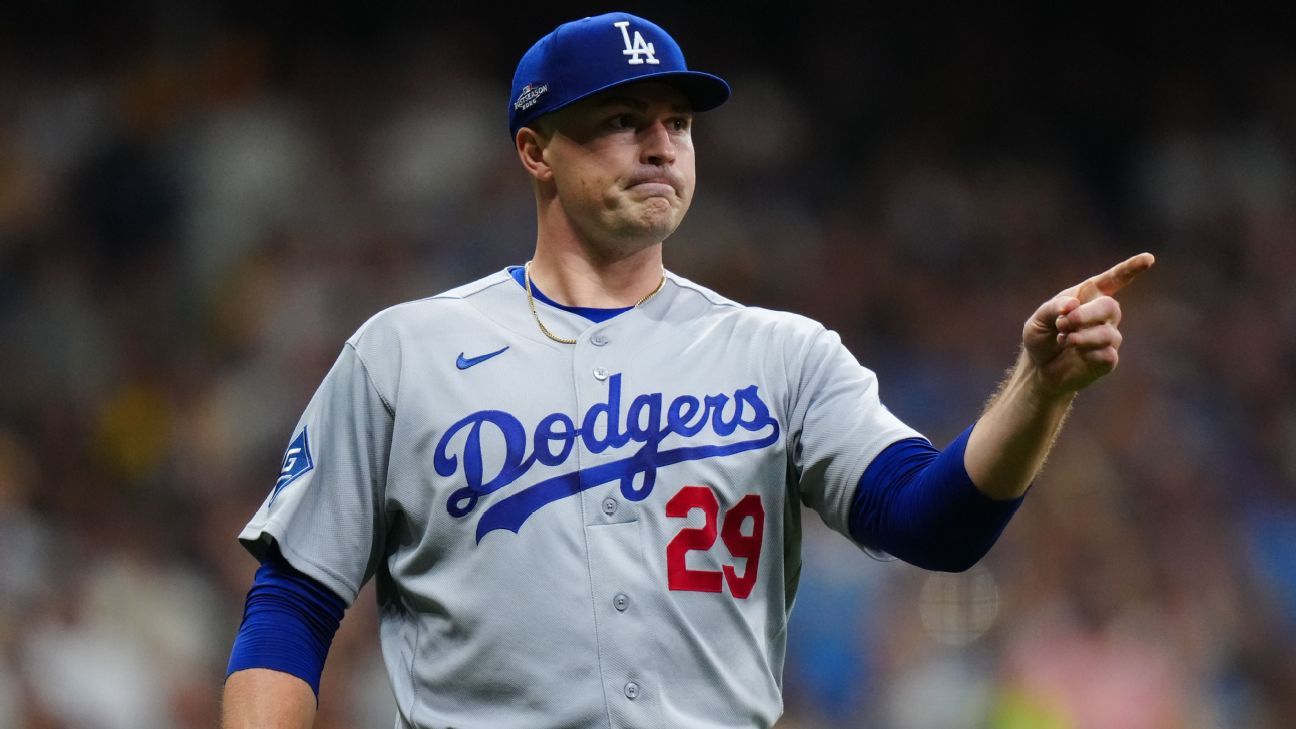
Image: courtesy of ESPN
Inside the $450 Million Math That Made Tarik Skubal a New York Met
The New York Mets secured two-time Cy Young Award winner Tarik Skubal on a nine-year, $450 million contract, setting a historic high-water mark for pitching compensation. Beating out a rival $400 million bid from the Toronto Blue Jays, the deal includes a $45 million signing bonus, zero opt-outs, and a full no-trade clause, reflecting owner Steve Cohen's aggressive pursuit of elite certainty over financial thrift.
Outlook
Background
Tarik Skubal enters Queens following a career trajectory that saw him rise from the Detroit Tigers before a mid-season stop with the Los Angeles Dodgers. The contract surpasses Yoshinobu Yamamoto's previous $325 million standard for pitchers, elevating Skubal to the fourth-largest total deal in baseball history behind only Shohei Ohtani, Juan Soto, and Vladimir Guerrero Jr. Crucially, the agreement contains no opt-outs, meaning the Mets bought absolute labor certainty rather than flexibility.
See also
Precedents
History shows that pitching contracts of this magnitude carry immense execution risk, particularly past the six-year mark. Historical precedents such as Max Scherzer and Justin Verlander prove that elite arms can produce Hall of Fame-caliber seasons into their late thirties, but comparable investments in pitchers often collide with physical degradation and escalating Tommy John surgery rates. Front offices traditionally avoid committing nine-year horizons to arms, making this contract an aggressive outlier driven by modern revenue sharing and ownership capital rather than traditional actuarial models.
What this changes for baseball is the absolute ceiling of single-player valuation, proving that starting pitching can command position-player-tier megadeals when scarcity aligns with aggressive ownership. For a franchise like the Mets, the move signals a structural willingness to bypass traditional risk aversion, transforming financial liquidity into immediate roster dominance while reshaping how agents negotiate opt-out concessions.
Scenarios
AnalysisOne possible outcome is that Skubal maintains his Cy Young form for the first five years of the deal, anchoring a championship rotation alongside Nolan McLean and justifying every dollar of the $50 million annual payout. Another potential outcome is that physical wear and tear catches up to the left-hander by the back half of the decade, saddling the Mets' payroll with an untradeable anchor under the full no-trade clause. A third possibility is that rival clubs respond by inflating their own pitching expenditures, permanently altering the luxury tax threshold calculus across the league.
Timeline
July 2026
Mid-Season Acquisition
Tarik Skubal finishes the first half of the season with the Detroit Tigers before being traded to the Los Angeles Dodgers for the final months of the campaign.
November 2026
The Bidding War
Top-tier contenders enter negotiations, with the Toronto Blue Jays floating a nine-year offer exceeding $400 million.
November 23, 2026
Record Agreement Reached
The New York Mets finalize a nine-year, $450 million contract with Skubal, establishing the richest pitching deal in MLB history with zero opt-outs.
Frequently Asked Questions
At $450 million total and $50 million annually, Skubal's deal is the largest in history for a pitcher, surpassing Yoshinobu Yamamoto's $325 million contract. Across all positions, it ranks fourth behind Shohei Ohtani, Juan Soto, and Vladimir Guerrero Jr.
Discussion
Be the first to share your thoughts.