
This victory, while expected by many, sets a clear tone for Australia's campaign: they are the team to beat. Expect their remaining group stage matches to be approached with a dual focus on maintaining momentum and managing player fitness. The immediate priority will be to assess Beth Mooney’s injury, with updates likely to emerge as the team prepares for its next fixture. The team's deep bench will be tested if Mooney's absence extends into the crucial knockout rounds. For Pakistan, the focus will now shift to playing for pride and gaining valuable international experience against top-tier opponents, with their semi-final hopes now effectively extinguished.
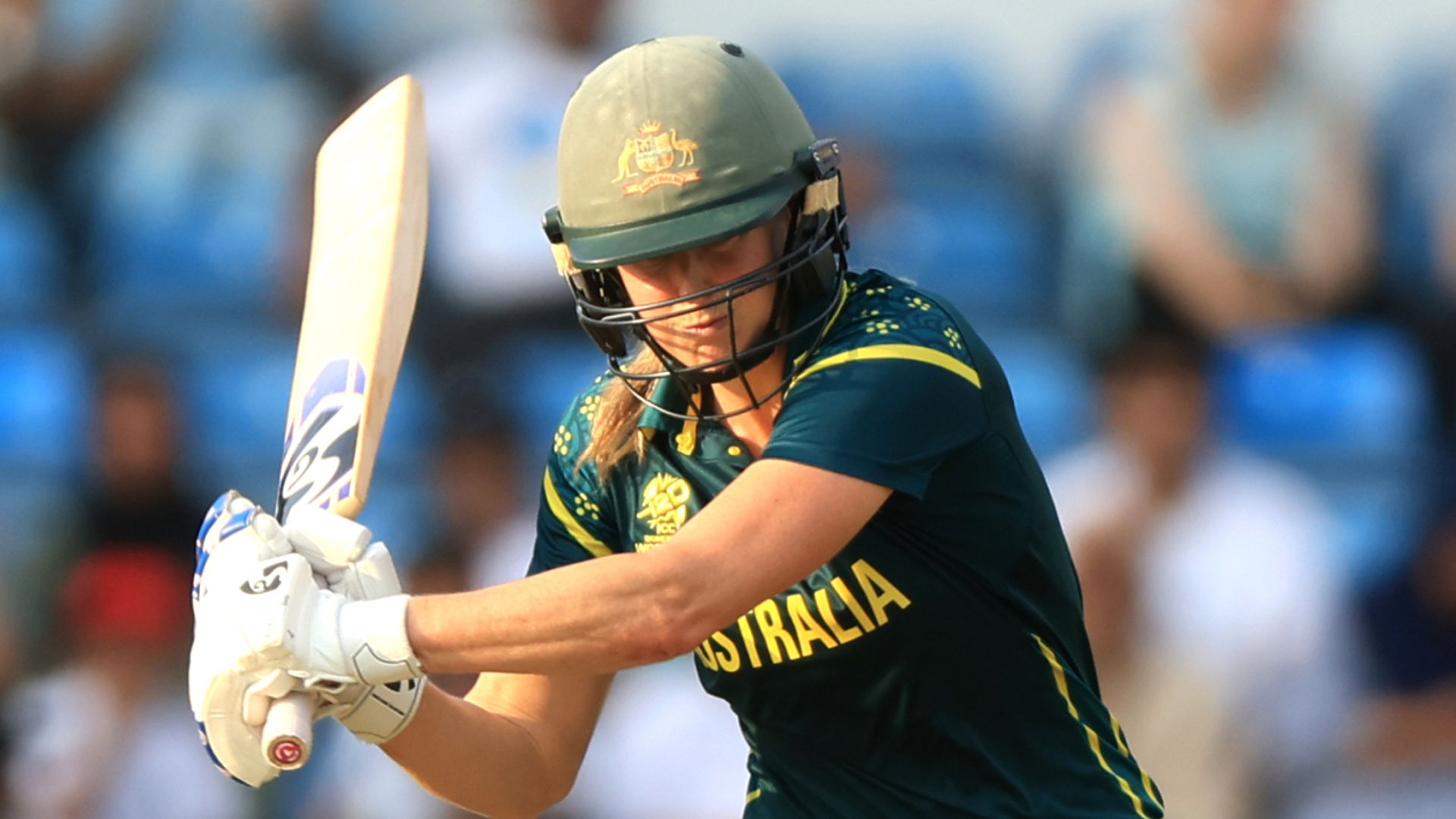
Image: courtesy of Sky sports
Ellyse Perry Powers Australia to Dominant World Cup Win, But Mooney Injury Looms
Ellyse Perry delivered a commanding all-round performance, scoring 71 runs and taking two wickets, to lead Australia to a crushing 113-run victory over Pakistan in the Women’s T20 World Cup on Tuesday. The win solidified Australia's top position in Group A and moved them closer to the semi-finals, extending their unbeaten streak in the tournament. However, the dominant display was tempered by concerns over a confirmed injury to key batter Beth Mooney.
Outlook
Background
Australia's women's cricket team has established itself as a formidable force on the global stage, particularly in the T20 format. They entered the 2026 ICC Women's T20 World Cup as strong favorites, a reputation built on consistent success in major tournaments, including multiple T20 World Cup titles. This match against Pakistan was a critical fixture in the group stage, offering an opportunity to solidify their position at the top of Group A and secure a spot in the semi-finals. The tournament format demands consistent performances, as only the top teams from each group progress to the knockout stages. Headingley, the venue for this match, is known for its lively pitches that can offer assistance to both batters and bowlers, making an all-round performance like Perry's particularly valuable.
Precedents
Australia's dominance in women's T20 cricket is not a recent phenomenon; it is a sustained pattern built over more than a decade. Since the inception of the Women's T20 World Cup, Australia has been the most successful nation, often showcasing a blend of individual brilliance and collective tactical execution. Their strategy typically involves aggressive batting, disciplined bowling, and exceptional fielding, putting immense pressure on opposition teams. Historically, when a key player like Ellyse Perry or Beth Mooney has been sidelined, the Australian squad has often demonstrated remarkable depth, with other players stepping up to fill the void. This depth is a hallmark of their success, a product of a robust domestic structure and a strong talent development pipeline. However, past instances have also shown that even the most dominant teams can be vulnerable to injuries, especially to specialist players who provide unique balance to the squad. The team's ability to absorb such shocks without losing rhythm will be crucial as the tournament progresses towards its most high-stakes encounters. The team's performance against Pakistan, a side they have historically dominated, aligns with this pattern of superiority, but the semi-final stage often introduces different pressures where margins are finer and historical records count for less.
This victory reaffirms Australia's status as the leading contender for the Women's T20 World Cup trophy, a position they have held with remarkable consistency across formats for years. For Ellyse Perry, the performance further cements her legacy as one of the greatest all-round cricketers of her generation, capable of single-handedly altering the course of a match with both bat and ball. Her ability to perform under pressure in a global tournament is a testament to her enduring quality and invaluable experience.
However, the confirmed injury to Beth Mooney introduces a significant element of uncertainty. Mooney is a top-order batter whose consistency and ability to anchor an innings are vital to Australia's batting lineup. Losing a player of her caliber, even for a short period, could force a tactical rethink and place additional pressure on the remaining batters. In the cut-throat environment of World Cup semi-finals, where a single lapse can be fatal, the depth of Australia's squad will be rigorously tested. For rival teams, this injury could be perceived as a glimmer of opportunity, a potential crack in the seemingly impenetrable Australian armor. The outcome of the tournament could hinge not just on skill, but on how effectively Australia manages player fitness and adapts to unexpected challenges.
Scenarios
AnalysisOne immediate outcome is that Australia will likely advance to the semi-finals as the top team from Group A, given their strong position and unbeaten record. This provides them with a potentially more favorable draw in the knockout stages, avoiding other group winners.
A second potential outcome hinges on the severity and duration of Beth Mooney's injury. If she is sidelined for an extended period, Australia's coaching staff may be forced to reshuffle their batting order and bring in a replacement player. This could disrupt the team's established rhythm and test the depth of their bench, potentially impacting their performance against stronger opposition in the semi-finals or final.
Conversely, the team's proven depth could mean that other players, such as Phoebe Litchfield or Grace Harris, step up effectively, demonstrating the strength of Australia's talent pool. This would reinforce their reputation for having multiple match-winners and the ability to absorb significant player absences without losing their competitive edge. The team's psychological resilience, often cited as a key factor in their success, will also be under scrutiny if they face adversity in the later stages of the tournament.
Timeline
2026-06-23
Australia vs. Pakistan Group Stage Match
Australia, led by Ellyse Perry, defeats Pakistan by 113 runs at Headingley in the ICC Women's T20 World Cup, solidifying their top position in Group A. Beth Mooney sustains an injury during the match.
2026-06-24
Injury Assessment and Group A Standings
Australian team management will conduct further assessments on Beth Mooney's injury. The win against Pakistan significantly boosts Australia's net run rate and secures their standing at the top of Group A, moving them 'closer' to semi-final qualification.
2026-06-26
Anticipated Group Stage Conclusion
Based on typical tournament schedules, the remaining group stage matches are expected to conclude around this date, confirming the semi-finalists. An official announcement regarding Australia's semi-final qualification is likely.
Frequently Asked Questions
Australia scored 7-199 in their innings, while Pakistan was bowled out for 86. Australia won by 113 runs.
Discussion
Be the first to share your thoughts.