
Veridact
TechSportsFinanceGaming🎯 PredictionsAbout
Sign InSign Up
Veridact

AI-powered anticipation analysis. We cover tech, sports, finance, and gaming events before they happen — with historical context, scenario modeling, and evolving coverage.

Stay ahead of the story

Analysis delivered before events unfold.

Coverage

  • Tech
  • Sports
  • Finance
  • Gaming

Company

  • About Us
  • Privacy Policy

© 2026 Veridact. AI-assisted analysis platform.

Analysis is AI-generated and not professional financial, legal, or medical advice.

gaming
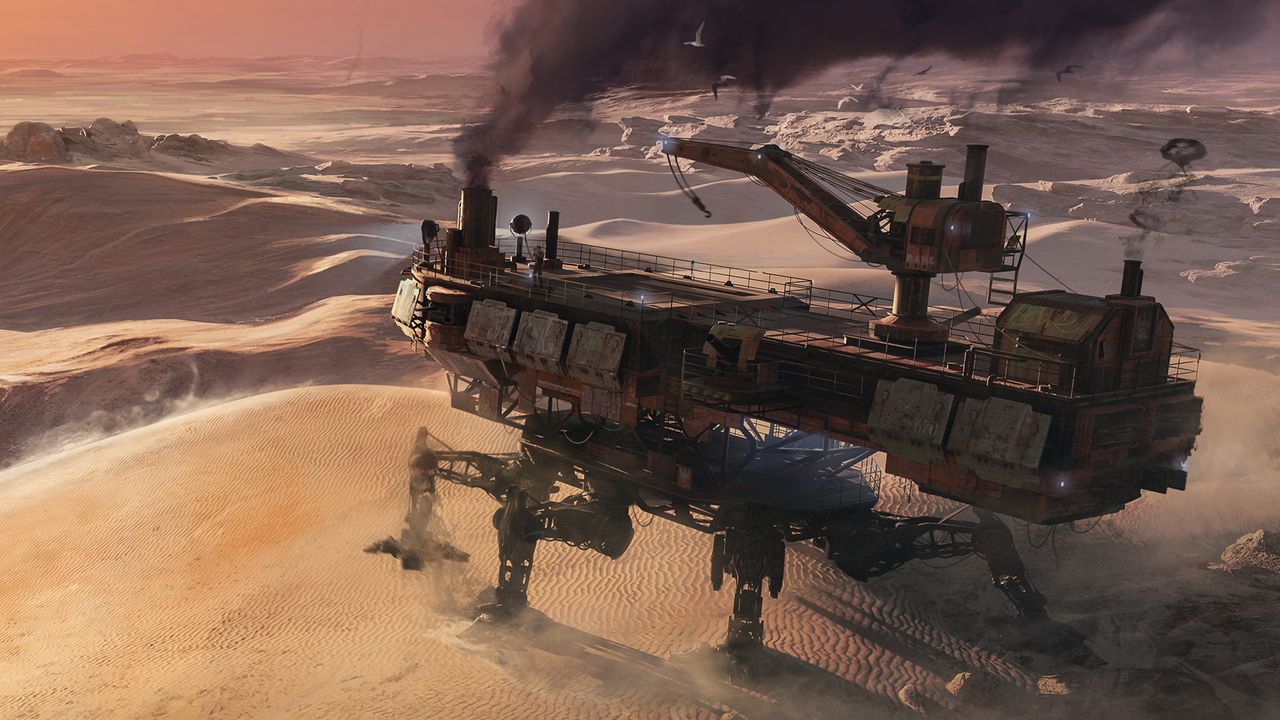
After a delay in 2025 and two delays this year (plus two more short delays this morning) mech fortress-builder Sand has finally launched

Image: courtesy of PC Gamer

gamingJune 23, 2026By Veridact EditorialUpdated Jun 23

After Five Delays and a Final-Morning Scramble, Mech Fortress-Builder Sand Finally Launches

After a series of postponements stretching back to 2025, the highly anticipated simulation game Sand has officially released, offering a case study in the high-stakes world of mid-tier game development.

Implications

At its core, Sand is an ambitious hybrid of survival, resource management, and vehicle physics. Players are dropped into a vast, arid world where the only way to survive is to construct and maintain a "sandship"—a massive, modular walking fortress powered by complex machinery. Unlike traditional base-building games where your fortress is anchored to the ground, Sand forces you to build vertically on a platform that is constantly in motion. This movement introduces a host of gameplay challenges. You are not just managing storage chests and crafting stations; you are managing weight distribution, engine efficiency, and structural integrity.

When you take your fortress into battle, these design choices become matters of life and death. If an enemy player targets your ship's legs, your entire base could grind to a halt, leaving you vulnerable to boarding parties. If you concentrate too much heavy armor on one side, your ship might tilt, reducing its speed and making it harder to aim your weapons. The game's combat is highly physical, requiring players to physically run around their moving fortresses, loading fuel into engines, repairing damaged hull plates, and manning deck guns.

This creates a frantic, high-stress multiplayer environment. You can team up with friends to operate a single massive fortress, or clash with rival crews over scarce water and fuel deposits in the desert. The game's progression system relies heavily on salvaging scrap metal and advanced technology from abandoned ruins. This loop of exploring, salvaging, upgrading, and fighting forms the backbone of the experience. But because the game relies so heavily on real-time physics and multiplayer synchronization, players should expect a demanding experience that pushes both their hardware and their cooperative skills to the limit.

Background

To understand why Sand took so long to reach the hands of players, one must look at the trail of missed deadlines left in its wake. The journey began in early 2025, when the development team planned to launch the game in Early Access in April. That launch never happened. In a move that surprised many industry observers, the developers scrapped the April 2025 Early Access release entirely. Instead, they made a strategic pivot: they would bypass Early Access altogether and focus on delivering a polished, full 1.0 release. The new target was set for March 2026.

This decision suggests that the team recognized a growing shift in player expectations. However, the extra year of development was not enough to solve the game's underlying technical hurdles. In the final days of March 2026, the developers announced another delay, pushing the release to June 10. Once again, as that date approached, the team realized they needed more time. On June 9—just one day before the scheduled launch—the game was delayed for a third time, with a new release date set for June 22.

Even the final launch day was not free of drama. On the morning of June 22, 2026, eager players waiting for the Steam download button to activate were greeted by two consecutive micro-delays, pushing the launch back by several hours. This indicates that the development team was likely working up to the absolute last second, patching critical launch-day bugs and compiling final builds in real-time. When the game finally went live on June 22, it capped off a development saga defined by narrow escapes and constant adjustments. This highly reactive release schedule suggests a studio operating under intense pressure, where the fear of a buggy launch outweighed the public relations fallout of repeated delays.

See also

Call of Duty: Modern Warfare 4 finally revealed, and it's officially leaving last-generation consoles behind→

Precedents

The turbulent release of Sand is not an isolated incident; it is part of a broader, systemic shift in how modern video games are brought to market. For years, the industry relied on Early Access as a safety valve. Developers could release unpolished, bug-ridden builds under the guise of an "alpha" or "beta" phase, relying on the community to help them test and fund the game. However, this model has begun to break down. Modern players are increasingly intolerant of poor performance, even in unfinished releases. A bad first impression can permanently damage a game's reputation, leading to a flood of negative Steam reviews that the platform's recommendation algorithm rarely lets a game recover from.

We have seen this play out across the industry. Major publishers and independent studios alike are choosing the short-term pain of a delay over the long-term disaster of a broken launch. Pearl Abyss recently pushed its highly anticipated action game Crimson Desert from late 2025 into the first quarter of 2026, explicitly citing the need to ensure success on a meaningful scale. Similarly, Bungie has faced minor delays with its Destiny 2 updates in 2026 as it navigates structural changes and player skepticism. The shadow of high-profile launch disasters still looms large over the industry.

This suggests that developers have realized that a delayed game is eventually good, but a rushed game is bad forever. In the case of Sand, the decision to delay the game five times—including twice on the actual day of release—indicates that the studio was willing to endure community frustration to protect its launch-day review score. In an era where Steam's refund policy allows players to instantly return any game they play for less than two hours, a stable, working build on day one is no longer a luxury; it is a fundamental requirement for financial survival.

The stakes for Sand could not be higher. In the modern gaming ecosystem, mid-tier independent games exist in an incredibly precarious financial position. They do not have the multi-million dollar marketing budgets of major publishers, nor do they have the low overhead of tiny, three-person indie teams. A mid-tier game represents a significant capital allocation, often involving millions of dollars in development costs and years of labor. For a studio of this size, a single failed launch is not just a setback; it is an existential threat that can lead to immediate layoffs or studio closure.

This pressure is amplified by the sheer volume of games launching on digital storefronts daily. Discoverability is the single biggest hurdle for any new release. When a game launches, it has a very narrow window of time—often just 48 hours—to capture the attention of the Steam algorithm. If a game generates high player counts and positive reviews in those initial hours, Steam will feature it prominently on its front page, driving a virtuous cycle of sales. If the launch is plagued by server crashes, physics glitches, or performance drops, players will refund the game, reviews will turn negative, and the algorithm will bury the title, cutting off its primary source of revenue.

For the developers of Sand, the decision to delay the game repeatedly was a calculated risk. Each delay cost money, as the studio had to keep paying salaries and server costs without any incoming revenue. However, launching a broken game would have guaranteed financial ruin. By taking the extra time to polish the multiplayer physics and server infrastructure, the studio gave itself a fighting chance. The launch of Sand is a test case for whether the market still rewards patience, or if the loss of momentum from repeated delays is too difficult to overcome.

Scenarios

Analysis

The future of Sand will likely be determined by how the community reacts to the launch build over the coming weeks. Analysis suggests three potential paths for the game's trajectory.

In the first scenario, the extra development time successfully eliminated major technical issues, leading to a stable and highly polished launch. Players find the fortress-building mechanics intuitive, the multiplayer performance smooth, and the physics-based combat satisfying. As positive reviews accumulate, the game gains traction on streaming platforms, driving a steady stream of new players. This outcome would vindicate the developers' decision to delay the game, proving that taking the extra time to polish a complex simulation is always the correct strategic move.

In the second scenario, the delays prove to have been insufficient to solve the game's underlying technical debt. Despite the extra polish, players still encounter game-breaking physics bugs, server instability, or optimization issues on mid-range hardware. The frustration of five delays, combined with a buggy launch, could trigger a severe backlash from the community. If reviews trend negative, player numbers will drop rapidly, leaving the developers with a dwindling player base and insufficient revenue to fund the long-term post-launch support that a multiplayer survival game requires.

In a third, more moderate scenario, Sand establishes itself as a cult classic. The game launches with some rough edges and minor bugs, but its core concept—building giant walking fortresses with friends—is so unique and compelling that a dedicated niche community forms around it. Much like other complex simulations, the player base remains relatively small but highly engaged. The developers use the revenue from this dedicated community to release steady patches and content updates, slowly expanding the game's audience over several years. This slow-burn success would allow the studio to survive and gradually build Sand into a highly profitable franchise.

Timeline

April 2025
First Planned Launch Scrapped
The developers plan to launch Sand in Early Access, but scrap the release to pivot toward a full 1.0 launch.
March 2026
Second Last-Minute Delay
With the full release planned for late March, the studio announces a last-minute delay, pushing the date to June 10.
June 9, 2026
Third Delay Announced
Just one day before the rescheduled launch, the game is delayed again to June 22 to allow for final performance tuning.
June 22, 2026
Launch Day Micro-Delays
Two consecutive micro-delays on the morning of June 22 push the launch back by several hours before the game finally goes live.

Frequently Asked Questions

The game went through five distinct delays, primarily due to a major strategic shift from an Early Access release to a full 1.0 launch, as well as the technical complexities of synchronizing multiplayer physics on moving vehicles.

Discussion

0/100
0/1000

Be the first to share your thoughts.

Related Coverage

gaming

Nicolas Cage Enters Call of Duty: The Strategy Behind Gaming's Star Power Crossovers

Jun 23
gaming

GTA 6's Missing Reflection: Fan Scrutiny Meets Technical Reality Ahead of November Launch

Jun 23
gaming

The Rogue Coders Rebuilding the Multiplayer Game That Sony Abandoned

Jun 23
gaming

AMC's 'The Vampire Lestat' Navigates Fan Disappointment With Source Material Changes

Jun 22

Stay ahead of the story

AI analysis delivered before events unfold. No spam.

ⓘ

Disclosure: This article contains AI-assisted analysis based on publicly available information.