
The immediate aftermath of EA's latest reversal will likely see continued frustration and debate within the Battlefield 6 community. Players, already wary of the game's live-service monetization, will scrutinize future updates and communications from EA and developer DICE. This ongoing distrust could influence player retention, especially as new content rolls out and the game attempts to grow its active user base. EA may face pressure to clarify its booster policy further or risk alienating a significant portion of its dedicated player base.
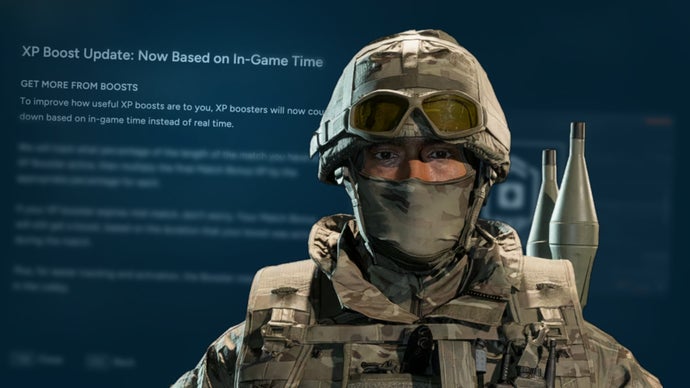
Image: courtesy of EuroGamer
EA's Repeated XP Booster Reversals Test Battlefield 6 Player Loyalty
Electronic Arts (EA) has once again stirred controversy among Battlefield 6 players by first appearing to change its XP Booster system to a more player-friendly model, only to then revert the change, claiming it was an error. This incident, which unfolded on July 1, follows a pattern of decisions that have eroded community trust, particularly concerning the live-service aspects of the game. The core issue revolves around whether XP Boosters count down in real-world time, even when players are not in a match, or only during active gameplay – a crucial difference for player value and engagement.
Outlook
Background
XP Boosters in Battlefield 6 are consumable items designed to double a player's account experience points for a set duration, typically 15, 30, or 60 minutes. The critical point of contention is how these timers operate. Unlike previous Battlefield titles, where XP Boosters only counted down during active gameplay, Battlefield 6 implemented a system where the timer runs continuously in real-world time once activated, regardless of whether the player is in a match. This means a 60-minute booster could expire even if a player only spends 10 minutes in-game, a design choice common in many other live-service shooters but widely unpopular with Battlefield veterans.
On July 1, reports from the player community indicated that EA had seemingly adjusted the system, allowing XP Booster timers to only deplete during active matches. This 'fix' was met with positive reception, as it aligned with long-standing player expectations and the mechanics of older Battlefield games. However, shortly after, EA reversed this change, stating it was an error and restoring the real-world countdown mechanism. This swift reversal, coupled with the 'error' explanation, has fueled significant player resentment.
This incident also comes on the heels of another apology from EA, issued around July 1, regarding an outage on the EA app that prevented some players who pre-ordered Battlefield 6 from accessing the game. As compensation for that separate issue, affected players received 12 hardware and 12 career 60-minute XP boosters, along with a free Season 1 premium battle pass. While this compensation was for a different problem, the timing of both events highlights a period of operational challenges and communication missteps for EA regarding Battlefield 6.
Precedents
EA has a documented history of navigating the complex waters of live-service monetization and player sentiment. The company has faced significant backlash in the past over microtransaction implementations, particularly concerning 'loot box' mechanics in titles like Star Wars Battlefront II. These controversies often revolve around perceived 'pay-to-win' elements or systems that feel exploitative rather than rewarding.
For the Battlefield franchise specifically, the transition to a full-fledged live-service model with Battlefield 6 marks a significant shift. Previous iterations, while offering some post-launch content, did not rely as heavily on continuous monetization through battle passes and consumable boosters. This newer model inherently requires a delicate balance: generating ongoing revenue while keeping players engaged and feeling respected. The 'real-world time' XP Booster mechanic is a prime example of a design choice that prioritizes monetization efficiency over player convenience, echoing similar debates seen in other major gaming franchises.
The pattern observed here — introducing a player-unfriendly mechanic, facing backlash, making a seemingly positive change, and then reverting it as an 'error' — suggests either internal policy disputes, a lack of clear communication between development and publishing teams, or a deliberate strategy to test player tolerance thresholds. Such actions, regardless of intent, consistently undermine player trust, which is a critical currency for any live-service game aiming for long-term success.
The handling of XP Boosters in Battlefield 6 is more than a minor technicality; it represents a fundamental challenge to the contract between game developers and their player base in the live-service era. For a game like Battlefield 6, which relies on consistent player engagement and ongoing content purchases, player loyalty is paramount. When players feel their time or money is being devalued by mechanics like real-time booster countdowns, it directly impacts their willingness to continue playing, invest in future content, or recommend the game to others.
This specific incident could have several ripple effects. It could lead to reduced player sentiment, making it harder for EA to attract new players or retain existing ones over time. It also casts a shadow over the perceived value of future in-game purchases and battle passes. Furthermore, the 'error' explanation itself can be seen as dismissive of player concerns, suggesting that a beneficial change was never truly intended. In an industry where community goodwill is increasingly vital for long-term success, especially against a backdrop of numerous competing titles, such missteps can carry significant weight, affecting the franchise's reputation and financial performance.
Scenarios
AnalysisOne immediate outcome is that EA may choose to stand firm on its current XP Booster policy, maintaining the real-world countdown. This approach could be driven by internal metrics indicating that the current system, despite player complaints, aligns with broader monetization goals or operational efficiency. If this occurs, it is INFERRED that player dissatisfaction will likely persist, potentially leading to a gradual decline in engagement from a segment of the player base and continued negative sentiment on forums and social media.
Alternatively, EA could face sufficient pressure from the community and internal stakeholders to re-evaluate the XP Booster system. This SPECULATIVE outcome might involve implementing a hybrid system, offering different types of boosters (some real-time, some in-game), or even reverting permanently to the in-game countdown for all boosters. Such a move would be seen as a gesture of goodwill, potentially rebuilding some of the lost trust, but it would also require acknowledging the initial 'error' claim was at best a miscommunication.
A third possible outcome is that the player base, while frustrated, ultimately adapts to the current system. Players might adjust their play habits to maximize booster usage, or simply accept it as a feature of the game. This INFERRED acceptance, however, would likely come with a lingering undercurrent of resentment, impacting long-term perceptions of EA and the Battlefield franchise, and potentially influencing purchasing decisions for future titles.
Timeline
2025-10-11
Battlefield 6 XP Boosters Guide Updated
A guide detailing Battlefield 6 XP boosters is updated, confirming that boosters count down in real-world time, a point of contention for many players.
2026-06-26
Game Update 1.3.3.0 Announced
The official Battlefield X account announces Game Update 1.3.3.0, scheduled to drop on Tuesday, June 30, promising combat changes, bug fixes, and new content.
2026-06-30
Game Update 1.3.3.0 Released
Battlefield 6 receives Game Update 1.3.3.0, introducing various changes to gameplay, events, and bug fixes.
2026-07-01
XP Booster Change and Reversal
EA reportedly implements a change allowing Battlefield 6 XP Boosters to count down only during active gameplay. This change is then reversed on the same day, with EA stating it was an 'error' and restoring the real-world countdown.
2026-07-01
EA App Outage Apology and Compensation
Around this date, EA issues an apology for an EA app outage that prevented some pre-order players from accessing Battlefield 6. Affected players receive 12 hardware and 12 career 60-minute XP boosters, plus a free Season 1 premium battle pass as compensation.
Frequently Asked Questions
On July 1, EA reportedly changed Battlefield 6 XP Boosters so their timers would only count down during active gameplay, a system players preferred. However, this change was quickly reverted, with EA claiming it was an 'error' and reinstating the original real-world countdown system.
Discussion
Be the first to share your thoughts.