
This week's earnings reports from Target on Wednesday and Walmart on Thursday are expected to provide granular insights into American spending habits. Investors and economists will be closely watching for trends in comparable store sales, average transaction values, and unit volumes across various product categories. Last quarter, Walmart's Chief Financial Officer noted that consumers were buying less gas, a clear sign of economic strain. This upcoming round of reports will likely detail further shifts in consumer behavior, such as a continued preference for smaller pack sizes and an increased hunt for promotions, particularly among lower-income households. Analysts anticipate that while wealthier consumers may continue to spend on 'fun' or discretionary items, the overall picture for the average American household could remain challenging, with an ongoing focus on value and necessity. The key will be understanding the divergence in spending power between different demographic groups and how deeply inflation is influencing their purchasing decisions.
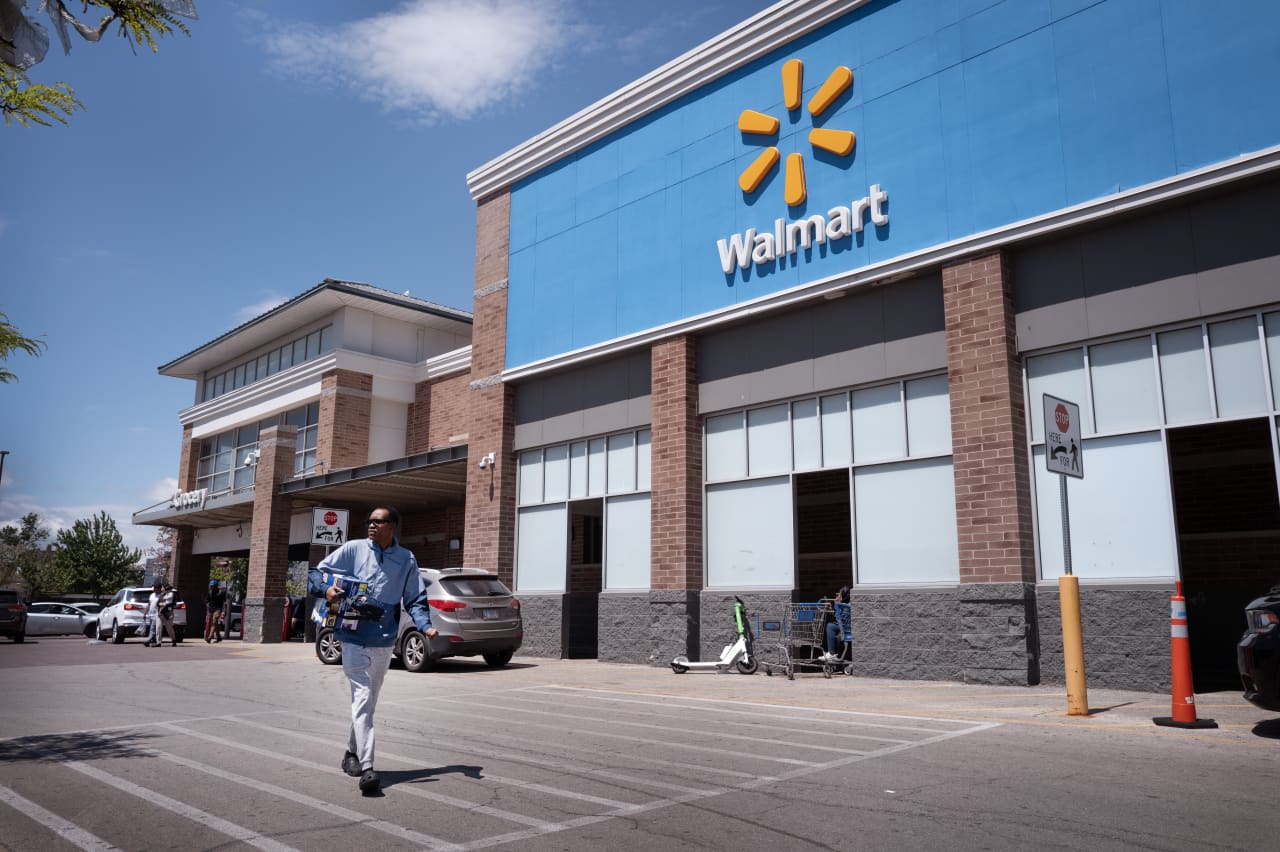
Image: courtesy of Market Watch
Walmart and Target Earnings: A Deeper Look at Who Is Actually Spending in an Inflation-Weary Economy
Walmart and Target are set to release their latest quarterly earnings reports this week, offering a critical window into the current state of the U.S. consumer. These reports will go beyond simple sales figures to reveal how different income groups are coping with persistent inflation, whether they are cutting back on essentials, and what this means for the broader economic outlook. The data will indicate if the stress previously noted by retailers continues to weigh on household budgets, or if some segments of the population are finding new resilience.
Outlook
Background
The backdrop for these retail earnings is one of persistent inflation, which has been eroding household purchasing power for an extended period. While some inflationary pressures have eased, the cumulative effect on consumers' budgets remains significant. The Federal Reserve continues to monitor economic data closely for signs of cooling demand, making these retail reports particularly influential. Walmart (WMT) and Target (TGT) are bellwethers for the U.S. economy due to their vast reach across different demographics and product categories, from groceries and household essentials to apparel and electronics. Their performance often serves as a proxy for the health of the entire consumer sector. Previous reports from these retailers, and other industry players, have consistently highlighted a bifurcation in spending: higher-income consumers often maintain spending levels, sometimes even increasing purchases in certain categories, while lower-income shoppers are forced to make tougher choices, prioritizing needs over wants and seeking out the lowest possible prices. This week's reports will confirm whether this trend is deepening or showing any signs of reversal.
See also
Precedents
Historically, during periods of economic uncertainty or sustained inflation, consumer behavior tends to follow predictable patterns. Shoppers typically 'trade down,' meaning they switch from premium brands to private-label or store brands, or opt for discount retailers. They also reduce discretionary spending on items like apparel, home goods, and electronics, focusing instead on necessities such as food, cleaning supplies, and personal care. The 'lipstick effect,' where consumers continue to buy small, affordable luxuries even when cutting back elsewhere, has also been observed, though its presence during prolonged inflation can be less pronounced. Retailers like Walmart, with its strong grocery presence and value proposition, often prove more resilient than specialty retailers during such times, as consumers consolidate their shopping trips and prioritize cost efficiency. However, even these large discount chains feel the pinch when customers cut back on higher-margin general merchandise. The comments from Walmart's CFO about reduced gas purchases reflect a classic stress indicator, echoing behaviors seen in previous downturns where every dollar counts.
The performance of Walmart and Target offers more than just a snapshot of two companies; it provides a crucial read on the financial resilience of the American household. Consumer spending accounts for roughly 70% of the U.S. economy, making its health paramount to overall economic stability. If these reports show a broad-based weakening in consumer demand, especially across essential categories, it could signal a deeper economic slowdown or even a recession. Conversely, unexpected strength, particularly in higher-margin discretionary categories, could suggest that consumers are more robust than current economic indicators imply. For businesses, these insights directly influence production plans, inventory management, and pricing strategies. For policymakers, especially the Federal Reserve, the data helps inform decisions on interest rates and monetary policy. Any sustained 'stress' among consumers, as Walmart previously noted, could prompt the Fed to reconsider its stance on tightening monetary conditions, while signs of continued spending, particularly from wealthier segments, might give them more room to maintain a hawkish approach. The stakes are high not just for shareholders, but for every business reliant on consumer confidence and purchasing power.
Scenarios
AnalysisOne primary outcome from these earnings reports could be a confirmation of a bifurcated consumer economy. This would mean that while affluent shoppers continue to spend, perhaps even increasing their purchases in certain categories, lower- and middle-income households are tightening their belts further. This scenario suggests continued pressure on retailers' profit margins as they absorb higher costs and offer more promotions to attract budget-conscious shoppers. It could also lead to cautious outlooks from both companies for the upcoming holiday season, reflecting uncertainty about sustained demand.
A second potential outcome is that the reports signal a broader weakening of consumer spending across all income levels. If even wealthier shoppers begin to pull back on discretionary items, or if the trade-down effect becomes more pronounced in essential categories, it could indicate that inflation's cumulative impact is finally catching up to a wider segment of the population. This would likely lead to a more pessimistic outlook for the retail sector and could prompt economists to revise down GDP growth forecasts. Such a development might also increase pressure on the Federal Reserve to consider interest rate cuts sooner than anticipated, in an effort to stimulate economic activity.
A third, though less likely, possibility is that the reports reveal surprising resilience in consumer spending. This could manifest as stronger-than-expected sales growth, particularly in general merchandise categories, or a stabilization in profit margins. Such an outcome would suggest that consumers have either adapted to the inflationary environment, are benefiting from stronger wage growth, or are drawing on accumulated savings more effectively than anticipated. This would likely be viewed positively by the market and could lead to more optimistic guidance for the remainder of the year.
Timeline
Frequently Asked Questions
Discussion
Be the first to share your thoughts.