
Micron's exceptional financial performance is expected to continue as long as the demand for AI-driven memory solutions remains robust. The company's move towards strategic customer agreements (SCAs) with pre-negotiated price bands signals a potential structural change in the historically volatile memory chip market. This model aims to provide more predictable revenue and higher, more stable margins, insulating Micron from the sharp downturns that have defined the industry for decades. Investors will be watching closely to see if this new approach can truly flatten the notorious boom-and-bust cycles.
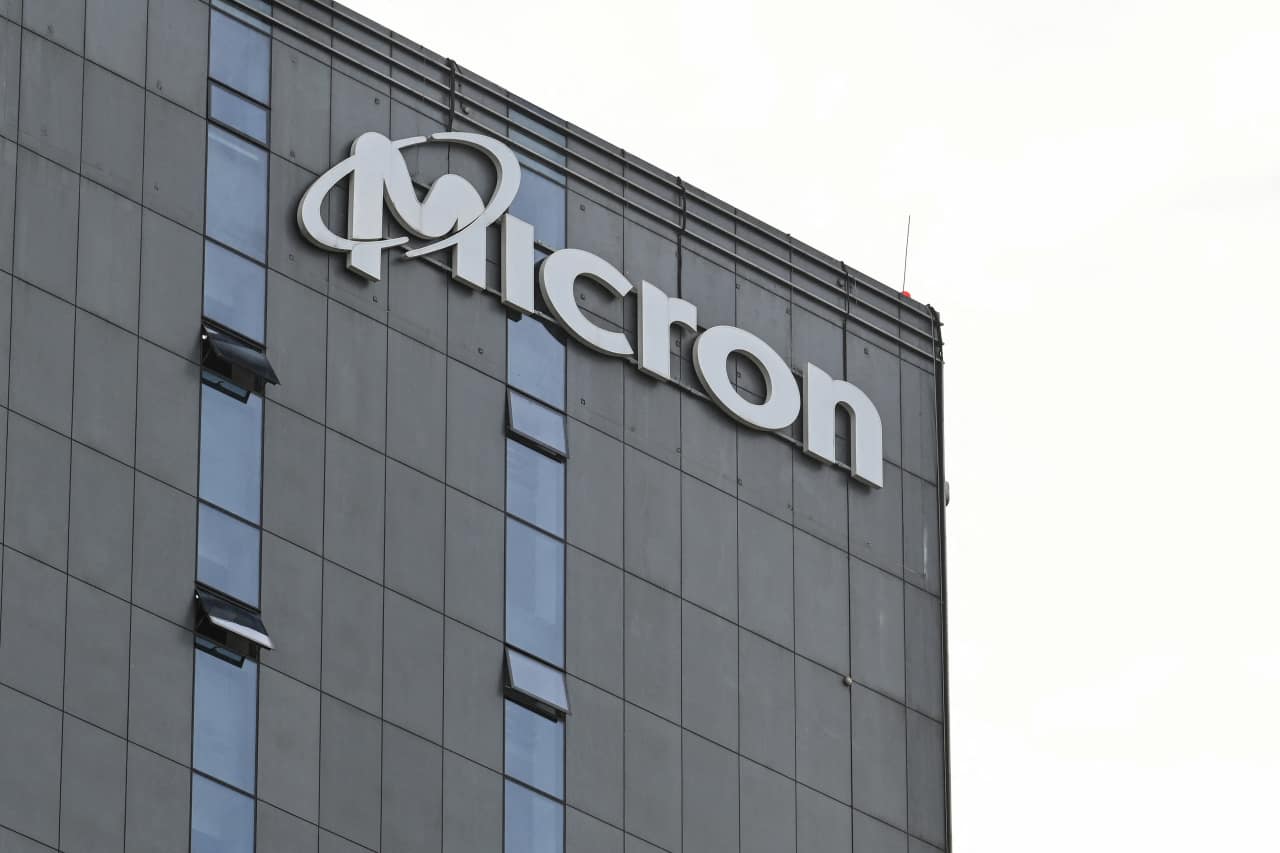
Image: courtesy of Market Watch
Micron's Margin King Status: Is the Cyclical Chip Industry Finally Breaking Free?
Micron Technology, a cornerstone of the memory chip industry, is projected to achieve unprecedented profitability in 2026, positioning it as the second most profitable U.S. company behind only Nvidia and Google. This dramatic financial turnaround is fueled by surging demand for high-performance memory chips, critical for artificial intelligence infrastructure, and a strategic shift by Micron towards long-term customer agreements. The company's gross margin has soared, reaching 84.9% in the third fiscal quarter of 2026, far surpassing previous records and analyst expectations.
Outlook
Background
The memory chip industry has long been characterized by extreme volatility, with periods of high demand and soaring prices often followed by oversupply, price crashes, and significant losses for manufacturers. Companies like Micron, which produce dynamic random-access memory (DRAM) and NAND flash memory, have historically seen their financial fortunes swing wildly with market cycles.
However, the advent of artificial intelligence has introduced a new, insatiable demand for high-bandwidth memory (HBM) and other advanced memory solutions. AI models require vast amounts of data to be processed at incredible speeds, making memory chips a bottleneck in many computing systems. This has created an urgent need for specialized, high-performance memory, allowing manufacturers to command premium prices.
Micron's financial results for the third fiscal quarter of 2026 underscore this shift. The company reported a net income of $28.24 billion, or $24.46 per share, a staggering increase from $1.89 billion, or $1.68 per share, in the same period a year earlier. Its gross margin, a key measure of profitability, jumped to an extraordinary 84.9% from 74.9% in the prior quarter and 39% in the third quarter of 2025. This performance not only exceeded analyst estimates but propelled Micron's market capitalization past $1 trillion. CEO statements confirmed that these gains are, in part, due to SCAs that establish 'floor prices' ensuring robust gross margins, 'well above our peak quarterly margins in any past cycle.' This suggests a deliberate strategy to re-engineer the company's financial stability.
See also
Precedents
The memory chip sector's history is a repeating pattern of feast and famine. When demand for computing devices or new technologies surges, memory prices climb, leading chipmakers to invest heavily in expanding production capacity. This often results in an eventual oversupply, driving prices down sharply and leading to periods of significant losses, even for industry leaders. This cyclicality is often referred to as the 'silicon cycle' or 'memory cycle.'
For instance, during the dot-com boom of the late 1990s and early 2000s, memory demand spiked, only to collapse soon after. Similar patterns were observed with the rise of personal computers, smartphones, and data centers. Companies like Micron have had to navigate these swings, often relying on cost-cutting and innovation to survive downturns. The introduction of new memory technologies or manufacturing processes typically offers a temporary advantage, but competitors quickly catch up, restoring price pressure.
Micron's current strategy of locking in long-term deals with price bands represents a significant departure from this historical norm. Traditionally, memory sales have been transacted on a short-term, spot-market basis, leaving companies vulnerable to rapid price fluctuations. If successful, these SCAs could fundamentally alter the industry's economic structure, moving it away from pure commodity pricing towards a more stable, value-driven model, particularly for high-end AI memory.
Micron's projected profitability is more than just a win for its shareholders; it signals a potential reordering of power and economics within the entire semiconductor industry. For years, the 'picks and shovels' companies — those providing the foundational components like memory — have often seen their profits squeezed compared to the companies designing the most advanced processors or software. Micron's ascent to near the top of the profitability ranks, alongside giants like Nvidia and Google, indicates a dramatic shift in where value is being captured in the AI ecosystem.
This shift has several broader consequences. For consumers, it could mean that the cost of advanced AI capabilities, which rely heavily on high-performance memory, may remain elevated. For other technology companies, particularly those building AI infrastructure, it highlights the increasing cost and strategic importance of memory, potentially influencing their hardware procurement strategies and internal R&D investments.
Furthermore, if Micron's long-term agreement strategy proves sustainable, it could inspire other memory manufacturers to adopt similar models, potentially leading to a more stable, less volatile memory market overall. This would have profound implications for capital allocation, research and development cycles, and the long-term financial health of an industry that underpins virtually all modern technology. The question is whether the extraordinary demand from AI is strong enough to permanently break the old cycle, or simply push the next downturn further out.
Scenarios
AnalysisSeveral potential outcomes could unfold from Micron's current trajectory:
* A New Era of Stability for Memory: If Micron's strategic customer agreements (SCAs) successfully lock in high margins and stable demand, it could fundamentally re-engineer the memory market. This implies a future where memory manufacturers experience less severe cyclical downturns, allowing for more consistent investment in R&D and manufacturing capacity. This outcome would benefit long-term investors and potentially lead to more predictable innovation cycles within the industry. The CEO's confidence in floor prices 'well above our peak quarterly margins in any past cycle' suggests this is a deliberate, structural goal.
* Accelerated Competition and Innovation: Micron's remarkable profitability could spur aggressive competition from rivals like Samsung and SK Hynix. These companies might intensify their own R&D efforts in high-bandwidth memory (HBM) and other AI-specific memory solutions, potentially leading to faster technological advancements and, eventually, increased supply. While this could initially benefit the broader AI industry with more options, it also carries the risk of eventually eroding Micron's premium pricing power if supply catches up to or exceeds demand.
* Shift in AI Hardware Economics: The high cost and critical importance of memory chips, highlighted by Micron's margins, could force AI hardware developers to optimize their designs even further for memory efficiency. This might lead to innovations in memory architecture or software algorithms that reduce memory footprint, potentially impacting the long-term demand dynamics for HBM and other specialized memory types. It could also encourage more vertical integration, where large tech companies might consider investing directly in memory production or co-developing chips with manufacturers to secure supply and manage costs.
* Regulatory Scrutiny: As memory becomes an increasingly critical and profitable component for AI, and as a few players dominate the market, there is a speculative possibility of increased regulatory scrutiny. Governments might examine pricing practices or market concentration if memory costs are perceived to be hindering AI innovation or creating unfair competitive advantages. This is a longer-term risk, but one that could emerge if the current pricing power persists.
Timeline
2025-08
Micron Q4 2025 Revenue
Micron reported revenue of $11.32 billion for its fourth fiscal quarter of 2025, showing early signs of recovery in the memory market.
2025-11
Micron Q1 2026 Revenue
The company's revenue increased to $13.64 billion for the first fiscal quarter of 2026, indicating continued growth in demand.
2026-02
Micron Q2 2026 Revenue
Revenue surged to $23.86 billion in the second fiscal quarter of 2026, as AI demand began to significantly impact memory chip sales.
2026-05
Micron Q3 2026 Revenue
Micron's revenue reached $41.46 billion for the third fiscal quarter of 2026, demonstrating accelerating growth.
2026-06-28
Micron Q3 2026 Earnings Report and Strategic Announcements
Micron announced its Q3 2026 earnings, reporting a net income of $28.24 billion and a gross margin of 84.9%. The company also confirmed its strategy of using 'strategic customer agreements' (SCAs) with price bands to secure long-term high margins, and its market capitalization surpassed $1 trillion. The company was projected to be more profitable than any U.S. company except Nvidia and Google.
2026-06-29
Market Reaction and Analyst Re-evaluation
Following Micron's earnings report yesterday, the market continues to absorb the implications of its unprecedented profitability and strategic shift. Analysts are re-evaluating long-term forecasts for Micron and the broader memory chip industry, considering the potential for a new, more stable market structure.
Frequently Asked Questions
Strategic customer agreements (SCAs) are long-term deals Micron is striking with its major customers, particularly those in the AI sector. Unlike traditional short-term memory chip sales, these agreements include pre-negotiated price bands, which means there's a 'floor price' that ensures Micron maintains a very robust gross margin. This is crucial because it helps to stabilize revenue and profitability, protecting the company from the dramatic price drops that have historically plagued the memory chip industry during periods of oversupply.
Discussion
Be the first to share your thoughts.