
Investors can expect continued scrutiny of Wamco's operational integrity and fund performance in the wake of its $100 million settlement. The broader market for closed-end bond funds will likely remain sensitive to Federal Reserve interest rate policy and inflation data. For Wamco's funds specifically, the market will be weighing the removal of legal uncertainty against lingering reputational concerns and the fundamental value of their underlying bond portfolios. This dynamic could lead to a gradual re-evaluation of these funds, but any significant shift in their discounted pricing will likely be incremental rather than sudden.
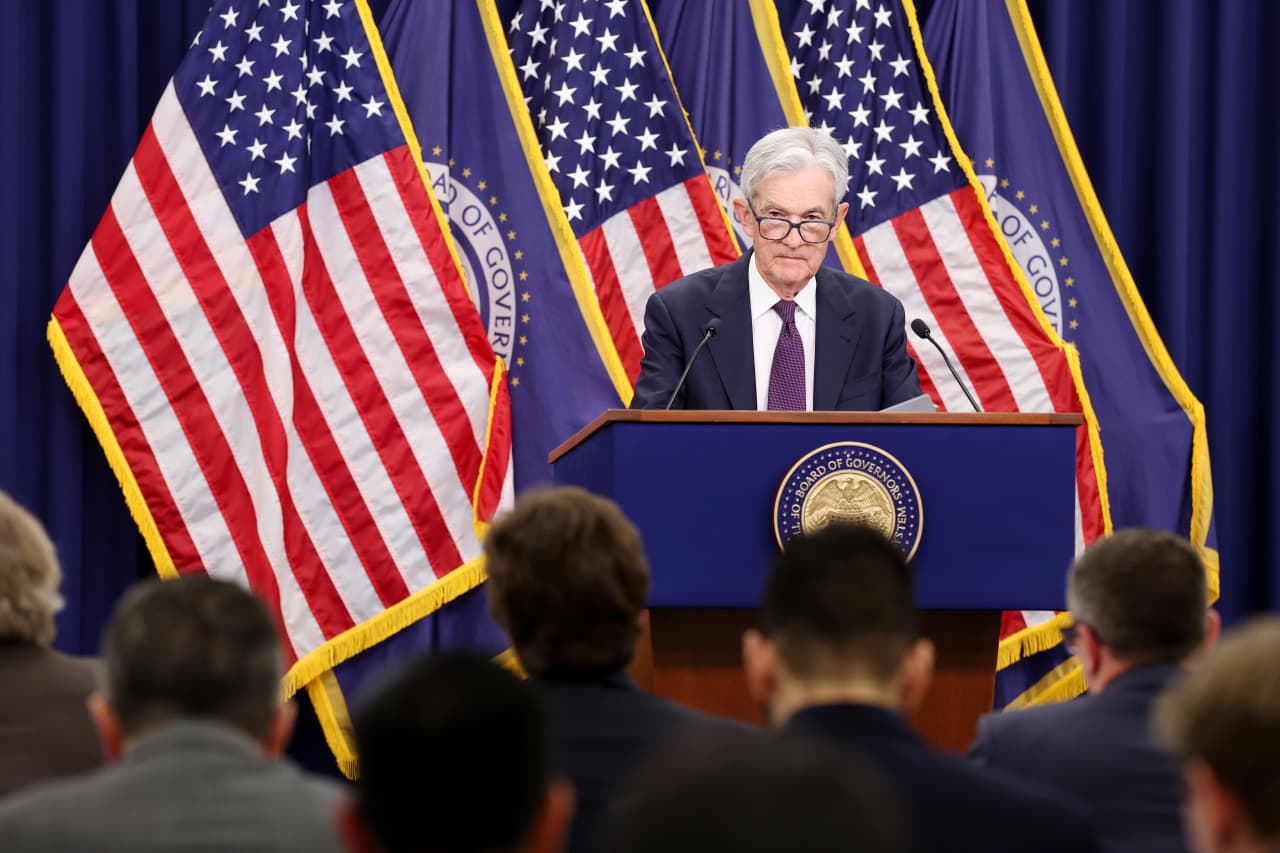
Image: courtesy of Market Watch
Wamco's Scandal-Hit Bond Funds: A Potential Value Play Emerges After $100 Million Settlement
Discounted closed-end bond funds, particularly those managed by Wamco, are drawing attention from some investors despite the firm's recent $100 million settlement of a regulatory probe. While professional advisors remain cautious, the current undervaluation of these funds, partly driven by negative sentiment and rising interest rates, suggests a potential investment opportunity for those willing to conduct thorough due diligence and accept higher risk.
Outlook
Background
The investment landscape for bond funds has been complex, especially for closed-end funds (CEFs). These funds issue a fixed number of shares that trade on an exchange, much like stocks, and their market price can differ significantly from the net asset value (NAV) of their underlying holdings. When market prices fall below NAV, the fund is said to be trading at a discount.
Sentiment toward CEFs, particularly those focused on bonds, took a hit when the Federal Reserve, under Chairman Jerome Powell, began raising interest rates to combat inflation. Higher interest rates typically reduce the value of existing bonds, which carry lower fixed rates, and can make bond funds less attractive. This broad market pressure has contributed to many bond CEFs trading at discounts.
Adding a layer of specific complexity to Wamco's funds is the company's recent legal troubles. Wamco, a prominent asset manager, settled a probe for $100 million related to Ken Leech, as confirmed by Pensions & Investments on June 28, 2026. This settlement, while resolving a significant legal overhang, marked the firm as 'scandal-hit,' further dampening investor confidence and likely contributing to deeper discounts on its funds. The combination of industry-wide headwinds and company-specific reputational damage has created a situation where Wamco's bond funds are seen by some as potentially undervalued, presenting a contrarian investment opportunity.
Precedents
History suggests that funds trading at significant discounts due to temporary negative sentiment or company-specific issues can sometimes present attractive entry points. In the past, periods of market distress or isolated corporate scandals have led to assets being sold off indiscriminately, often pushing their prices below their intrinsic value. When the underlying fundamentals remain sound and the negative catalyst is resolved or fades, these discounts can narrow, leading to capital appreciation for investors who bought in at the lower price.
For closed-end funds, the discount to Net Asset Value (NAV) often widens during periods of market uncertainty, rising interest rates, or when there are questions about the fund's management or strategy. Conversely, these discounts tend to narrow when market conditions stabilize, interest rate expectations become clearer, or when the fund demonstrates strong performance or management changes that restore confidence.
The challenge, however, lies in distinguishing between a temporary, sentiment-driven discount and one that reflects fundamental problems with the fund's holdings, management, or the broader market. The 'scandal-hit' label on Wamco's funds introduces a reputational risk that can take longer to dissipate than a purely economic downturn. Historically, firms recovering from significant probes or legal issues often face a prolonged period of investor skepticism, even after a settlement is reached. The market may demand a higher 'risk premium' before fully re-embracing the firm's offerings. Therefore, while the potential for a discount to narrow exists, the speed and extent of that narrowing are heavily influenced by how effectively Wamco can rebuild trust and demonstrate consistent performance moving forward.
The situation with Wamco's discounted bond funds matters because it highlights a classic tension in financial markets: the conflict between short-term negative sentiment and long-term intrinsic value. For individual investors, it represents a potential opportunity to acquire income-generating assets at a reduced price, but it also carries the inherent risks of investing in a company recently embroiled in a high-profile probe.
For Wamco itself, successfully navigating this period could be crucial for its long-term reputation and its ability to attract and retain assets. If its funds perform well and the discounts narrow, it could signal to the market that the firm is effectively moving past its scandal and rebuilding trust. Conversely, if the discounts persist or deepen, it could prolong the reputational damage and make it harder for Wamco to compete.
More broadly, this scenario offers a case study in market efficiency — or inefficiency. Are markets correctly pricing in all the risks associated with Wamco's past, or are they overreacting, creating a temporary mispricing? The answer has implications for how investors approach 'blood in the streets' opportunities and how they weigh company-specific issues against broader market trends like interest rate policy. It forces a conversation about the role of due diligence, risk tolerance, and the often-divergent perspectives of institutional advisors versus individual retail investors.
Scenarios
AnalysisThe current market dynamics and Wamco's specific situation could lead to several distinct outcomes for these discounted bond funds:
1. Discounts Gradually Narrow as Confidence Returns: One possible outcome is that the $100 million settlement acts as a clear line in the sand, allowing Wamco to begin rebuilding its reputation. As the scandal fades from immediate memory and the firm demonstrates stable operations and fund performance, investor sentiment could slowly improve. This, combined with a potential stabilization or even reduction in interest rates by the Federal Reserve, could lead to a gradual narrowing of the discounts on Wamco's closed-end bond funds. Investors who bought in at the wider discounts could see capital appreciation, in addition to the income generated by the bonds. This outcome would validate the 'contrarian' investment thesis, suggesting that the market had overreacted to the negative news.
2. Discounts Persist or Widen Due to Lingering Skepticism and Market Headwinds: Conversely, the reputational damage from the Ken Leech probe and the $100 million settlement could prove to be more entrenched than anticipated. Professional advisors' caution may reflect a deep-seated institutional reluctance to recommend Wamco's funds, limiting new capital inflows. Furthermore, if interest rates remain high or continue to rise, the broader market for bond funds could face renewed pressure, overriding any positive sentiment from Wamco's settlement. In this scenario, the discounts on Wamco's funds could persist or even widen, as investors remain wary or find more attractive alternatives elsewhere. This would mean that the perceived 'value trap' materializes, and early investors may not see the anticipated capital appreciation.
3. Wamco Implements Strategic Changes to Drive Value: Another possibility is that Wamco, facing persistent discounts and investor skepticism, initiates strategic changes to enhance shareholder value. This could involve share buyback programs for its CEFs, tender offers, or even converting some closed-end funds to open-end structures to eliminate the discount mechanism. Such proactive measures, if successful, could directly force a narrowing of the discount regardless of broader market sentiment or interest rates. However, these actions often require significant capital and strategic shifts, and their implementation is not guaranteed.
4. Market Stagnation and Continued Uncertainty: A less definitive outcome could see Wamco's funds remain in a state of extended uncertainty. With the settlement behind them, but no strong catalysts for either significant discount narrowing or widening, the funds might simply track the broader bond market with their discounts largely intact. This 'wait and see' period could last until a clearer trend emerges in either Wamco's operational performance, its reputational standing, or the macro interest rate environment.
Timeline
2023-02-08
Western Asset Publishes Insights on Segmentation and Horizons
Western Asset, a global asset management firm, published insights related to segmentation and investment horizons, reflecting ongoing analysis within the bond market. While not directly related to the probe, it indicates the firm's active research in the bond space.
2023-02-27
Western Asset Publishes Decarbonization Insights
Western Asset published an article titled 'Decarbonize to Survive,' exploring approaches to assess risks for corporate bond issuers related to carbon emissions. This highlights the firm's engagement with ESG factors in bond analysis.
2026-06-27
Reports Emerge on Discounted Bond Fund Opportunities
Initial reports and market sentiment analysis began to circulate, suggesting that discounted bond funds, especially those from 'scandal-hit' Wamco, might present an investment opportunity. This marks the beginning of the public discussion around this specific value proposition.
2026-06-28
Wamco Settles Ken Leech Probe for $100 Million
Pensions & Investments confirmed that Wamco settled a probe involving Ken Leech for $100 million. This settlement formally resolves a significant legal and reputational issue for the firm, removing a major source of uncertainty.
2026-06-28
Cohen & Steers Declare CEF Distributions
Cohen & Steers Closed-End Funds declared distributions for July, August, and September 2026, as reported by Finansavisen. This indicates ongoing activity and regular payouts within the broader closed-end fund market, providing context for Wamco's situation.
Frequently Asked Questions
A discounted bond fund typically refers to a closed-end fund (CEF) that invests in bonds, where the market price of its shares is lower than the net asset value (NAV) of the bonds it holds. The NAV is the total value of all the fund's assets minus its liabilities, divided by the number of outstanding shares. A discount means you can buy the fund's underlying assets for less than their calculated worth.
Discussion
Be the first to share your thoughts.