
The coming months will be critical for Xiaomi's electric vehicle division as it works to integrate the new-generation SU7 and push its broader EV portfolio, including the SU7 Ultra and YU7 SUV. The company's ability to maintain sales momentum will hinge on how effectively the refreshed SU7 captures market interest and whether the newer SUV models can expand its appeal beyond the initial sedan success. Investors and competitors will be watching closely for signs of sustained growth, particularly as Xiaomi aims for a total of 550,000 EV deliveries by the end of 2026. The performance of these newer models and the refreshed SU7 will determine if Xiaomi can transition from an impressive market disruptor to a consistent, long-term player in the global EV landscape.
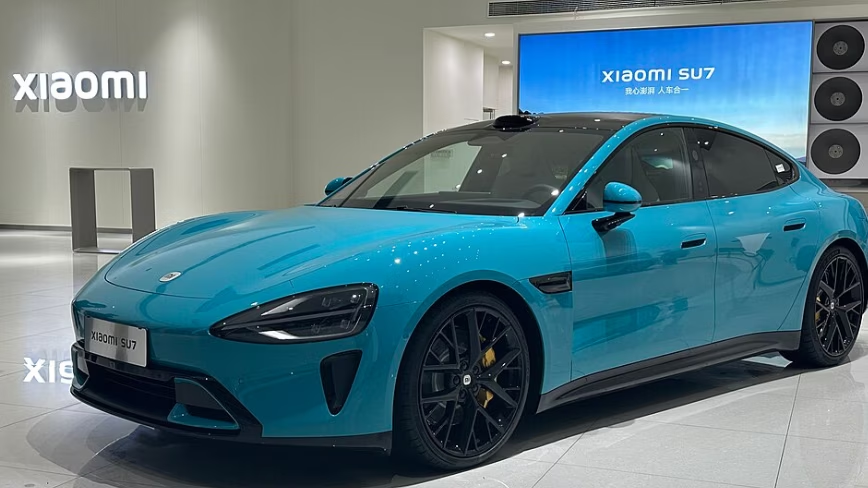
Image: courtesy of Thenextweb
Xiaomi's EV Ambitions Tested as SU7 Hits Half-Million Deliveries Amidst Rapid Refresh
Xiaomi, the consumer electronics giant, has reached a significant milestone, delivering over 500,000 units of its SU7 electric sedan since its launch in April 2024. This achievement, confirmed in August 2026, positions Xiaomi as a formidable new entrant in China's crowded electric vehicle market. However, the rapid pace of this success is matched by the equally rapid evolution of its product line: the first-generation SU7 concluded production after 381,000 deliveries, making way for a refreshed model launched in April 2026. While overall EV deliveries for Xiaomi continue to climb, the initial SU7 model saw a substantial sales decline in 2026, highlighting the intense competition and fast-moving consumer preferences that define the sector.
Outlook
Background
Xiaomi officially declared its intent to manufacture vehicles on March 30, 2021, a move that surprised many in the automotive industry. Just three years later, the company launched its first electric sedan, the SU7, on March 28, 2024, with customer deliveries beginning almost immediately on April 3, 2024. This swift transition from concept to mass production was a clear statement of intent, leveraging Xiaomi's extensive manufacturing and supply chain expertise gained from its consumer electronics business. The SU7 quickly garnered attention for its sleek design, competitive pricing, and smart features, drawing a loyal customer base eager for a tech-infused driving experience.
The initial market reception was strong, but the Chinese electric vehicle sector is notoriously competitive, characterized by aggressive pricing, rapid technological advancements, and a constant stream of new models from both established automakers and tech-focused entrants. This fierce environment means that even successful models face pressure to innovate or risk quickly becoming outdated. Xiaomi's decision to wrap up production of the first-generation SU7 after delivering over 381,000 units and launch a refreshed model in April 2026, just two years after the original, is a direct response to these market dynamics. It suggests a strategic understanding that sustained success requires continuous adaptation and a willingness to quickly iterate on product offerings, even when initial sales are robust.
See also
Precedents
The trajectory of Xiaomi's entry into the EV market echoes patterns seen with other tech giants venturing into new, hardware-intensive sectors. Companies like Apple, for instance, have consistently demonstrated the power of brand loyalty, design prowess, and a deep understanding of consumer electronics to create demand in new categories. However, the automotive industry presents unique challenges, including complex supply chains, stringent safety regulations, and long product development cycles, which often prove difficult for newcomers to master. Tesla, another notable disruptor, also faced significant 'production hell' early in its journey, despite its technological edge.
In China specifically, the EV market has seen numerous players emerge, from established state-backed enterprises to nimble startups. Success is often fleeting, with many brands struggling to scale or differentiate themselves amidst intense price wars and rapid technological obsolescence. The ability to quickly refresh models, as Xiaomi has done with the SU7, is a historical hallmark of the consumer electronics industry, but it is a relatively new and aggressive strategy in the automotive world. This approach, while risky, allows Xiaomi to maintain a cutting-edge product offering, a critical factor in a market where consumers expect the latest technology and features. The challenge, historically, lies in whether a company can maintain profitability and quality control while accelerating its product cycles to such an extent.
Xiaomi's performance in the electric vehicle space is a bellwether for the broader tech-to-auto convergence. The company's ability to transition from smartphones and smart home devices to complex automotive manufacturing and sales in such a short timeframe challenges traditional industry assumptions about barriers to entry. Its rapid delivery numbers, reaching half a million SU7s, demonstrate that brand recognition and a strong consumer tech ecosystem can translate into significant traction in a new, capital-intensive sector.
However, the simultaneous decline in first-generation SU7 sales in 2026, even as total EV deliveries for Xiaomi increased, highlights the brutal reality of the Chinese EV market. It is a market where initial success does not guarantee longevity, and where product lifecycles are compressing at an unprecedented rate. For consumers, this means more choice and faster access to advanced technology, but for manufacturers, it necessitates constant innovation and immense capital expenditure. Xiaomi's strategy of quickly refreshing its flagship model and expanding its SUV lineup is a high-stakes play to stay relevant and competitive. Its success or failure will offer crucial lessons for other tech companies eyeing the automotive sector and will reshape expectations for how quickly car models can and should evolve in the age of software-defined vehicles.
Scenarios
AnalysisOne potential outcome is that Xiaomi successfully leverages its brand loyalty and aggressive product refresh cycle to establish itself as a top-tier EV manufacturer in China. The strong early orders for the new-generation SU7 and the expansion into new segments with the SU7 Ultra and YU7 SUV suggest a strategic path to sustained growth. If these new models resonate with consumers, Xiaomi could not only meet its 2026 delivery target of 550,000 vehicles but also solidify its market share against formidable domestic and international competitors. This would validate its 'tech company builds cars' model and potentially encourage other electronics firms to follow suit.
Conversely, the rapid refresh cycle and aggressive expansion could strain Xiaomi's operational capabilities and financial resources. While the company has shown impressive speed, maintaining quality control, managing a diverse supply chain for multiple models, and navigating intense pricing pressures could prove challenging. If the new-generation SU7 fails to maintain the momentum of the original, or if the SUV models do not gain significant traction, Xiaomi could find itself overextended. This might lead to slower growth, increased discounting, or even a re-evaluation of its ambitious EV targets, ultimately ceding ground to more established players or other fast-moving startups in the Chinese market. The decline in first-gen SU7 sales in 2026, even amidst overall growth, serves as a reminder of the volatility inherent in this sector.
Timeline
Frequently Asked Questions
Discussion
Be the first to share your thoughts.