
Expect a deeper dive into the University of Maryland study that identified this alarming trend, examining the specific health risks posed by wildfire smoke to unborn babies. We will explore how decades of regulatory success in reducing human-caused emissions are now being overshadowed by a new, more pervasive threat. The article will outline the challenges this presents for public health officials and policymakers, who must now contend with a form of air pollution that is harder to control through traditional means. Finally, we will consider the broader implications for environmental justice, as vulnerable communities often bear the brunt of both climate impacts and air quality degradation.
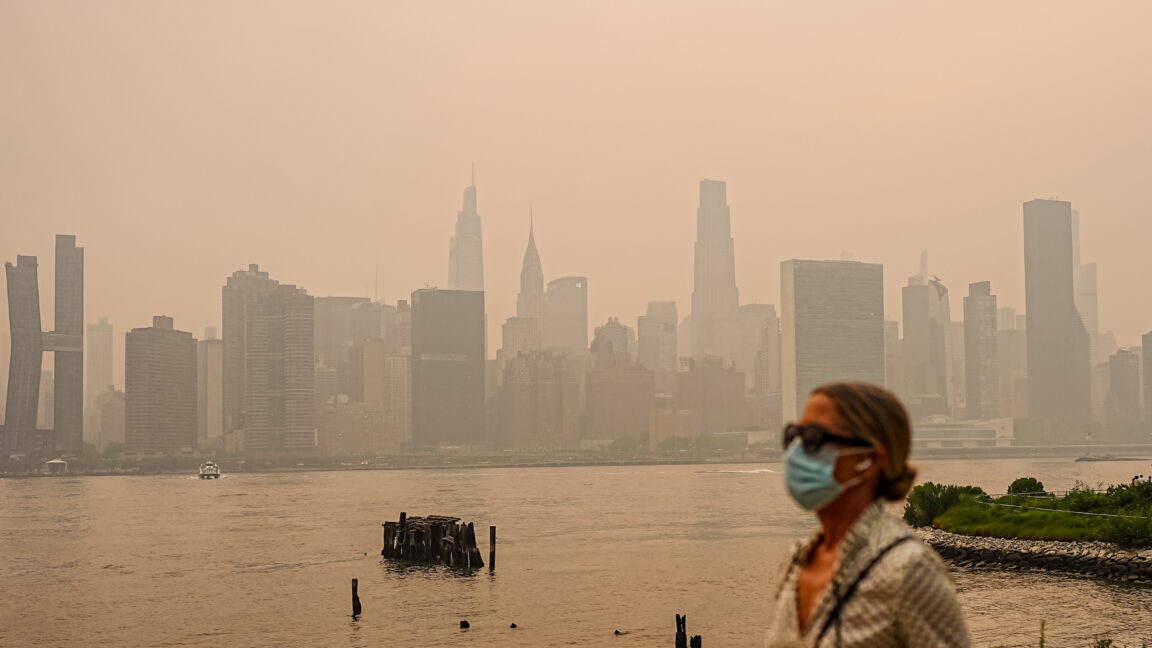
Image: courtesy of Ars Technica
Wildfire Smoke Now a Bigger Prenatal Threat Than Car Exhaust and Industrial Pollution
For decades, environmental regulations chipped away at the dangers posed by car exhaust and industrial emissions, making the air safer for pregnant people and unborn babies. But that progress is now being undone. Wildfire smoke, fueled by a changing climate, has surpassed traditional human-sourced air pollution as the leading prenatal health threat in the United States, according to new analysis. This reversal means expectant parents face a new, escalating risk, with potential consequences ranging from premature births to lifelong respiratory problems for their children. The shift forces a re-evaluation of public health strategies and environmental policy, as a diffuse, climate-driven threat now overshadows the localized pollution sources that agencies once focused on.
Outlook
Background
The air quality in the United States has seen significant improvements since the passage of the Clean Air Act in 1970. This landmark legislation, along with its subsequent amendments, led to stringent controls on emissions from vehicles and industrial facilities. Over the past five decades, combined emissions of six major harmful air pollutants from these human sources have fallen by almost 80 percent, a testament to the effectiveness of targeted regulation. This reduction has had measurable public health benefits, including a decrease in prenatal exposure to these harmful substances.
However, a new study from the University of Maryland, analyzing data from 2003 to 2019 across the contiguous United States, has revealed a stark reversal in this progress. Researchers found that wildfire smoke is now responsible for more unhealthy air days for unborn babies than all human-sourced emissions combined. This means that despite the success in curbing pollution from factories and cars, the increasing frequency and intensity of wildfires—driven by warmer, drier conditions linked to climate change—are now exposing expectant parents and their fetuses to dangerous levels of fine particulate matter. The shift represents a fundamental change in the nature of the air pollution threat, moving from largely localized industrial and vehicular sources to a widespread, climate-driven phenomenon.
Precedents
The history of air pollution control in the U.S. is largely a story of identifying specific sources, setting limits, and enforcing compliance. From the smog of Los Angeles in the mid-20th century to industrial effluence in the Rust Belt, regulators focused on measurable, controllable emissions. This approach yielded significant results, leading to cleaner skies and improved public health outcomes, particularly for vulnerable groups like children and pregnant people.
Historically, concerns about prenatal health and air quality focused on pollutants like lead, carbon monoxide, sulfur dioxide, and particulate matter from industrial processes and vehicle exhaust. Studies consistently linked exposure to these substances during pregnancy with adverse outcomes, prompting stricter regulations. For example, the removal of lead from gasoline and paint had profound positive impacts on child development.
However, the rise of large-scale wildfires introduces a different challenge. While wildfires have always been a natural part of many ecosystems, their increasing intensity, duration, and geographic spread are not. The smoke they produce contains a complex cocktail of fine particulate matter, carbon monoxide, volatile organic compounds, and other toxic substances. Unlike a power plant or a vehicle, a wildfire cannot be 'regulated' in the same way. Its emissions are diffuse, intermittent, and dependent on weather patterns and fuel availability, all of which are being exacerbated by climate change. This marks a departure from the historical pattern of air quality management, demanding new tools and strategies that extend beyond traditional emission controls.
This shift in the dominant prenatal air pollution threat changes almost everything about how public health officials and environmental agencies approach air quality. For decades, the focus was on industrial smokestacks and tailpipes. Now, the enemy is often a distant plume of smoke, carried hundreds or thousands of miles by wind, unpredictable in its timing and intensity.
The real stakes are human. For expectant parents, the news means a new layer of anxiety and risk. Exposure to wildfire smoke during pregnancy significantly increases the likelihood of adverse birth outcomes, including premature birth and low birth weight. These conditions are not just immediate concerns; they raise a child's risk of early death, chronic respiratory conditions like asthma, and other long-term health problems. This translates into higher healthcare costs, reduced quality of life, and a potential widening of health disparities, as lower-income communities and communities of color are often disproportionately affected by both wildfires and the lack of resources to mitigate exposure.
For policymakers, the challenge is profound. Traditional air quality models and regulatory frameworks are not designed to effectively manage climate-driven events like wildfires. This necessitates a fundamental re-thinking of environmental policy, moving beyond point-source controls to broader climate mitigation and adaptation strategies. It also calls for better public communication and protective measures for pregnant individuals in affected areas, which may include enhanced air filtration, access to clean air shelters, and more robust monitoring systems. The scientific confirmation of this new dominant threat means that inaction is no longer tenable; the health of future generations depends on a rapid and comprehensive response.
Scenarios
AnalysisThe revelation that wildfire smoke now poses a greater prenatal threat could trigger several key shifts in policy and public health strategy.
One potential outcome is a re-prioritization of public health messaging and protective measures. Health agencies, particularly in states prone to wildfires, may begin to issue more specific guidance for pregnant individuals, advising on indoor air quality, the use of N95 masks, and when to seek medical attention during smoke events. We could see increased investment in 'clean air' shelters or community centers equipped with advanced air filtration during peak wildfire seasons. This would represent a proactive shift from general air quality warnings to targeted prenatal health interventions.
Another outcome may involve a push for new or revised air quality standards and monitoring techniques. Current regulations under the Clean Air Act were primarily designed for industrial and vehicular pollutants. While fine particulate matter (PM2.5) from smoke is covered, the episodic, widespread nature of wildfire smoke may prompt calls for more dynamic monitoring systems and perhaps even specific standards or advisories tailored to wildfire events. This could lead to a more nuanced approach to air quality alerts, distinguishing between industrial smog and wildfire smoke, and providing specific health recommendations for each.
Furthermore, this data could intensify calls for more aggressive climate change mitigation policies. Since wildfires are exacerbated by warmer, drier conditions, the long-term solution lies in reducing the emissions that drive climate change. The direct link to prenatal health may add urgency to these efforts, framing climate action not just as an environmental issue but as a critical public health imperative for the most vulnerable. This could influence legislative priorities, funding for renewable energy, and land management practices aimed at reducing fire risk.
Finally, this information may also lead to increased research into the specific long-term health impacts of prenatal wildfire smoke exposure. Understanding the exact mechanisms and full spectrum of health consequences could inform more precise medical guidelines and interventions, shaping the future of maternal and child health care in affected regions.
Timeline
1970
Clean Air Act Passed
The landmark U.S. federal law established comprehensive regulations to control air pollution from various sources, leading to significant reductions in emissions from vehicles and industries over subsequent decades.
2003-2019
Study Period for Air Pollution Analysis
Researchers at the University of Maryland analyzed data across the contiguous United States, tracking changes in air pollution from human sources and wildfire smoke, and their impact on prenatal health.
2026-08-16
New Study Reveals Wildfire Smoke as Primary Prenatal Threat
Analysis, reported by Inside Climate News and other outlets, confirmed that wildfire smoke now causes more unhealthy air days for unborn babies than traditional human-sourced air pollution, reversing decades of progress.
Frequently Asked Questions
The primary concern is fine particulate matter, known as PM2.5. These microscopic particles are small enough to be inhaled deep into the lungs and can even enter the bloodstream. Wildfire smoke also contains other toxic components like carbon monoxide, volatile organic compounds, and polycyclic aromatic hydrocarbons, all of which can be harmful during pregnancy.
Discussion
Be the first to share your thoughts.