
The integration of artificial intelligence into the study of lost languages is still in its early stages, but its trajectory suggests a future where AI acts as a crucial partner for human linguists and archaeologists. We can expect continued refinement of AI models, focusing on increasing their accuracy and developing more robust methods for cross-referencing and validating their interpretations against historical and archaeological context. This will likely lead to a deeper, albeit still debated, understanding of ancient civilizations. However, the path will not be linear; the limitations of available data for many dead languages will continue to present significant hurdles, meaning AI's success will be uneven across different linguistic challenges.
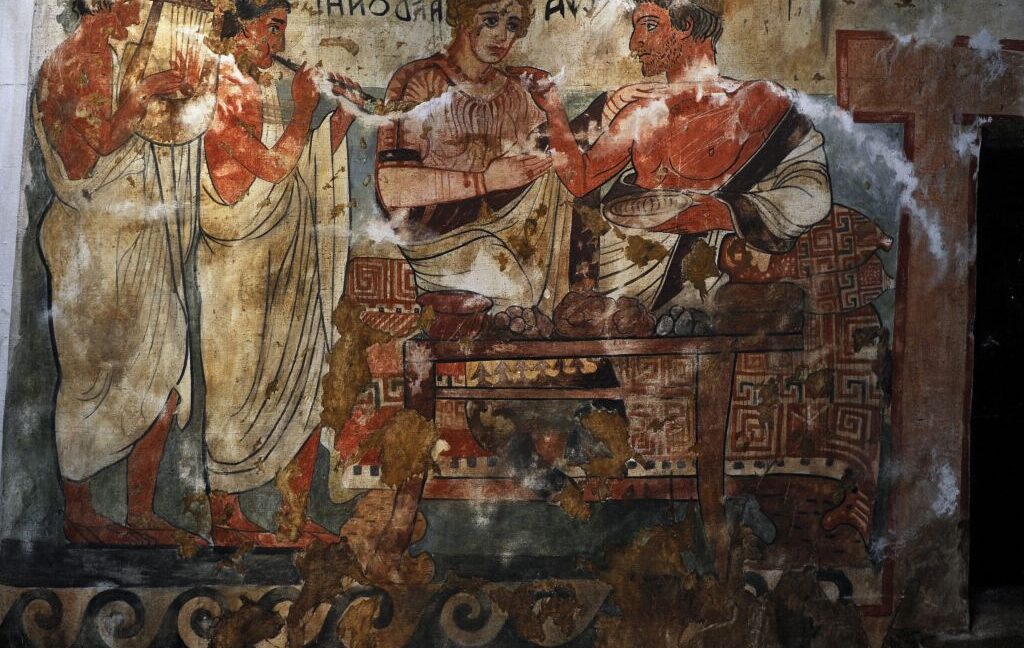
Image: courtesy of Ars Technica
Beyond the Breakthrough: The Unseen Challenges of AI Deciphering Ancient Tongues
Artificial intelligence has made significant strides in deciphering lost languages, with systems from institutions like MIT's CSAIL demonstrating the ability to unlock ancient texts without prior knowledge of linguistic relationships. While AI excels at identifying patterns and performing cross-lingual transfer, the fundamental challenge remains: how to reliably verify these automated decipherments when no living speakers or direct translations exist. This tension between AI's analytical power and the inherent limitations of historical linguistics is reshaping the field, positioning AI as a powerful hypothesis-generating tool for human experts rather than a definitive translator.
Outlook
Background
For centuries, the decipherment of lost languages has been one of humanity's most intricate intellectual puzzles, often requiring a unique blend of linguistic genius, historical insight, and sheer luck. The breakthrough in understanding Egyptian hieroglyphs, for instance, hinged on the discovery of the Rosetta Stone, which provided a known Greek translation alongside the unknown script. Without such a 'crib sheet,' progress is painstakingly slow, often relying on identifying repetitive patterns, proper nouns, and subtle connections to related, living languages.
Enter artificial intelligence, which excels at pattern recognition and processing vast amounts of data. Recent developments, particularly from researchers at MIT’s Computer Science and Artificial Intelligence Laboratory (CSAIL) and Google's AI lab, have introduced systems capable of deciphering lost languages without the explicit need for prior knowledge about the language's family tree. This represents a significant shift from traditional methods. These AI models employ techniques such as cross-lingual transfer, where they learn structures and patterns from well-understood languages and apply them to unknown ones, or by identifying statistical regularities within the lost language itself to infer grammatical rules and vocabulary. The goal is not just to translate words, but to reconstruct the underlying linguistic system.
Confirmed examples of progress include AI assisting in the decoding of 4,000-year-old Akkadian and Sumerian texts. Languages like Etruscan, which has a partial vocabulary but whose grammar remains largely elusive, are precisely the kind of challenge where AI is now being deployed. The core promise is that AI can 'supercharge' the hunches of linguists, allowing them to test hypotheses at a scale and speed previously impossible. However, the critical question of verification — how to definitively know if an AI's decipherment is correct — remains a central, unresolved issue. Without a clear external reference, validating these results against historical or archaeological context becomes paramount, and often, the most difficult part of the process.
Precedents
The history of decipherment is filled with tales of intellectual breakthroughs, but also of prolonged struggles and false starts. The decipherment of Linear B, for instance, by Michael Ventris in the mid-22th century, involved years of meticulous analysis of recurring patterns and syllabic structures, eventually confirmed by the discovery of new tablets that aligned with his proposed Greek-based system. Mayan hieroglyphs, once considered purely ideographic, were gradually understood as a complex logographic and syllabic system through decades of work by multiple scholars.
A common thread in these successes is the eventual emergence of corroborating evidence, whether through bilingual texts, internal consistency across a large corpus of inscriptions, or archaeological findings that align with the translated content. The challenge with many truly 'lost' languages, however, is the scarcity of such external anchors. Often, the texts are short, repetitive, and lack context. This is where AI faces a similar, if amplified, hurdle. While AI can process data faster and identify patterns humans might miss, the fundamental requirement for external validation has not changed. Without a 'Rosetta Stone' equivalent, or a significant body of text that exhibits internal logical consistency after translation, any decipherment, human or machine-generated, remains a strong hypothesis rather than a confirmed truth. The historical pattern suggests that while new tools can accelerate the generation of hypotheses, the ultimate confirmation still relies on a convergence of evidence.
The ability to read lost languages is more than an academic curiosity; it is a direct line to the thoughts, beliefs, and daily lives of ancient peoples. Each deciphered script opens a new window into human history, revealing previously unknown aspects of art, religion, politics, trade, and science. The stakes are profound: unlocking these texts could rewrite our understanding of early civilizations, their interactions, and the spread of ideas across continents.
For archaeology, decipherment provides context to artifacts and ruins, transforming mute objects into narrative elements of a larger story. For anthropology, it offers insights into cultural practices and social structures that are otherwise inaccessible. From an economic perspective, understanding ancient trade routes or administrative documents can illuminate historical precedents for global commerce and governance.
Furthermore, the application of AI to such a complex problem pushes the boundaries of artificial intelligence itself. It forces the development of more sophisticated algorithms for handling sparse, noisy, and highly contextual data, with potential spillover benefits for other fields requiring complex pattern recognition, from cybersecurity to medical diagnostics. The ultimate consequence is a potential acceleration of human knowledge, allowing us to reconstruct more complete and accurate narratives of our shared past, enriching our understanding of what it means to be human.
Scenarios
AnalysisThe deployment of AI in deciphering lost languages presents several distinct paths forward, each with its own set of challenges and opportunities.
One likely outcome is that AI will become an indispensable tool for generating initial decipherment hypotheses. Linguists, instead of spending years manually sifting through inscriptions for patterns, could use AI to quickly identify potential grammatical structures, root words, and recurring phrases. This approach would significantly accelerate the early stages of analysis, allowing human experts to focus their efforts on evaluating and refining the AI's suggestions, cross-referencing them with archaeological and historical data. In this scenario, AI acts as a sophisticated 'first pass' interpreter, dramatically improving efficiency.
A second possibility involves the development of AI systems capable of self-validation, at least to a certain degree. This might involve AI not only proposing translations but also assessing the internal consistency of its own decipherments across a larger corpus of texts, or even generating predictive models that can be tested against newly discovered inscriptions. While a complete 'Rosetta Stone' equivalent for every lost language is improbable, AI could potentially identify statistically significant correlations between linguistic elements and known cultural practices, offering a form of probabilistic verification. This would require substantial advancements in AI's ability to understand context and nuance, moving beyond pure pattern recognition.
Conversely, it is also possible that the inherent limitations of sparse data for many truly lost languages will become clearer. Some languages may simply lack enough surviving material for even advanced AI to reliably reconstruct their grammar and vocabulary without significant external clues. In this scenario, AI's role might be restricted to assisting with languages that have a relatively robust corpus of texts, or those with some identifiable connections to known language families, leaving the most enigmatic scripts largely untouched. The 'unverifiable results' concern, highlighted by some in the Ars OpenForum, could persist as a fundamental barrier, preventing widespread acceptance of AI-generated decipherments without independent human confirmation.
Timeline
Frequently Asked Questions
Discussion
Be the first to share your thoughts.