
Consumers in Austin and Atlanta should expect to see Waymo's robotaxis available through two separate channels starting in January 2028: the existing Uber app and Waymo's new proprietary application. This dual availability will last until May 2028, when the current contract between Waymo and Uber fully expires, at which point Waymo's service will likely become exclusive to its own app. Uber, for its part, is now free to pursue partnerships with other autonomous vehicle developers to integrate their services onto its platform in these cities. This suggests a more competitive environment for robotaxi services, offering consumers more choices and potentially different pricing structures depending on the provider and platform.
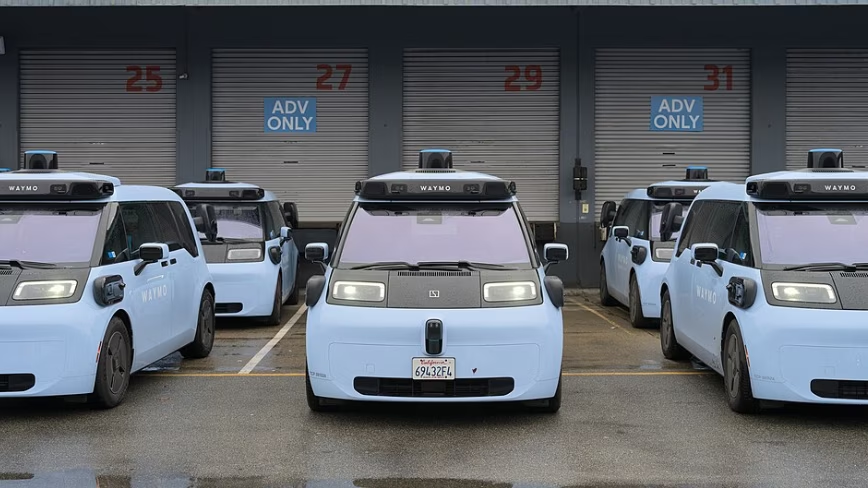
Image: courtesy of Thenextweb
Waymo's Break From Uber Signals New Phase in Robotaxi Race
Waymo, Alphabet's autonomous driving unit, will end its exclusive partnership with Uber for robotaxi services in Austin and Atlanta by launching its own standalone app in January 2028. This move frees Uber to bring other autonomous vehicle providers onto its platform and marks a significant shift from collaboration to direct competition in two key emerging markets for self-driving cars.
Outlook
Background
For the past three years, Waymo has offered its robotaxi services in Austin, Texas, and Atlanta, Georgia, exclusively through the Uber platform. This arrangement, which began around early 2025, allowed Waymo to gain operational experience and reach a large customer base without immediately building out its own consumer-facing infrastructure in those markets. For Uber, it provided access to cutting-edge autonomous vehicle technology, allowing it to offer advanced ride options without the immense capital expenditure of developing its own self-driving fleet.
This wasn't Waymo's first dance with Uber. The companies had a more limited partnership in Phoenix, Arizona, which concluded last month. That earlier collaboration, while smaller in scope, provided a testing ground for how Waymo's vehicles could integrate into a third-party ride-hailing system. The decision to launch a standalone app in Austin and Atlanta reflects Waymo's growing confidence in its technology and its operational capabilities. The company has been steadily expanding its fully driverless operations in cities like Phoenix and San Francisco, where it manages the entire user experience from booking to ride completion. Expanding this direct-to-consumer model to Austin and Atlanta indicates a strategic push to control its own destiny, capturing more of the revenue and customer data directly, rather than sharing it with a platform like Uber.
Precedents
The tech industry is replete with examples of partnerships that eventually morph into competition. Companies often collaborate in nascent markets to accelerate adoption or share the burden of development, only to later diverge as each partner seeks to maximize its own value.
Think of the early days of smartphones: Google's Android operating system powered devices from numerous manufacturers, including Samsung. While they remain partners, Samsung has increasingly developed its own software layers and services, creating a distinct ecosystem that, in some ways, competes with Google's direct offerings. Similarly, Apple and Google, once close collaborators with Google Maps on the iPhone, eventually became direct rivals across various service categories.
In the transportation sector, this pattern is also visible. Ride-hailing companies initially partnered with traditional taxi services or individual drivers before building out their own vast networks. The current Waymo-Uber shift echoes this, as autonomous vehicle developers move from being technology providers to a platform, to becoming direct service providers on or alongside platforms. This evolution often signals a maturing market where the underlying technology is robust enough for independent commercial deployment, and the developers are ready to capture a larger slice of the economic pie. For Waymo, it is about owning the customer relationship and the data that comes with it, much like Google sought to own the search experience or Apple the mobile ecosystem.
This shift is more than just a change in app icon for Waymo users; it represents a critical inflection point in the commercialization of autonomous vehicle technology. For Waymo, it's a declaration of independence and a strategic move to directly monetize its substantial investments in self-driving research and development. By launching its own app, Waymo gains full control over the customer experience, pricing, branding, and, crucially, the invaluable rider data that informs future improvements and expansion strategies. This direct relationship is essential for building a sustainable, scalable business.
For Uber, the end of exclusivity is a forced diversification. While it loses a guaranteed supply of Waymo robotaxis, it gains the flexibility to partner with a broader array of autonomous vehicle companies. This could be a net positive, allowing Uber to hedge its bets across multiple technologies and avoid over-reliance on a single provider. It also positions Uber as a truly 'platform-agnostic' service, capable of integrating whatever autonomous solutions gain traction in different markets. The real stakes here are about market structure: will the future of robotaxis be dominated by a few vertically integrated players like Waymo, or by platform aggregators like Uber that curate services from various providers? This move suggests both models will compete fiercely.
Scenarios
AnalysisOne possible outcome is that Waymo successfully leverages its brand and technology to build a strong direct customer base in Austin and Atlanta, gradually reducing its reliance on third-party platforms. This could lead to a more streamlined user experience for Waymo loyalists and allow the company greater flexibility in how it deploys and manages its fleet.
Another outcome is that Uber, now unconstrained by exclusivity, moves quickly to onboard other autonomous vehicle partners in Austin and Atlanta. This could include companies like Cruise, Zoox, or even newer entrants, creating a multi-vendor robotaxi offering within the Uber app. Such a scenario would maintain Uber's appeal as a comprehensive mobility platform and could intensify competition among AV developers for access to Uber's vast user base.
A third scenario suggests increased price competition for consumers. With multiple robotaxi providers potentially operating through their own apps and possibly via Uber, the fight for market share could lead to more aggressive pricing strategies and promotional offers, particularly in the early stages of direct competition. This could accelerate public adoption of autonomous ride-hailing services, but also pressure the profitability of the operators.
Finally, the market could become more fragmented. Users might find themselves needing multiple apps to access different autonomous vehicle services, depending on availability, pricing, or specific vehicle features. This could introduce a layer of complexity for consumers, though it also offers them greater choice.
Timeline
Early 2025 (Inferred)
Waymo-Uber Exclusivity Begins
Waymo's robotaxi service launches exclusively on the Uber app in Austin and Atlanta, under a three-year agreement.
June 2026
Phoenix Partnership Ends
A more limited partnership between Waymo and Uber in Phoenix, Arizona, concludes.
July 25, 2026
Waymo Notifies Uber
Waymo officially notifies Uber of its intent to launch its own standalone app in Austin and Atlanta, ending the exclusivity arrangement. Uber confirms receipt of the notice on Friday.
January 2028
Waymo App Launches
Waymo is set to launch its own standalone app for robotaxi services in Austin and Atlanta, operating alongside its existing service on the Uber platform.
May 2028
Exclusivity Contract Expires
The current exclusivity contract allowing Waymo vehicles on the Uber platform in Austin and Atlanta fully expires, freeing Waymo to operate independently and Uber to partner with other AV providers.
Frequently Asked Questions
For Waymo, it means they will launch their own app in Austin and Atlanta, allowing them to directly offer robotaxi services and control the entire customer experience and revenue stream. For Uber, it means they are no longer restricted to only Waymo for autonomous vehicle services in those cities and can now seek partnerships with other self-driving car companies.
Discussion
Be the first to share your thoughts.