
The direct contradiction between a federal judicial denial and a federal agency's order means Kalshi's operational status in New York will likely remain contested, setting the stage for an escalated legal showdown between federal and state authorities.
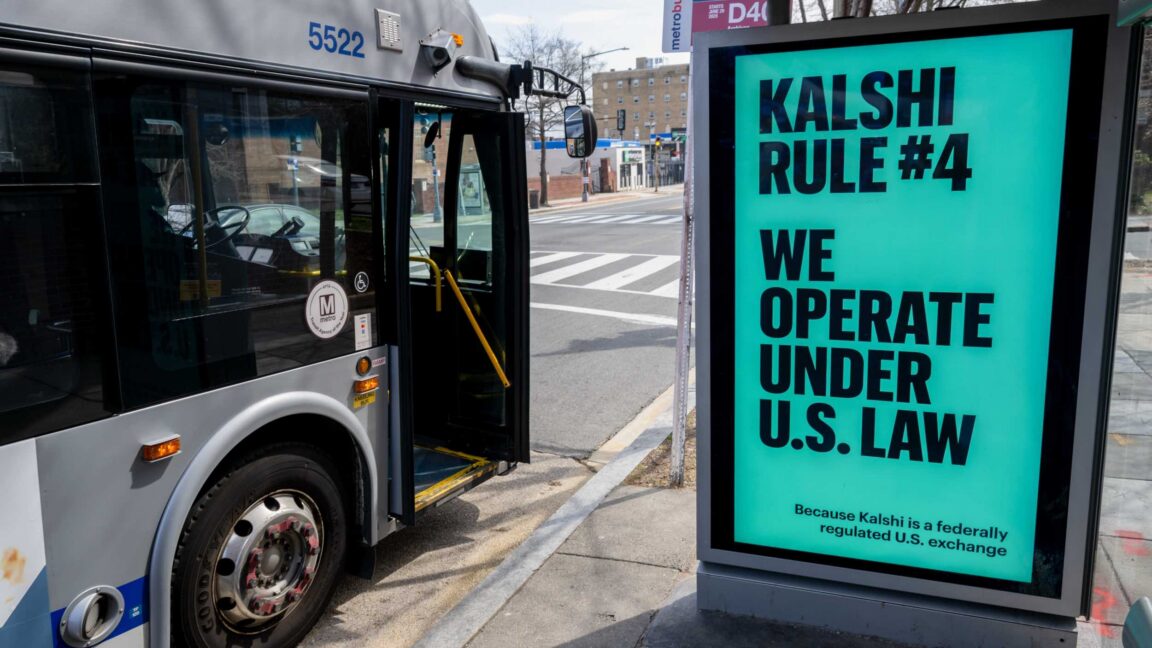
Image: courtesy of Ars Technica
Kalshi Caught Between Federal Order and State Block: The Future of Prediction Markets in New York Hangs in Legal Limbo
Prediction market platform Kalshi faces a complex legal standoff in New York after a federal judge denied its request to override state gambling laws, even as the Commodity Futures Trading Commission (CFTC) ordered the company to continue operations there. The conflicting directives highlight a broader national battle over whether prediction markets are federally regulated commodities or illegal state-level gambling, leaving Kalshi and its users in a precarious position.
Outlook
Background
The legal status of prediction markets in the United States has become a flashpoint, with platforms like Kalshi caught between federal regulators asserting jurisdiction and state officials enforcing long-standing gambling prohibitions. Kalshi, a platform that allows users to 'trade on events' by taking positions on future outcomes — ranging from economic indicators to political races — argues its offerings are federally regulated commodities, not wagers.
On August 12, 2026, a federal judge denied Kalshi's specific request to block New York from enforcing its gambling laws against the platform. This ruling marked a victory for New York Governor Kathy Hochul and Attorney General Letitia James, who issued a joint statement celebrating the decision and vowing to continue holding 'all gambling platforms accountable to the law.' The state's position, first articulated in a cease and desist letter from the New York State Gaming Commission last fall, centers on the argument that Kalshi's activities constitute illegal gambling, designed to protect consumers from unregulated financial products.
Yet, the situation is further complicated by a separate, and seemingly contradictory, action taken by the Trump administration's Commodity Futures Trading Commission (CFTC). On August 11, 2026, the CFTC announced it had exercised its 'emergency authority' to order Kalshi to continue operating in New York. The agency cited a 'market emergency' as its justification, asserting federal jurisdiction over prediction markets under the Commodity Exchange Act (CEA). This move by the CFTC positions the federal government squarely against New York's regulatory efforts, creating a direct legal impasse.
This is not an isolated incident. The dispute in New York is part of a larger, nationwide conflict. There are at least 19 federal lawsuits specifically involving Kalshi's legality against state gambling laws, according to NPR. More broadly, legal expert Wallach noted that there are '30 or 40 lawsuits pending across the United States' between state regulators and prediction market operators. The Trump Administration has also initiated federal lawsuits against states like Arizona, Connecticut, and Illinois, aiming to challenge similar actions taken by those state regulators.
Precedents
The tension between federal and state authority over economic activities is a recurring theme in U.S. legal history, particularly when new technologies or financial instruments emerge. For decades, gambling regulation has largely fallen under state purview, leading to a patchwork of laws across the country. States have historically relied on their police powers to protect public welfare and morals, often defining and restricting various forms of wagering.
However, the Commodity Futures Trading Commission (CFTC) was established to regulate futures and options markets, which are often used for hedging and price discovery rather than direct speculation. The core of the current debate is whether prediction markets, which allow users to take positions on future events, fall under the CFTC's definition of a 'commodity' or a 'swap.' If they are considered commodities, federal law, specifically the Commodity Exchange Act (CEA), generally preempts state laws, meaning federal regulation would take precedence.
This isn't the first time Kalshi has faced state-level opposition. In March 2025, New Jersey's Division of Gaming Enforcement (DGE) ordered Kalshi to halt operations, arguing that its sports-related contracts violated the state's Sports Wagering Act. Kalshi responded by taking the matter to federal district court, asserting the CFTC's preemptive authority. This precedent in New Jersey indicates a consistent pattern: states view these markets as gambling, while Kalshi and the CFTC argue for federal oversight, framing them as legitimate financial instruments. The ongoing federal lawsuits initiated by the Trump administration against multiple states further solidify this pattern of federal pushback against state-level enforcement. The current situation in New York is simply the latest, and most direct, confrontation in this evolving regulatory battleground.
The clash over Kalshi's operations in New York carries significant implications, extending far beyond a single prediction market platform. At its core, this dispute challenges the fundamental division of regulatory power between state and federal governments in the age of digital financial innovation.
For the broader tech and financial industries, the outcome could set a crucial precedent for how emerging platforms, especially those blurring the lines between traditional finance and online speculation, are regulated. If states successfully assert their authority, it could lead to a fragmented regulatory environment, forcing companies to navigate a complex, state-by-state legal maze. This would stifle innovation and market access, making it difficult for platforms to operate nationwide without facing constant legal challenges.
Conversely, if the CFTC's assertion of federal preemption prevails, it could open the door for a more unified regulatory approach, potentially legitimizing prediction markets as a new class of financial instruments. This would offer clarity to operators and participants but might also raise concerns about consumer protection, as state gambling laws often include specific safeguards that federal commodity regulations do not directly address.
For consumers and traders, the immediate impact is uncertainty. Users in New York who rely on Kalshi for trading or information gathering are now caught in a legal limbo, unsure if or when their access might be restricted. A fragmented regulatory landscape could also mean unequal access to these markets depending on where one resides, creating an uneven playing field.
Finally, the involvement of the Trump administration, particularly its use of 'emergency authority,' elevates the stakes politically. It signals a strong federal commitment to supporting these markets, likely viewing them as tools for price discovery and economic insight rather than mere gambling. The legal battles ahead will not only determine Kalshi's fate but will also redefine the boundaries of federal oversight in an increasingly digital and interconnected economy.
Scenarios
AnalysisThe current legal entanglement in New York presents several potential paths forward, none of them straightforward:
1. Direct Federal-State Legal Showdown: One immediate outcome could be an accelerated legal battle between the CFTC and New York State. The CFTC's emergency order directly challenges New York's ability to enforce its laws, especially in light of the federal judge's denial of Kalshi's request. This could lead to the Department of Justice, acting on behalf of the CFTC, intervening more forcefully in the existing lawsuits or initiating new litigation directly against New York to assert federal preemption. Such a case would likely escalate quickly through the federal court system, potentially reaching an appellate court or even the Supreme Court, given the significant constitutional questions of federalism and regulatory authority at stake.
2. Kalshi Operates in Limbo, Facing Enforcement Risks: Despite the CFTC's order, Kalshi may find itself in a difficult operational position in New York. The judge's denial of its request means New York retains the legal grounds to pursue enforcement actions against the platform. Kalshi could choose to continue operating, relying on the CFTC's order as a shield, but this could expose the company and its employees to state-level penalties, fines, or even criminal charges if New York decides to aggressively enforce its gambling statutes. This scenario would create significant operational uncertainty and legal risk for Kalshi in the state.
3. Temporary Halt in New York Pending Resolution: Kalshi might opt for a more cautious approach, temporarily ceasing operations in New York while the federal-state conflict is resolved. This would mitigate immediate legal risks from New York State but would mean a loss of market access and revenue from one of the largest financial centers in the U.S. Such a move would likely be accompanied by a public statement urging federal authorities to expedite a resolution, emphasizing the platform's commitment to operating within a clear regulatory framework.
4. Legislative Intervention: The ongoing legal quagmire could eventually prompt Congress to step in. The ambiguity surrounding prediction markets highlights a gap in current federal law. Congress could pass specific legislation that clearly defines prediction markets, assigns definitive regulatory authority (either to the CFTC, another agency, or a hybrid model), and clarifies preemption rules. This would offer a long-term solution but is often a slow and politically challenging process, making it a less immediate outcome compared to judicial or administrative actions.
Timeline
2025-03
New Jersey Orders Halt
New Jersey's Division of Gaming Enforcement (DGE) orders Kalshi to cease operations in the state, asserting its sports-related contracts violate state gambling laws. Kalshi responds by suing in federal court.
2026-04-06
Trump Administration Sues States
The Trump administration initiates lawsuits against Arizona, Connecticut, and Illinois, challenging state actions against prediction market operators like Kalshi and Polymarket, arguing for federal oversight.
2026-08-11
CFTC Issues Emergency Order
The Commodity Futures Trading Commission (CFTC) announces it has used its 'emergency authority' to order Kalshi to continue operating in New York, citing a 'market emergency' and federal jurisdiction.
2026-08-12
Federal Judge Denies Kalshi's Request
A federal judge denies Kalshi's request to override New York's state gambling laws, marking a legal victory for Governor Kathy Hochul and Attorney General Letitia James.
Frequently Asked Questions
Prediction markets are online platforms where users can 'trade' on the outcome of future events. Instead of buying stocks or bonds, they buy contracts that pay out if a specific event happens (e.g., 'Will the Fed raise interest rates next month?'). The price of these contracts fluctuates based on supply and demand, reflecting the crowd's collective probability assessment of an event.
Discussion
Be the first to share your thoughts.