
Veridact
TechSportsFinanceGaming🎯 PredictionsAbout
Sign InSign Up
Veridact

AI-powered anticipation analysis. We cover tech, sports, finance, and gaming events before they happen — with historical context, scenario modeling, and evolving coverage.

Stay ahead of the story

Analysis delivered before events unfold.

Coverage

  • Tech
  • Sports
  • Finance
  • Gaming

Company

  • About Us
  • Privacy Policy

© 2026 Veridact. AI-assisted analysis platform.

Analysis is AI-generated and not professional financial, legal, or medical advice.

tech
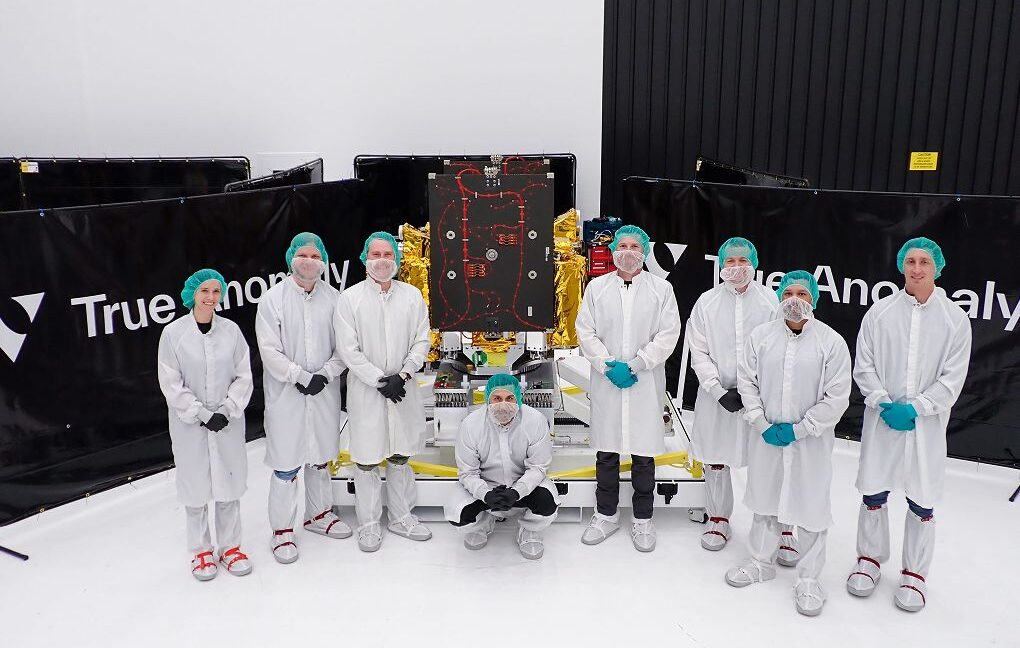
A US military exercise in space got underway with barely anyone noticing

Image: courtesy of Ars Technica

techJune 23, 2026By Veridact EditorialUpdated Jun 23

The Quiet Launch: How the Space Force is Rewriting the Rules of Orbital Conflict

On June 22, 2026, Rocket Lab quietly launched a satellite from its New Zealand launch complex, marking the commencement of a highly anticipated, low-profile US Space Force exercise. The mission, part of the military’s Tactically Responsive Space (TacRS) initiative, is designed to test the Pentagon's ability to rapidly deploy, maneuver, and operate orbital assets during an active conflict. Unlike traditional military launches that require years of planning and months of public scheduling, this operation was executed on an accelerated timeline with minimal public notice. The exercise focuses on orbital warfare and space domain awareness, signaling a shift in how the US military views the high frontier. This suggests that the era of treating space as a peaceful sanctuary is officially over, replaced by a doctrine that treats Low Earth Orbit as an active combat zone where speed and agility are the primary currencies.

Implications

In the coming weeks, observers can expect to see live orbital maneuvers as the newly launched satellite begins its active testing phase. The Space Force has indicated that this exercise will simulate real-world threat scenarios, which logically implies close-approach maneuvers with other designated target satellites to test defensive and offensive capabilities. Analysts suggest the exercise will test 'orbital warfare' tactics, where spacecraft must detect, track, and potentially evade hostile assets that are attempting to jam, blind, or physically disable them.

Unlike previous exercises that relied heavily on computer simulations, this mission uses live assets in orbit to validate complex astrodynamics in real-time. This means the satellite will likely perform rapid orbit-raising maneuvers, testing the limits of its commercial propulsion systems under simulated combat stress. Ground crews will also face intense pressure, measuring how quickly operators can re-task a satellite once an orbital threat is identified. If the spacecraft performs as intended, the Space Force will likely use the data to refine its requirements for future rapid-response constellations, pushing commercial suppliers to build highly maneuverable platforms that can survive in a contested environment.

Background

To understand why this launch is significant, one must look at the traditional defense procurement model. Historically, military satellites are multi-billion-dollar behemoths. They take a decade to design, five years to build, and months to carefully integrate onto heavy-lift rockets. They are designed to last for fifteen years in a pristine, uncontested vacuum. In a modern conflict with a peer adversary like China or Russia, these massive, slow-moving targets would be highly vulnerable to ground-based anti-satellite (ASAT) missiles, co-orbital interceptors, and high-powered laser blinders.

The Space Force's response is Tactically Responsive Space (TacRS). The goal is to treat satellites not as irreplaceable national treasures, but as rapidly replaceable tactical tools. If an adversary disables a critical GPS or communications satellite, the military wants the capability to launch a replacement within twenty-four hours, not twenty-four months. This requires a complete overhaul of the launch pipeline. The military must keep satellites on 'hot standby' at commercial manufacturing facilities, maintain rockets on standby at private launch pads, and train ground crews to integrate payloads and calculate orbital trajectories in hours rather than weeks. This shift is heavily dependent on the commercial space sector, which has dramatically lowered the cost of launch and accelerated manufacturing timelines through mass-produced satellite buses.

Precedents

The June 22, 2026 exercise builds directly on historical precedents established over the last three years. In September 2023, the Space Force executed the Victus Nox mission, which set a record by launching a Firefly Aerospace rocket just twenty-seven hours after receiving the launch order. That mission proved that the physical logistics of rapid launch were possible. However, Victus Nox was largely a proof-of-concept focused on the launch itself.

This latest exercise represents the next logical step: operational integration. While Victus Nox proved the military could get a satellite into orbit quickly, this mission is designed to prove that the satellite can immediately perform complex tactical maneuvers once it arrives. This mirrors the evolution of the Space Force’s 'Space Flag' exercises, which have grown from simple classroom tabletop simulations in 2022 to live-fly exercises involving simulated on-orbit combat engagements. Historically, when the US military transitions an experimental capability into a live exercise, it signals that the technology is moving out of the research-and-development phase and into formal operational doctrine. This suggests that rapid-response capabilities are becoming a standardized tool for regional combatant commanders.

The Real Stakes

The broader consequence of this exercise is the rewriting of the deterrence calculus in orbit. For decades, the primary threat to space assets was physical destruction via ground-launched missiles. Today, the threat is far more sophisticated, involving co-orbital 'inspector' satellites that can shadow US assets, jam communications, or physically damage delicate sensors. By demonstrating that it can launch and maneuver satellites on demand, the US is signaling to adversaries that attacking American space systems is a self-defeating strategy.

If an adversary knows that any satellite they destroy can be replaced in less than a day, the strategic value of an anti-satellite strike drops precipitously. Conversely, this capability also introduces new risks of miscalculation. When live military exercises involve rapid, unannounced maneuvers in close proximity to other satellites, the risk of accidental collisions or misinterpreted actions increases. One possible outcome is that an adversary might mistake a defensive tactical maneuver for an offensive action, leading to an unintended escalation in a crisis. The commercial space sector also faces significant consequences; as the military relies more heavily on private launch providers like Rocket Lab and True Anomaly, these companies become integral to national security infrastructure, potentially making their facilities and personnel targets in a broader geopolitical conflict.

Scenarios

Analysis

The Normalization of 'Hot Standby' Fleets

One highly likely outcome is that the Space Force will transition from one-off demonstration missions to maintaining a permanent, rotating inventory of 'hot standby' satellites. Under this model, commercial manufacturers would keep standardized military payloads on their factory floors, fully assembled and ready for integration. Commercial launch providers would maintain open slots in their launch manifests, allowing the military to commandeer a rocket at a moment's notice. This would shift the defense industry's role from custom engineering to high-rate, on-demand manufacturing.

An Escalation in Orbital Maneuver Warfare

As the US refines its rapid-deployment capabilities, adversaries are highly likely to accelerate their own responsive space programs. China has already demonstrated rapid-launch capabilities using its Kuaizhou and Long March rockets, and Russia has long experimented with co-orbital technologies. This suggests that the future of Low Earth Orbit will be characterized by constant, silent maneuvering, with satellites from competing powers continuously shadowing, tracking, and evading one another in a perpetual game of orbital cat-and-mouse.

Regulatory Friction Over Debris and Traffic Management

The rapid deployment of tactical satellites, combined with high-energy maneuvering exercises, will inevitably clash with civilian space traffic management. If military satellites are launched on short notice without standard public registry filings, commercial operators may struggle to plan collision-avoidance maneuvers. This could force a major regulatory overhaul, forcing the military to find a balance between operational secrecy and the collective safety of the orbital commons.

Timeline

2022-08-15
Space Flag 22-3 Initiated
The Space Force conducts its largest-ever simulated orbital warfare exercise to test combat readiness in contested environments.
2023-09-14
Victus Nox Launches
Firefly Aerospace successfully launches a Space Force satellite within 27 hours of receiving the order, proving rapid-launch logistics.
2024-04-11
Victus Haze Program Announced
The Space Force selects Rocket Lab and True Anomaly to design a live-fly tactical demonstration to simulate orbital threat scenarios.
2026-06-22
Tactical Exercise Commences
Rocket Lab launches a rapid-response satellite from New Zealand, kicking off a low-profile live-fly military exercise in orbit.
2027-12-31
Projected Program Formalization
Analysts suggest the Pentagon will push to transition Tactically Responsive Space from an experimental program to a permanent budget line item.

Frequently Asked Questions

TacRS is a US military initiative aimed at rapidly launching, configuring, and operating satellites in response to immediate threats or losses of orbital assets during a conflict.

Discussion

0/100
0/1000

Be the first to share your thoughts.

Related Coverage

tech

Cooling Crisis: Nvidia Takes Aim at Data Center Water, But AI's Thirst Runs Deeper

Jun 23
tech

Microsoft and Chevron Forge 20-Year Deal for Massive Gas-Powered AI Data Center in West Texas

Jun 23
tech

Unpatchable Hardware Flaw Opens Older iPhones to Permanent Jailbreak Risk

Jun 23
tech

AMD Bows to Customer Pressure, Restores Memory Encryption on Consumer Ryzen CPUs

Jun 23

Stay ahead of the story

AI analysis delivered before events unfold. No spam.

ⓘ

Disclosure: This article contains AI-assisted analysis based on publicly available information.