
Over the coming months, expect increased attention on these early-stage biotech programs. Clinical trials for potential measles treatments are slated to begin as early as 2027, marking a critical step in bringing any new therapy to market. This period will also likely see continued public health campaigns aimed at boosting vaccination rates, as public health officials grapple with dual strategies of prevention and treatment. The development of an effective treatment, however, is a multi-year process, and its widespread availability remains a distant prospect.
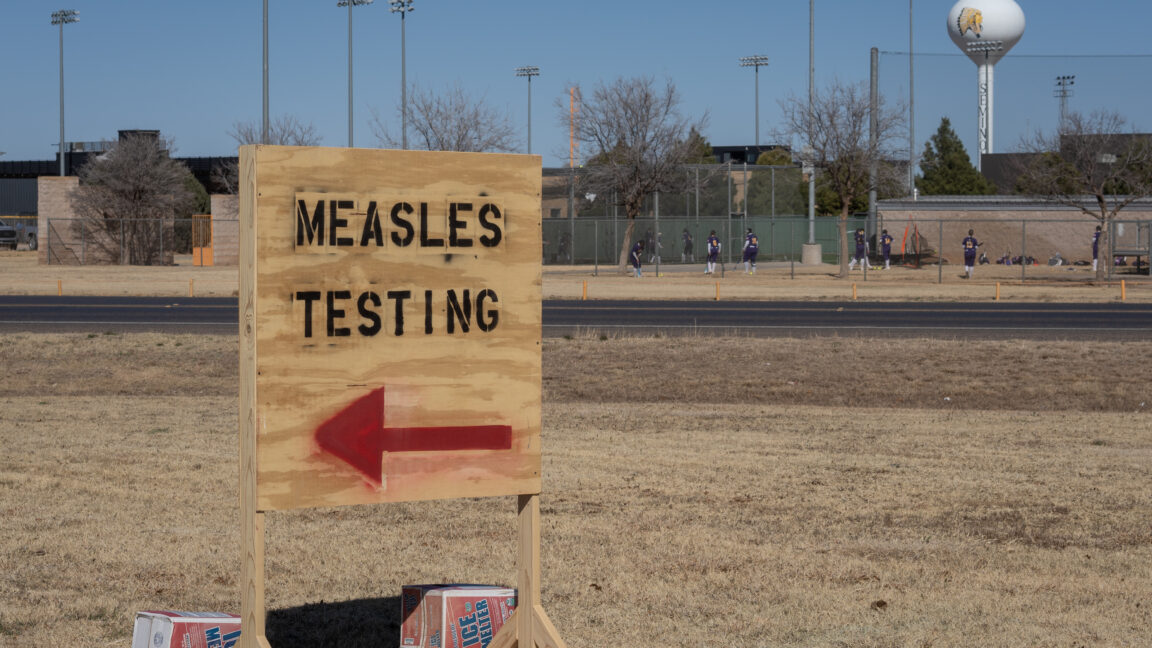
Image: courtesy of Ars Technica
The Return of Measles: Why Biotech Firms Are Racing to Treat a Vanquished Disease
Measles, a disease once considered largely eradicated in the United States, has seen a sharp resurgence, with confirmed cases reaching a 35-year high in 2026. This unexpected public health crisis has prompted biotech companies, including Invivyd and a New Haven-based firm, to initiate programs for developing new treatments, primarily monoclonal antibodies. The shift towards treating measles marks a significant departure from the decades-long reliance on vaccination for prevention, highlighting the consequences of declining immunization rates.
Outlook
Background
Measles cases in the U.S. have climbed significantly, reaching over 2,300 confirmed infections in 2026. This marks the highest number of reported cases in 35 years. The rise follows a challenging 2025, which saw outbreaks in unvaccinated communities and was deemed the worst year for measles in the U.S. since 1991. The increase in cases is directly linked to declining vaccination rates across the country. Currently, there is no specific, approved treatment for measles, leaving infected individuals to rely on supportive care. This gap in the medical arsenal has created an opening for biotechnology firms to pursue novel therapies.
Precedents
The history of measles in the United States is largely a success story of public health. Before the measles vaccine became widely available in the 1960s, hundreds of thousands of cases, thousands of hospitalizations, and hundreds of deaths occurred annually. Widespread vaccination led to a dramatic decline in cases, culminating in the declaration of measles eradication in the U.S. in 2000. This achievement was a testament to the effectiveness of herd immunity — when a sufficient portion of the population is immune, it protects those who cannot be vaccinated.
The current resurgence, therefore, represents a concerning reversal of decades of progress. It mirrors historical patterns seen with other preventable diseases when vaccination coverage drops below critical thresholds. The renewed focus on treatment development, rather than purely prevention, reflects a reactive posture to a public health challenge that was once considered solved. This pivot suggests an institutional recognition that vaccination rates may not recover quickly enough to contain outbreaks solely through existing preventive measures.
The re-emergence of measles as a significant public health threat changes the calculus for both medical professionals and the public. For decades, the primary defense against measles was the highly effective MMR vaccine. The disease's return, driven by declining vaccination rates, forces a costly and complex medical response that includes containment, diagnosis, and now, the urgent development of treatments. This shift carries substantial economic and human costs.
From a financial perspective, developing new drugs is expensive and time-consuming. It diverts resources that could otherwise be used for other health challenges or for reinforcing existing vaccination programs. For individuals, a measles infection can be severe, leading to complications like pneumonia, encephalitis, and even death. The reported death in Gaines County, Texas, in February 2025, serves as a stark reminder of these risks. The existence of a treatment could offer a lifeline for vulnerable populations, such as infants too young to be vaccinated, or individuals with compromised immune systems.
Beyond the immediate health implications, the situation also highlights a broader societal challenge: the erosion of trust in established public health measures. The need for a treatment for a vaccine-preventable disease signals a failure in collective public health responsibility, placing a greater burden on medical innovation to compensate for gaps in prevention. This makes the biotech race for measles treatments not just a scientific endeavor, but a reflection of deeper societal trends.
Scenarios
AnalysisThe current push for measles treatments could lead to several distinct outcomes, each with its own set of implications:
Outcome 1: Successful Development and Approval of a Treatment
If biotech firms like Invivyd successfully navigate clinical trials and regulatory hurdles, a specific measles treatment, such as a monoclonal antibody, could eventually reach the market. This would provide a vital tool for doctors, particularly for individuals who are severely ill, immunocompromised, or have been exposed to the virus and need immediate, short-term protection. The availability of a treatment could reduce hospitalizations, mitigate severe complications, and potentially lower mortality rates associated with outbreaks. However, as the source notes, it is likely to be years before such countermeasures are available, and even then, their accessibility and cost could present challenges.
Outcome 2: Treatments Complement, But Do Not Replace, Vaccination
Even with a successful treatment, it is highly probable that public health strategies would continue to emphasize vaccination as the primary defense. Treatments are typically reactive, addressing infections after they occur or providing temporary protection. They do not confer the long-lasting, community-wide immunity that vaccines offer. In this scenario, new treatments would serve as an important adjunct, providing a safety net for those who cannot be vaccinated or for managing severe cases, but the fundamental challenge of declining vaccination rates would persist. Public health messaging would need to carefully balance the existence of a treatment with the continued critical importance of immunization.
Outcome 3: Development Challenges and Limited Impact
Drug development is inherently risky, and many promising candidates fail in clinical trials due to efficacy or safety concerns. It is possible that the current research efforts may not yield a widely available or highly effective treatment within a meaningful timeframe. In this scenario, the medical community would continue to rely on supportive care, and the public health burden of measles would remain high if vaccination rates do not improve. This outcome would underscore the difficulty of developing new therapies and reinforce the idea that prevention remains the most robust and cost-effective approach to infectious diseases.
Timeline
1991
Previous High for Measles Cases
The year before 2025, which saw the worst measles outbreaks, with a significant number of cases reported across the U.S.
2000
Measles Declared Eradicated in U.S.
After decades of widespread vaccination, the Centers for Disease Control and Prevention (CDC) announced that measles had been eliminated from the United States.
2025
Significant Outbreaks and Case Increase
A series of outbreaks across unvaccinated communities made 2025 the worst year for measles in the United States since 1991. Eighty cases were reported in Gaines County, Texas, with one death.
May 2026
Invivyd Announces Discovery Program
Biotech firm Invivyd publicly announced a new discovery program focused on developing a monoclonal antibody for potential measles treatment or post-exposure protection.
June 30, 2026
New Haven Biotech Firm Confirms Development
A New Haven biopharmaceutical company confirmed it is actively working on a potential measles treatment, as U.S. cases surpassed 2,100.
2026
U.S. Measles Cases Hit 35-Year High
Confirmed measles cases in the United States reached over 2,300, marking the highest number in 35 years and prompting urgent calls for treatment development.
2027
Planned Clinical Trials for New Treatments
Clinical trials for new measles treatments, including those from Invivyd and other biotech firms, are expected to begin next year.
Frequently Asked Questions
Measles is a highly contagious viral infection that typically presents with a rash, fever, cough, runny nose, and red, watery eyes. It can lead to serious complications, especially in young children and immunocompromised individuals, including pneumonia, encephalitis (brain swelling), and even death.
Discussion
Be the first to share your thoughts.