
The immediate aftermath of this report will likely involve intense internal discussions within the Pentagon and NATO regarding modern battlefield readiness. Military analysts and defense strategists are expected to scrutinize the exercise results to understand how conventional armored forces can better counter the sophisticated, low-cost drone threats demonstrated by the Ukrainian teams. We can anticipate increased emphasis on counter-drone technologies, changes in training protocols, and potentially accelerated procurement cycles for systems designed to mitigate such vulnerabilities. The public reporting of these results also serves as a blunt message to potential adversaries about the evolving nature of ground combat.
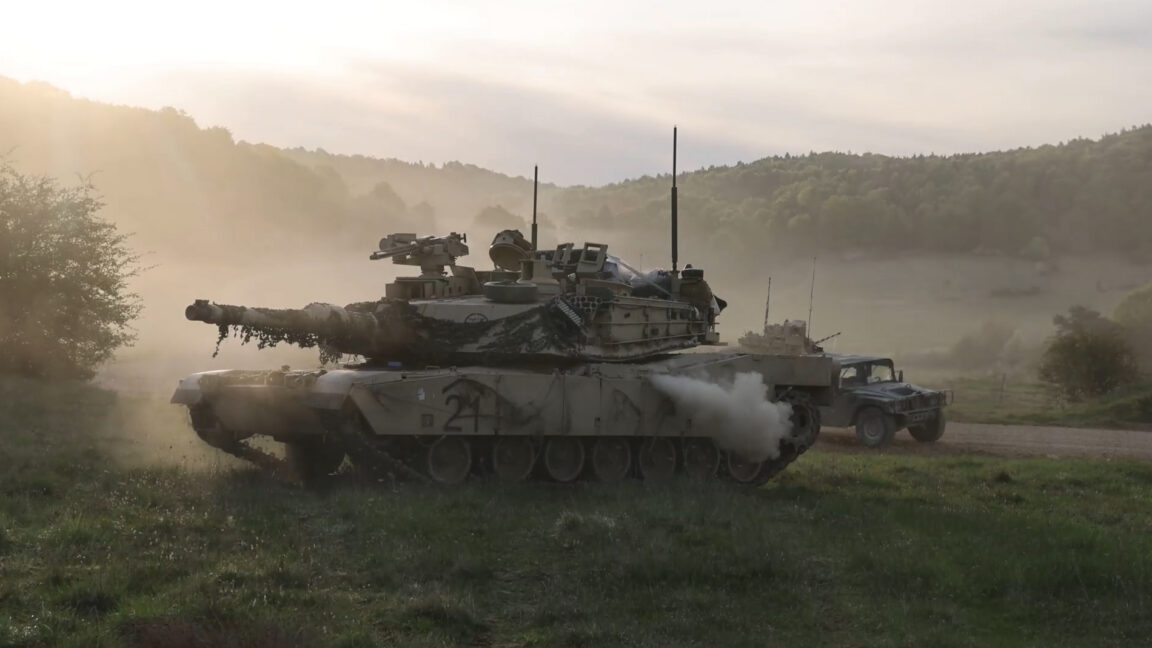
Image: courtesy of Ars Technica
The Drone Shock: What Ukrainian Tactics Revealed About US Vulnerabilities in a War Game
Ukrainian drone operators decisively outmaneuvered a US Army armored brigade during a major NATO military exercise in Germany earlier this year. The exercise, known as Combined Resolve, saw Ukrainian teams effectively 'wiping out' US vehicles so rapidly that the American units had to be 'respawned' multiple times to keep the simulation active. This outcome highlights the growing threat of modern drone warfare and the real-world lessons Ukraine has refined since 2022.
Outlook
Background
The Exercise Combined Resolve, held in Germany from April 9 to May 10, 2026, was designed to test the readiness and interoperability of NATO forces. During this specific segment, Ukrainian drone operators, drawing directly from their combat experience, were pitted against a US Army armored brigade. The results were stark: Ukrainian drones were able to locate and simulate strikes on US armored vehicles with such speed and efficiency that the American brigade was repeatedly rendered inoperable. In the context of a war game, 'wiping out' a unit means the drones successfully locked onto targets or flew close enough to simulate a destructive strike, under pre-defined rules. The term 'respawn' refers to the necessity of digitally or physically reintroducing these 'destroyed' units back into the exercise because the US forces consistently ran out of active vehicles well before the scheduled end of the simulation. While US troops reportedly improved their tactics over the course of the exercise, the initial and repeated dominance by the Ukrainian drone teams underscored a significant operational gap. The core challenge for conventional forces remains the ability to detect, identify, and neutralize small, fast, and often inexpensive drones before they can inflict disproportionate damage on high-value military assets like tanks and armored personnel carriers.
Precedents
Military history is replete with examples of new technologies fundamentally reshaping warfare, often catching established powers off guard. The introduction of machine guns in the late 19th century, tanks in World War I, and precision-guided munitions in the late 20th century all forced armies to rethink doctrine, training, and procurement. The current era of drone warfare mirrors these historical shifts. From the early use of reconnaissance drones to the widespread deployment of loitering munitions and FPV (first-person view) attack drones, the conflict in Ukraine has served as a real-time laboratory, accelerating the development and tactical deployment of these systems. Historically, the US military has shown an ability to adapt, albeit sometimes slowly. After the initial shock of new threats, significant resources are typically diverted to developing countermeasures and integrating new tactics. The German Blitzkrieg in World War II, the Soviet Union's tank armies in the Cold War, and asymmetric threats in Iraq and Afghanistan all spurred significant doctrinal and technological shifts within the US armed forces. This current situation, where a combat-hardened ally demonstrates a decisive tactical advantage with a relatively new technology, fits this pattern, forcing an urgent re-evaluation.
The implications of Ukrainian drone teams dominating a US armored brigade extend far beyond a single war game. This event is a critical signal about the future of ground combat and the urgent need for conventional militaries, particularly those with heavy investment in traditional armored forces, to adapt. Firstly, it highlights the cost-effectiveness of drone warfare; relatively inexpensive drones can neutralize multi-million dollar tanks and armored vehicles, shifting the economic balance of power on the battlefield. Secondly, it challenges long-held assumptions about force protection and maneuver warfare, suggesting that traditional defenses against air threats are insufficient against swarms of small, agile drones. For the US Army and NATO, this means a potential acceleration in research and development for advanced counter-drone systems, electronic warfare capabilities, and improved battlefield awareness. It also implies a need to overhaul training to integrate these new threats and develop effective defensive tactics. Furthermore, the lessons learned from Ukraine offer a direct, combat-proven blueprint for other nations, potentially influencing global defense spending and military doctrine. The ability of a smaller, less conventionally equipped force to inflict such damage with drones could embolden adversaries and reshape geopolitical calculations, making the ability to counter this threat paramount for maintaining military deterrence and effectiveness.
Scenarios
AnalysisThe US Army's encounter with advanced Ukrainian drone tactics could lead to several significant shifts in the coming months and years.
One potential outcome is a rapid re-prioritization of defense spending towards counter-drone technologies and electronic warfare systems. This could mean increased investment in directed energy weapons, advanced jamming capabilities, and networked sensor systems designed to detect and neutralize small, fast-moving aerial threats. Defense contractors specializing in these areas may see accelerated demand and development contracts.
Another outcome could be a fundamental rethinking of how conventional armored brigades operate on the modern battlefield. This might involve changes in tactical doctrine, emphasizing more dispersed formations, enhanced camouflage and concealment techniques, and the integration of organic drone defense capabilities directly within armored units. Training exercises could increasingly feature highly aggressive drone scenarios to better prepare troops for these evolving threats. This also suggests a push for 'drone-on-drone' combat capabilities, where friendly drones are specifically designed to hunt and destroy enemy drones, creating a new layer of aerial engagement.
A third, broader consequence could be increased collaboration and intelligence sharing between the US and Ukraine on drone warfare tactics and counter-tactics. Given Ukraine's unique, real-world experience, the US military might deepen its engagement to learn directly from their battlefield innovations, potentially leading to joint development projects or expedited adoption of proven Ukrainian methodologies.
Timeline
2022-02-24
Full-Scale Invasion of Ukraine Begins
Russia's full-scale invasion of Ukraine begins, accelerating the development and battlefield integration of drone warfare tactics by Ukrainian forces due to necessity.
2026-04-09
Exercise Combined Resolve Begins
The NATO military exercise, Combined Resolve, commences in Germany, featuring US Army and Ukrainian drone operator participation.
2026-05-10
Exercise Combined Resolve Concludes
The multi-week military exercise officially ends, with internal assessments of unit performance beginning.
2026-08-13
Report on Drone Dominance Emerges
News reports surface detailing how Ukrainian drone operators significantly outperformed a US Army armored brigade during Exercise Combined Resolve, repeatedly 'wiping out' US units.
Frequently Asked Questions
Exercise Combined Resolve is a multinational military exercise conducted by NATO in Germany, designed to test the readiness and interoperability of allied forces in a simulated combat environment. It typically involves various units and scenarios to prepare troops for complex battlefield conditions.
Discussion
Be the first to share your thoughts.