
Parents could eventually gain a new option for managing their children's transportation, particularly for after-school activities or short errands. For Uber, this represents a strategic move to capture a younger demographic and expand its "family" offerings, potentially increasing overall platform engagement and revenue. However, the rollout is likely to be deliberate and heavily feature-laden, focusing on robust safety protocols and transparency to address inevitable public scrutiny and parental concerns. Regulatory bodies may also examine such a service closely, potentially leading to new guidelines or requirements for ride-sharing companies transporting minors.
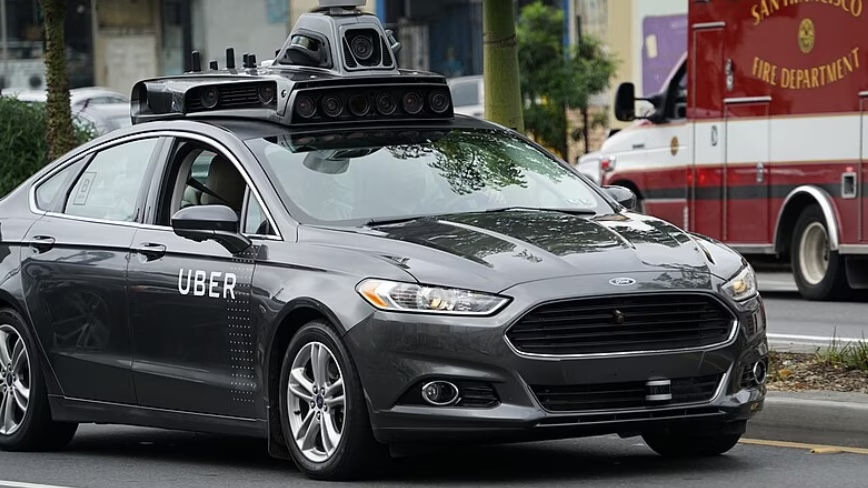
Image: courtesy of Thenextweb
Uber's Next Frontier: The Safety and Liability Tightrope of Rides for 10-Year-Olds
Uber is exploring a new service that would allow children as young as 10 to ride alone, a significant expansion of its existing unaccompanied minor policy. While the company confirms this product is not yet live, code found in its iOS app indicates development is underway to add "tweens" aged 10-12 to family profiles. This initiative presents both a substantial market opportunity for Uber and considerable challenges related to child safety, parental trust, and regulatory oversight, building on the framework of its current teen account service for 13-17 year olds.
Outlook
Background
Uber's current policy explicitly prohibits drivers from transporting unaccompanied minors unless the trip is booked through a designated "Teen account," which is available for users aged 13 to 17. For these existing teen accounts, Uber has implemented several safety features: parents can track rides in real-time, communicate with the driver and teen via a three-way group chat, and audio recording options are available to drivers, with notification to the teen. Drivers are also instructed to verify the age of any unaccompanied rider who appears under 18 if the trip is not marked as a Teen account, and to cancel the trip if age cannot be confirmed. The development of a "tween" service for 10-12 year olds, as suggested by the iOS app code, would represent a substantial lowering of this age threshold, pushing Uber into a more sensitive demographic. The company has stated this specific product is not yet live, but acknowledges it is "always looking to meet the needs of busy families."
Precedents
The ride-sharing industry has a complex history with safety, particularly concerning minors. While Uber has invested heavily in safety features following past incidents, the concept of unaccompanied minors in ride-shares has always been a point of contention. Competitors like Lyft generally maintain a stricter age policy, often requiring riders to be 18. The existing "Uber for Teens" product for 13-17 year olds was itself a significant step, introduced after years of drivers occasionally transporting minors despite official policy. This gradual expansion reflects an industry trend of trying to serve a broader market while navigating complex liability issues. Historically, any service involving children generates intense public and media scrutiny, forcing companies to over-communicate safety measures and often leading to slower, more cautious rollouts than initially planned.
This potential service expansion matters on several fronts. For Uber, it represents a calculated attempt to unlock a new, potentially vast market segment – busy parents seeking reliable transportation for their children. Success here could significantly boost user numbers and ride volume. For parents, it offers a new layer of logistical flexibility, addressing the perennial challenge of managing kids' schedules. However, the stakes are exceptionally high for child safety. Any perceived lapse could lead to catastrophic reputational damage for Uber, trigger intense regulatory backlash, and erode public trust in the entire ride-sharing model. For drivers, it could mean new responsibilities, training requirements, and potentially increased scrutiny, impacting their willingness to accept such rides. The development also forces a broader societal conversation about the age at which children are considered independent enough for unsupervised travel with private services.
Scenarios
Analysis1. Successful Launch and Gradual Adoption: Uber could launch the "tween" service with an extensive suite of safety features (e.g., mandatory real-time tracking, enhanced driver vetting, in-car cameras, explicit parental controls, geo-fencing). If the launch is smooth and initial user experiences are positive, and if parents perceive the safety measures as robust, the service could see gradual adoption, particularly in suburban areas where transportation needs are high. This would solidify Uber's position as a comprehensive family mobility provider.
2. Regulatory Delays or Restrictions: Concerns from child safety advocates, parent groups, or government regulators could lead to significant delays in the launch or force Uber to implement even stricter, potentially costly, safety requirements. Some jurisdictions might even ban such a service outright for younger minors, fragmenting its availability.
3. Limited Driver Participation: Drivers might be hesitant to accept rides from younger children due to increased responsibility, potential behavioral issues, or fear of false accusations. If a significant portion of drivers opt out, the service's reliability and availability could suffer, hindering its growth.
4. Reputational Backlash and Abandonment: In the event of a high-profile safety incident, even a single one, public outcry could be severe. This could force Uber to withdraw the service entirely or restrict it to an older age group, suffering significant brand damage and financial losses in the process.
Timeline
2026-08-12
Code Discovery and Uber's Statement
Bloomberg reported the discovery of code in Uber's iOS app referring to adding 'tween' aged 10-12 to Uber Family profiles. Uber confirmed the product is 'not live' but stated it is exploring options for busy families.
Early 2027 (Speculative)
Potential Formal Announcement
Uber may formally announce plans for a 'tween' service, detailing proposed safety features and pilot programs for testing in select markets.
Mid-2027 to Early 2028 (Speculative)
Phased Service Rollout
A phased rollout of the service could begin in specific cities, contingent on successful pilot phases, regulatory approvals, and positive initial feedback.
Frequently Asked Questions
CONFIRMED: Uber's official policy prohibits drivers from transporting unaccompanied minors unless the trip is booked through a specific "Teen account," which is currently available for ages 13-17. Drivers are instructed to verify age if a rider appears under 18 and the trip isn't marked as a Teen account, cancelling if age cannot be confirmed.
Discussion
Be the first to share your thoughts.