
This finding is expected to prompt a re-evaluation of established models for ancient American trade and cultural exchange. Researchers will likely focus on mapping the precise routes and mechanisms that facilitated the movement of high-value goods like cacao over thousands of kilometers. The discovery also sets the stage for further investigations into the daily lives, social structures, and economic systems of the Mississippian culture, particularly regarding their connections with Mesoamerican civilizations. It will spark renewed interest in identifying other potential exotic commodities traded across similar distances.
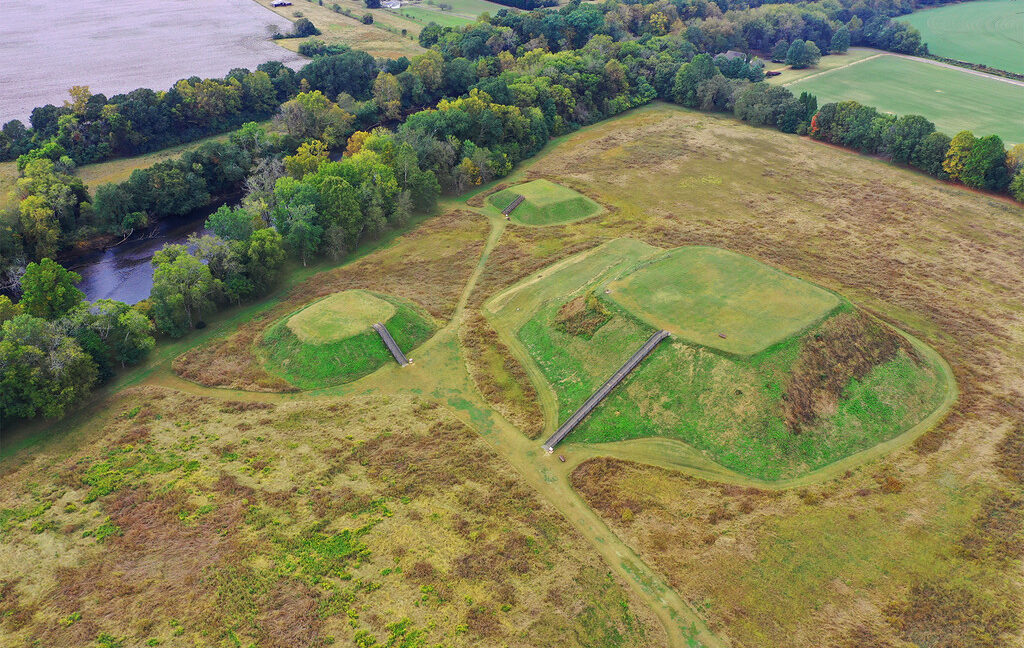
Image: courtesy of Ars Technica
Ancient DNA Confirms 1,000-Year-Old Cacao Trade to Georgia, Reshaping North American History
Archaeological analysis has confirmed that cacao, originating from Central America, was consumed in what is now northern Georgia approximately 1,000 years ago. This discovery, based on ancient DNA and chemical compounds found in pottery sherds from the Etowah site, provides direct evidence of sophisticated, long-distance trade networks connecting diverse cultures across the Americas centuries before European arrival. It challenges previous understandings of the scale and complexity of pre-Columbian societies in North America.
Outlook
Background
The confirmation of Central American cacao in present-day Georgia approximately 1,000 years ago represents a significant archaeological breakthrough. Specifically, ancient DNA and chemical residues were extracted from 800- to 900-year-old pottery at the Etowah Mounds site, a major Mississippian cultural center near Cartersville, Georgia. Cacao (Theobroma cacao) is a tropical plant native to regions far to the south, primarily Central and South America. Its presence in a temperate zone like Georgia means it could not have been grown locally; it had to be imported.
The Etowah site itself is a complex of earthen mounds, plazas, and defensive structures, once home to thousands of people from the Mississippian culture, which flourished across the southeastern United States from roughly 800 to 1600 CE. These societies were known for their advanced agriculture, intricate social hierarchies, and monumental architecture. Previous archaeological work at Etowah has uncovered evidence of a rich material culture, including elaborate pottery, shell carvings, and copper artifacts, suggesting a society with significant resources and artistic skill.
While evidence of trade among Mississippian communities and with groups in the American Southwest has been documented, the direct confirmation of a Central American commodity like cacao pushes the geographical boundaries of these networks much further than previously understood. The distance involved — an estimated 3,000 kilometers (nearly 1,900 miles) — indicates a remarkably robust and sustained system of exchange, whether through direct long-distance expeditions or a series of interconnected, shorter-distance trades between intermediate groups. This suggests a level of logistical organization and inter-cultural communication that has only recently begun to be fully appreciated by researchers.
Precedents
Before this discovery, archaeological evidence had already painted a picture of complex trade routes across ancient North America. For centuries, various indigenous groups exchanged goods like obsidian, copper, marine shells, and even specific types of pottery over considerable distances. The Ancestral Puebloans of the Southwest, for instance, traded turquoise far into Mesoamerica, while copper from the Great Lakes region found its way into Mississippian ceremonial objects.
However, these exchanges were often understood as regional or continental, with direct links to Mesoamerica being more sporadic or limited to specific high-value items like macaws, whose remains have been found in Southwestern sites. The idea of a perishable, consumable item like cacao, requiring careful preservation and transport, making such a journey eastward across the Mississippi River and into the southeastern woodlands, was largely speculative without direct evidence. This finding provides that direct evidence, shifting cacao from a 'possible' trade item to a 'confirmed' one for the Mississippian people.
The historical precedent for cacao's cultural importance is significant. In Mesoamerican societies like the Maya and Aztec, cacao was not merely a foodstuff; it was a highly valued commodity used as currency, in elite rituals, and consumed as a bitter, often spiced, ceremonial drink. Its presence in Georgia suggests that its cultural significance, or at least its status as a luxury item, may have travelled with it, indicating a transfer of cultural practices alongside the physical goods. This pattern mirrors the spread of other high-status items or technologies across ancient cultures, where the value of an object is often tied to its exotic origin and the effort required to obtain it.
The discovery of Central American cacao in ancient Georgia is not merely an interesting footnote in archaeological research; it fundamentally challenges and expands our understanding of pre-Columbian North America. For decades, prevailing narratives often underestimated the complexity, interconnectedness, and sophistication of indigenous societies north of Mexico, especially in terms of long-distance trade.
This finding offers direct evidence that Mississippian cultures, far from being isolated, were integrated into vast, continent-spanning economic and social networks. It implies a level of political organization and resource management capable of sustaining such extensive trade, whether through direct expeditions or intricate relay systems involving multiple intermediary groups. The logistics of transporting cacao, a delicate product, over 3,000 kilometers would have required significant effort, planning, and specialized knowledge, indicating a sophisticated infrastructure for exchange.
What does this tell us about the people who lived at Etowah? It suggests that the elites of the Mississippian culture had access to and valued exotic goods, likely using them in rituals, feasts, or as symbols of status and power. This insight enriches our understanding of their social hierarchy and ceremonial practices. Furthermore, it opens up new avenues for research into the cultural exchange that likely accompanied the movement of goods. Did the Mississippians adopt any Mesoamerican culinary practices or ritualistic uses for cacao? The answer could redefine our perception of cultural diffusion across the Americas.
Ultimately, this discovery reaffirms the ingenuity and dynamism of indigenous peoples, demonstrating that complex systems of trade and interaction were deeply embedded in the continent's history long before European contact. It underscores that ancient America was a world of interconnected societies, constantly exchanging goods, ideas, and innovations across vast geographical and cultural divides.
Scenarios
AnalysisThe confirmed presence of Central American cacao in ancient Georgia will likely lead to several important developments in archaeological research and historical interpretation.
One immediate outcome is a renewed focus on identifying specific trade routes and intermediary cultures. Researchers will likely employ advanced analytical techniques on artifacts from sites along potential corridors, searching for further traces of cacao or other Mesoamerican goods. This could involve examining more pottery residues, but also looking for other indicators of cultural contact, such as specific artistic motifs or architectural styles that might have diffused along trade pathways. The challenge will be to distinguish between direct trade and multi-stage 'down-the-line' exchange, where goods pass through many hands.
A second outcome could be a re-evaluation of the economic and social organization of Mississippian societies. If groups like those at Etowah were able to acquire such high-value, exotic commodities, it suggests a robust economic base and a social structure capable of organizing and supporting long-distance trade. This might lead to new theories about how labor was organized, how wealth was accumulated and displayed, and the political power wielded by leaders who could command access to such distant resources. It could also prompt a re-examination of other Mississippian sites for similar evidence.
Finally, this discovery may stimulate broader public interest and educational initiatives regarding the complexity of pre-Columbian American civilizations. By highlighting such a tangible and relatable item as cacao, it can make ancient history more accessible and challenge common misconceptions about indigenous societies being primitive or isolated. This could lead to increased funding for archaeological research, more museum exhibits, and a richer public discourse on the continent's deep history.
Timeline
800-1600 CE
Mississippian Culture Flourishes
The Mississippian culture, known for its mound-building and complex societies, develops and thrives across the southeastern United States, including major centers like Etowah.
Circa 1,000 years ago
Cacao Arrives in Georgia
Central American cacao, likely in dried form, is transported and consumed by inhabitants of the Etowah site in present-day northern Georgia, as evidenced by later archaeological findings.
August 27, 2026
Discovery Announced
Researchers announce the confirmed presence of ancient Central American cacao in 800- to 900-year-old pottery from the Etowah site, based on ancient DNA and chemical analysis.
Frequently Asked Questions
The significance lies in the origin and distance. Cacao is native to Central America, thousands of kilometers away from Georgia. Its presence confirms sophisticated, long-distance trade networks existed in North America long before European contact, indicating a higher level of societal organization and inter-cultural connection than previously understood.
Discussion
Be the first to share your thoughts.