
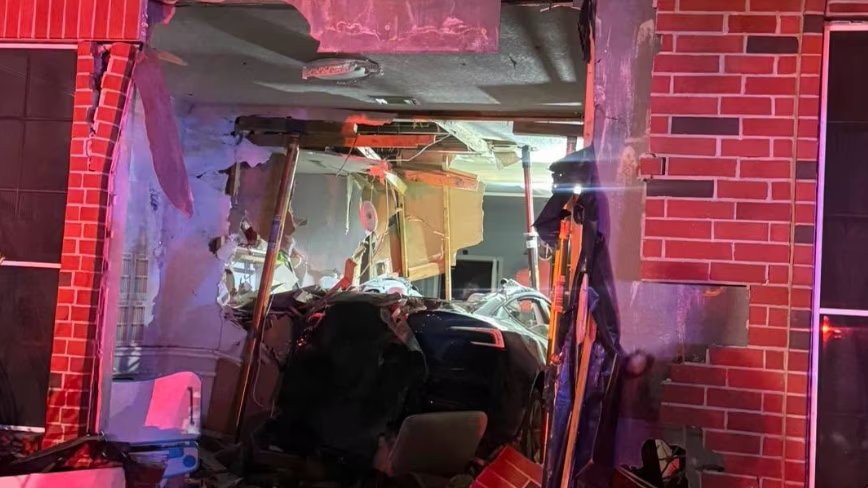
In the coming weeks, the investigation will focus intensely on the digital footprint left by the vehicle. Investigators from NHTSA and local law enforcement will extract data from the Tesla's onboard computers to verify whether Autopilot was active, and if so, for how long and under what parameters. This process will involve analyzing steering input, accelerator and brake pedal positions, and the vehicle's camera feeds. Under federal standing general orders, Tesla is required to submit crash data to NHTSA within days of learning of a fatal incident involving its driver-assist systems.
We can expect a sharp public debate over the vehicle's driver-monitoring system. Tesla uses a cabin camera and steering-wheel torque sensors to ensure the driver is paying attention, but critics have long argued these safeguards are easy to bypass or ignore. Local prosecutors in Texas will have to decide whether to file criminal charges against the driver. Historically, prosecutors have struggled with how to assign blame when a driver claims a semi-autonomous system failed, though the legal consensus remains that the human behind the wheel is ultimately responsible for the vehicle's path.
Meanwhile, Tesla is likely to face intense scrutiny over its software geofencing. Geofencing uses GPS data to restrict where certain software features can be turned on. If the investigation confirms that basic Autopilot—which is intended primarily for controlled-access highways—was active on a suburban street, it will pressure the company to explain why the software did not automatically disable itself in an environment with pedestrians, driveways, and homes.