
The future of artificial intelligence is widely understood to hinge on processing power, but where that power should reside is becoming a point of contention among the industry's most influential figures. Elon Musk, through SpaceX, envisions vast constellations of AI data centers orbiting the planet, powered by solar energy and connected by lasers. This week, Masayoshi Son, the SoftBank founder known for his aggressive investments in groundbreaking tech, offered a sharp counterpoint, questioning the fundamental logic of such an endeavor. His skepticism, voiced at a major shareholder event, signals that while the allure of space tech remains strong, the financial and operational realities are now drawing closer scrutiny from those who control immense capital.
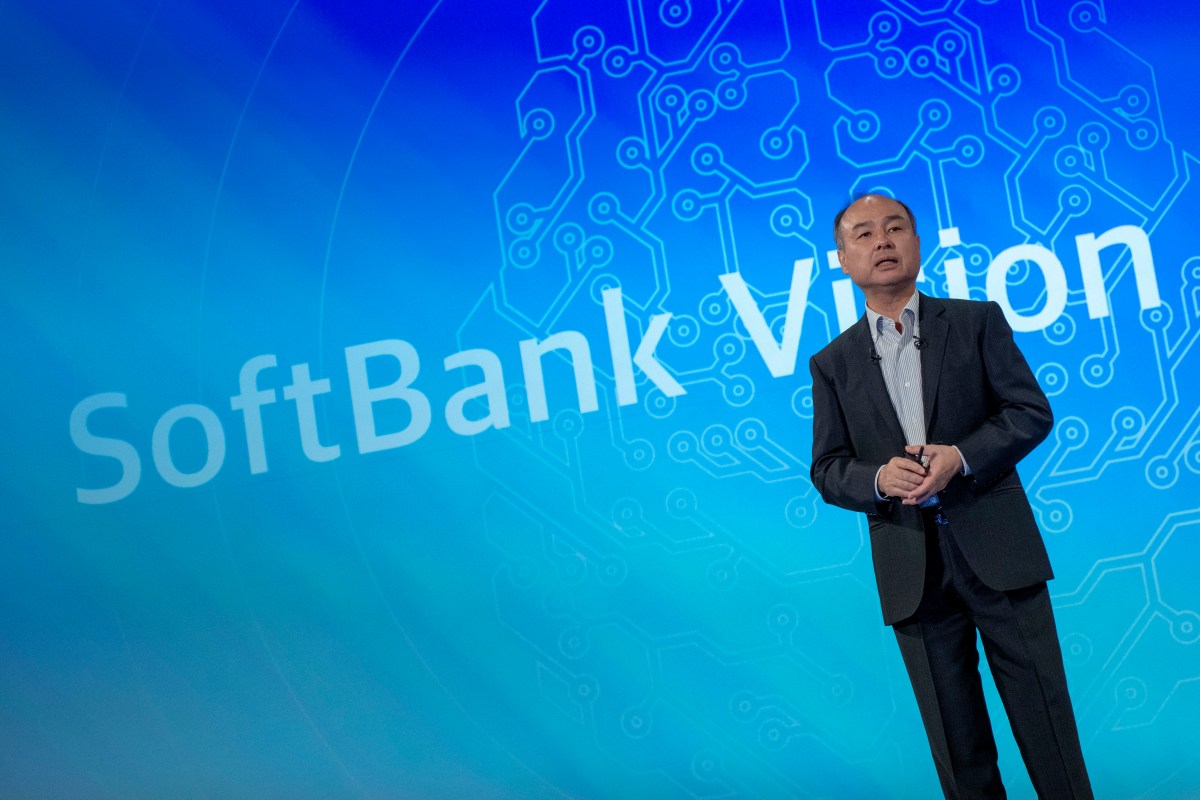
Image: courtesy of TechCrunch
SoftBank CEO Masayoshi Son Casts Doubt on Elon Musk's Orbital Data Center Ambitions
SoftBank CEO Masayoshi Son has publicly questioned the economic and practical viability of Elon Musk's ambitious plan to host artificial intelligence data centers in Earth's orbit. Speaking at SoftBank's annual shareholder meeting this week, Son argued that the substantial costs and complexities involved in space-based infrastructure outweigh any potential benefits, urging a focus on more immediate AI advancements on Earth. This challenge from a prominent tech investor highlights a growing divergence in strategic thinking at the highest levels of the technology industry regarding the future of AI computing.
Outlook
Background
The debate centers on two distinct visions for powering the next generation of artificial intelligence. On one side is Elon Musk, whose SpaceX outlined plans in March 2026 for what it calls 'Starship AI Sat Mini' – essentially racks of AI chips designed for deployment in space, supported by large solar panels and liquid radiators. Musk described this as a 'draft version of version one,' emphasizing a design simpler than the company's existing Starlink satellites.
Masayoshi Son, however, expressed considerable doubt at SoftBank's annual shareholder meeting on Tuesday, June 24, 2026. He specifically highlighted the economic and practical hurdles of maintaining data centers in orbit. Son questioned the overall value proposition, arguing that the benefits of moving such critical infrastructure into space do not justify the immense costs and complexities associated with launch, maintenance, and data transmission back to Earth. His comments suggest a belief that capital is better allocated to terrestrial AI development, where returns may be more immediate and less fraught with operational challenges.
This isn't the first time the two billionaires have found themselves at odds. In 2017, discussions between Musk and Son about a potential SoftBank investment in Tesla reportedly broke down over disagreements regarding ownership and control. That historical friction provides some context for the current public disagreement, indicating a pattern of differing strategic philosophies and approaches to corporate governance and long-term vision.
See also
Precedents
The history of ambitious technological projects, particularly those involving space, is often marked by initial skepticism followed by either groundbreaking success or quiet abandonment. Early satellite communication systems, GPS, and even SpaceX's own Starlink constellation faced considerable doubt regarding their technical feasibility and economic viability. Yet, many of these ventures eventually proved transformative, fundamentally altering industries and daily life.
However, the scale and complexity of orbital data centers present a different set of challenges. Unlike communication satellites, which primarily relay data, a data center requires robust processing, massive power consumption, and advanced cooling systems, all within the harsh environment of space. Past attempts at large-scale space manufacturing or resource extraction have consistently run into the prohibitive costs of launch and the difficulties of in-orbit maintenance and repair. The 'Musk effect' – his ability to attract talent and capital to seemingly impossible projects – has often defied traditional investment logic, but even his ventures are subject to economic realities over the long term. The current public questioning by a figure like Son, a seasoned investor known for both bold bets and rigorous financial scrutiny, signals a return to fundamental economic questions that often accompany such futuristic proposals.
The public disagreement between two of the tech world's most influential figures carries significant weight for several reasons. First, it brings a critical, public challenge to the very concept of space-based AI infrastructure, forcing a re-evaluation of its true potential and limitations. For investors, this creates analytical friction: do you back the audacious vision of Musk, who has a track record of disrupting industries, or the pragmatic caution of Son, who emphasizes immediate, tangible returns?
Secondly, the debate directly impacts capital allocation in the burgeoning AI sector. If the industry coalesces around Son's view, investment might flow more heavily into terrestrial data centers, advanced cooling technologies, and renewable energy solutions on Earth. Conversely, if Musk's vision gains traction, it could unlock a new frontier for space economy investment, attracting billions into launch capabilities, in-orbit servicing, and specialized space hardware.
Finally, this discussion highlights a deeper philosophical split within the tech elite: the 'move fast and break things' ethos of radical innovation versus a more calculated, return-on-investment driven approach. The outcome of this debate, whether through market forces or technological breakthroughs, will shape not just where our AI infrastructure resides, but also the broader strategic direction of global technology development for decades to come.
Scenarios
AnalysisThe path forward for orbital data centers, and the broader industry's embrace of them, presents several distinct possibilities:
One potential outcome is that SpaceX continues its development, but broad industry adoption remains cautious. Musk's company may refine its 'Starship AI Sat Mini' design and demonstrate some niche capabilities or specific applications where orbital placement offers unique advantages, such as extremely low-latency computing for space-based operations or scientific research. However, without clear economic justification or widespread demand that significantly outstrips terrestrial alternatives, major tech companies and investors might hold back from large-scale commitments, aligning more closely with Son's skeptical view. This could lead to a slower, more deliberate rollout focused on proving out the core technology rather than rapid commercial expansion.
Alternatively, Musk's vision could gain significant traction, attracting substantial external investment and partnerships. This would likely require SpaceX to demonstrate compelling economic advantages, such as dramatically lower operational costs through passive cooling in space, access to abundant solar power, or a regulatory environment that is more favorable than on Earth. If SpaceX can secure major contracts from hyperscale cloud providers or large enterprises seeking specialized computing solutions, it could validate the business case and spark a new wave of investment into the space infrastructure sector. Such a development would challenge the prevailing skepticism and could fundamentally alter how and where large-scale AI computation is performed.
A third possibility is a hybrid approach where orbital data centers serve as specialized extensions rather than primary infrastructure. Rather than replacing terrestrial data centers, space-based solutions could complement them, handling specific workloads that benefit from the unique conditions of orbit. This might include processing data from Earth observation satellites, providing localized AI capabilities for lunar or Martian missions, or offering a geographically distributed, highly resilient computing fabric. This outcome would acknowledge both the technical potential and the practical limitations, leading to a more integrated, multi-domain computing architecture.
Finally, the project could face significant technical or regulatory hurdles that slow or redirect its development. The complexities of radiation hardening, autonomous repair, and managing the thermal loads of high-performance AI chips in space are considerable. Furthermore, international regulations regarding space debris, spectrum allocation, and data sovereignty could introduce unforeseen delays or require substantial redesigns. In this scenario, the initial hype might give way to a more sober assessment of the long-term challenges, potentially leading SpaceX to re-prioritize other ventures or scale back its orbital data center ambitions.
Timeline
Frequently Asked Questions
Discussion
Be the first to share your thoughts.