
The path forward for Senator Markey's "AI accountability agenda" is likely to be challenging, with the political landscape described as "brutal." This suggests that while there is growing congressional interest in AI regulation, securing passage for such comprehensive legislation will require significant negotiation and compromise. Major technology companies, which rely heavily on data centers to power their AI operations, are expected to push back against measures that could increase costs or slow down development. Their arguments would likely center on the need to foster innovation and maintain global competitiveness. Conversely, environmental advocates, community groups, and labor organizations could rally support for the bills, highlighting the tangible impacts of data center growth and algorithmic decision-making on local communities and workers. The debate is poised to become a flashpoint for how the U.S. balances the rapid advancement of AI with the imperative to mitigate its potential downsides, particularly regarding infrastructure and resource use. The discussion could lead to a drawn-out legislative process, with various proposals potentially being debated, amended, or merged.
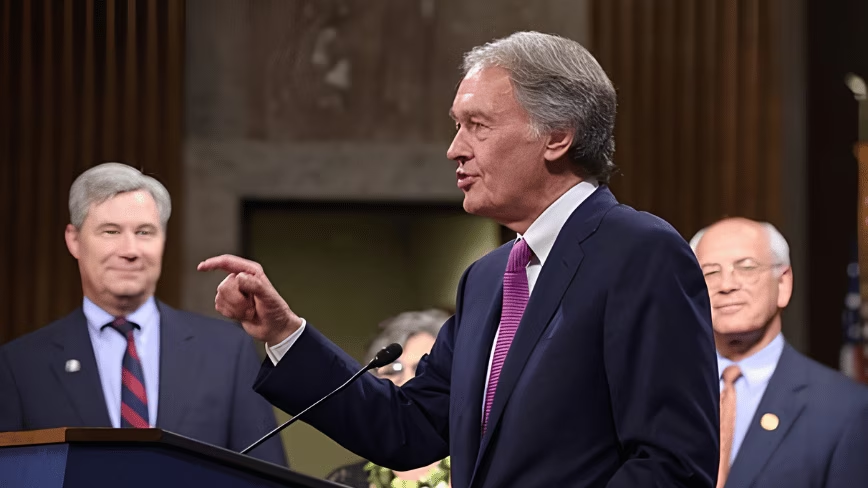
Image: courtesy of Thenextweb
Federal Checkpoints for AI: What Markey's Data Center Certification Plan Would Actually Mean
Senator Ed Markey of Massachusetts has introduced an "AI accountability agenda," a legislative package aimed at reining in the societal and environmental harms of artificial intelligence. A central piece of this agenda, announced on July 10, 2026, is a plan to require federal certification for new AI data centers, mandating that they demonstrate they "will not harm the public interest" before construction can begin. This initiative seeks to address a range of concerns, from the energy consumption of these facilities to the broader economic and social impacts of AI technologies.
Outlook
Background
The push for federal oversight stems from a widening recognition of AI's multifaceted impact. Markey's agenda specifically targets the significant environmental footprint of AI data centers, which are known for their high energy and water consumption. Beyond environmental concerns, the bills also aim to tackle issues such as intrusive workplace surveillance enabled by AI, embedded bias within discriminatory algorithms, instances where AI systems override human workers' judgments, and the potential for AI to deepen economic inequality by concentrating wealth among those who profit most from its development.
Markey's efforts are not isolated. On March 25, 2026, Senator Bernie Sanders and Representative Alexandria Ocasio-Cortez publicly called for a moratorium on the construction of new AI data centers, citing similar environmental and economic concerns. Just the previous day, on July 9, 2026, Congresswoman LaMonica McIver introduced the 'AI Data Center Site Selection Transparency Act of 2026,' a bill designed to ensure communities are informed and have input before data center deals are finalized in their neighborhoods. State-level actions are also emerging, with Connecticut State Senator Norm Needleman joining the passage of a bill on April 21, 2026, aimed at protecting residents from AI harms and preparing the workforce for AI integration. These varied legislative proposals, alongside a Senate hearing on July 10, 2026, which highlighted problems like bias, privacy loss, and job displacement, collectively signal a broad and intensifying concern across different levels of government regarding the unchecked expansion of AI and its foundational infrastructure.
Precedents
The idea of federal intervention to regulate a rapidly developing technology or industry is not new. Historically, when emerging sectors have demonstrated significant societal or environmental impacts, the federal government has often stepped in to establish oversight. Examples include the creation of the Interstate Commerce Commission in the late 19th century to regulate railroads, the Federal Communications Commission (FCC) for broadcasting and telecommunications, and the Environmental Protection Agency (EPA) to manage pollution and environmental risks. In each of these cases, initial industry expansion often outpaced regulatory frameworks, leading to calls for national standards to address concerns that local or state jurisdictions found difficult to manage uniformly. The legislative process typically involved intense lobbying from affected industries, public advocacy, and often, a prolonged period of debate and refinement before comprehensive laws were enacted. The resulting regulations often led to increased operational costs and new compliance requirements for businesses but also provided a more stable and predictable operating environment, along with enhanced public protections. This historical precedent suggests that while the path for Markey's AI agenda will be arduous, the growing consensus around AI's impacts could eventually force some form of federal action.
Senator Markey's proposal to require federal certification for AI data centers represents a significant shift in how the United States might approach the governance of artificial intelligence. If enacted, it would move beyond abstract ethical guidelines to impose concrete, pre-construction regulatory hurdles on the physical infrastructure that powers AI. This could fundamentally alter the economics and timelines of AI development, potentially slowing the rapid expansion of data centers and increasing their operational costs. For communities, this could mean enhanced protection against local environmental strain, such as increased energy demands, water usage, and potential utility cost hikes, while also granting them a more direct voice in local development decisions. For the broader tech industry, it signals a new era where the societal and environmental externalities of AI are not merely suggestions for corporate responsibility but legally mandated considerations. This legislative push could set a precedent for future federal oversight across other aspects of AI, influencing everything from algorithm design to data collection practices and ultimately shaping the trajectory of AI innovation in the U.S. The outcome will determine whether the unchecked growth of AI infrastructure continues or if a more regulated, publicly accountable model takes hold.
Scenarios
AnalysisThe legislative journey for Senator Markey's "AI accountability agenda" presents several distinct possibilities:
* Outcome 1: Federal Certification Takes Hold. One scenario is that significant portions of Markey's agenda, including the federal certification requirement for data centers, gain enough bipartisan support to pass through Congress. This could lead to a more centralized and standardized approval process for new AI data center construction, potentially slowing down the rate of expansion as companies navigate new regulatory requirements. It would also likely lead to increased development costs for tech companies, as they would need to invest more in environmental impact assessments, community engagement, and energy efficiency measures to meet federal standards. However, this outcome could offer greater protection for local communities, reduce the environmental footprint of AI infrastructure, and establish a clearer national policy on AI's physical presence.
* Outcome 2: State and Local Control Remains Dominant. Alternatively, the political challenges and industry opposition could prove too formidable, leading to the failure of Markey's comprehensive federal bills or their significant watering down. In this case, the regulation of AI data centers would largely remain fragmented, falling primarily under the purview of state and local governments. This could result in a patchwork of regulations across the country, with some regions imposing strict environmental or community engagement requirements, while others maintain more permissive policies to attract investment. This scenario might allow for faster, less encumbered data center development in certain areas but could also exacerbate environmental and social concerns in communities lacking robust local protections.
* Outcome 3: A Hybrid Regulatory Framework Emerges. A compromise outcome might see the federal government establish broad guidelines or a framework for AI data center development, but delegate much of the specific certification and oversight responsibilities to state agencies or newly formed regional bodies. This approach could provide a degree of national consistency while allowing for flexibility to address local conditions and concerns. It might involve federal funding incentives for states to adopt certain standards or a federal review process for particularly large or impactful projects. Such a hybrid model could represent a pragmatic middle ground, acknowledging the national implications of AI growth while respecting existing local governance structures.
Timeline
Frequently Asked Questions
Discussion
Be the first to share your thoughts.