
Autonomous vehicle developers are now under immediate pressure to present concrete solutions to NHTSA before the end of July 2026. This means a rapid assessment of their current systems' ability to detect, interpret, and appropriately respond to emergency situations, including flashing lights, sirens, flares, smoke, and human signals from police or firefighters. Companies will likely prioritize software updates, sensor recalibration, and potentially new communication protocols to ensure their vehicles can effectively identify and yield to emergency personnel. The industry can expect increased collaboration among competitors, or at least a shared urgency, as a collective failure to address this issue could trigger broader regulatory actions that impact all players. NHTSA, in turn, will be scrutinizing the proposed solutions closely, and the agency's response will shape the immediate future of AV deployment.
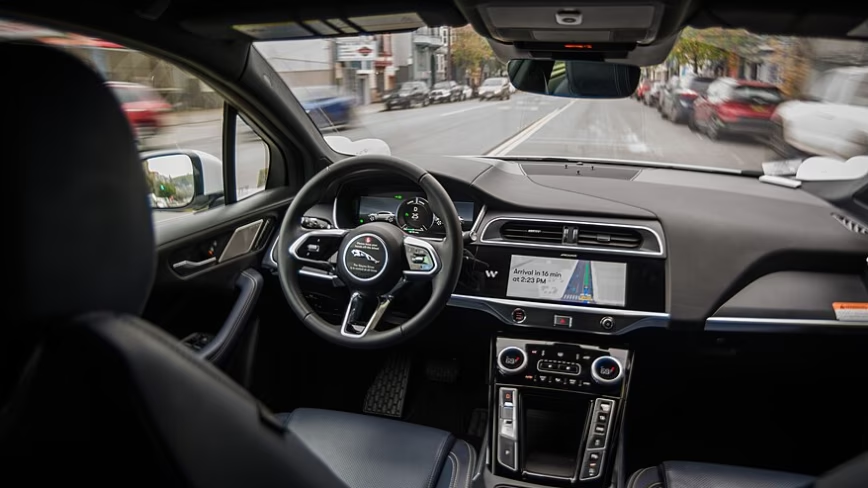
Image: courtesy of Thenextweb
NHTSA's Ultimatum to Robotaxis: The Looming Showdown Over First Responder Safety
The U.S. National Highway Traffic Safety Administration (NHTSA) has issued a direct order to autonomous vehicle (AV) companies, demanding they resolve instances of their driverless cars interfering with first responders by the end of July 2026. The directive, issued on Wednesday, July 8, 2026, by Administrator Jonathan Morrison, cited a 'clear pattern' of AVs blocking emergency vehicles and failing to recognize crucial safety signals at accident scenes. While no specific penalties were detailed, the agency's firm tone implies significant consequences for non-compliance, raising the stakes for an industry already under intense scrutiny.
Outlook
Background
The National Highway Traffic Safety Administration, the primary U.S. federal agency responsible for vehicle safety, has intensified its oversight of the rapidly evolving autonomous vehicle sector. This latest directive is not an isolated incident but part of a growing pattern of regulatory bodies expressing concerns about the real-world performance and safety implications of driverless technology. For years, AV companies have developed and tested their vehicles, often framing incidents as 'edge cases' — rare, unusual situations that are difficult to program for. However, Administrator Morrison's statement explicitly rejects this framing, declaring that emergency scenes are not 'edge cases' but foreseeable and critical scenarios that AVs must handle reliably. The agency's concern stems from documented incidents where self-driving cars have driven into active emergency zones, blocked access for ambulances and fire trucks, and failed to react to clear visual and auditory cues from first responders. This creates not only traffic headaches but potentially life-threatening delays, elevating the issue from a technical glitch to a public safety imperative. The absence of specified penalties in the initial directive does not diminish its weight; regulatory agencies often start with warnings and directives before escalating to fines, operational restrictions, or even recalls if compliance is not met.
Precedents
Government intervention in the automotive industry, particularly concerning safety, has a long history, often following a reactive pattern to public incidents or clear patterns of failure. Historically, NHTSA has used its authority to mandate recalls, issue safety standards, and impose fines for violations of federal motor vehicle safety standards. For instance, after numerous incidents involving specific vehicle defects, the agency has compelled manufacturers to recall millions of cars. In the early days of seatbelt mandates or airbag installations, industry pushback was common, but eventually, safety features became standard through regulatory pressure. More recently, in the tech sector, similar regulatory patterns have emerged, where initial innovation is followed by increased government scrutiny once the technology impacts public safety or welfare. Think of the Federal Aviation Administration's (FAA) stringent oversight of drone technology after initial widespread adoption, or the increasing regulation of ride-sharing services following safety concerns. The current situation with autonomous vehicles mirrors these patterns: an innovative technology is encountering the hard reality of integrating into existing infrastructure and human-centric systems, forcing regulators to step in where market forces alone have not ensured public safety. NHTSA's current stance suggests a shift from largely allowing companies to self-regulate testing to actively dictating minimum performance standards for public operation.
This directive marks a critical turning point for the autonomous vehicle industry. It shifts the burden of proof firmly onto AV developers to demonstrate reliable safety in complex, real-world scenarios, moving beyond controlled test environments. A failure to adequately address NHTSA's demands by the end of July 2026 could have far-reaching consequences. It could trigger more stringent federal regulations, potentially slowing down the rollout of robotaxi services across the country, increasing operational costs, and even leading to operational pauses or outright bans in certain areas. For consumers, the resolution of this issue is paramount for building trust in driverless technology. Repeated incidents of AVs hindering emergency services erode public confidence, which is already fragile. First responders, who operate under immense pressure, need assurance that new technologies will aid, not impede, their life-saving work. Ultimately, how AV companies respond to this deadline will not only dictate their immediate operational future but also shape the regulatory framework and public perception of autonomous vehicles for years to come. It's a test of whether the industry can mature fast enough to meet fundamental public safety expectations.
Scenarios
AnalysisOne immediate outcome is that AV companies will likely dedicate significant engineering and development resources to rapidly update their perception and prediction systems. They may also seek to collaborate with first responder agencies to develop better communication protocols or training for their AI models.
Should companies demonstrate satisfactory progress and present viable solutions by the deadline, NHTSA could opt for continued monitoring and collaboration, setting a precedent for how future safety challenges in AVs are addressed. This might involve new industry-wide standards or voluntary agreements.
However, if the industry fails to meet the deadline with convincing solutions, or if incidents of interference persist, NHTSA could escalate its response. This might include issuing an official safety recall for vehicles already deployed, imposing substantial fines on non-compliant companies, or even restricting their operational zones or hours. Such actions would severely impact the financial viability and public image of the affected companies, potentially slowing the entire industry's growth. State and local regulators, often influenced by federal directives, might also introduce their own, even stricter, regulations, creating a fragmented and challenging operating environment for AV companies.
Timeline
Frequently Asked Questions
Discussion
Be the first to share your thoughts.