
The narrative of human history is rarely static. What was once considered a near-certain catastrophe for our species — the eruption of the Mount Toba supervolcano 74,000 years ago — is now being fundamentally re-evaluated. New archaeological evidence and sophisticated climate modeling are painting a different picture: one where early humans adapted and persisted, rather than teetering on the brink of extinction. This shift in understanding means we must reconsider the environmental pressures that truly shaped our ancestors and how resilient they were in the face of immense natural forces. Expect a deeper dive into how scientific consensus evolves, the specific evidence that is overturning the Toba catastrophe theory, and what this new perspective tells us about the enduring adaptability of humanity.
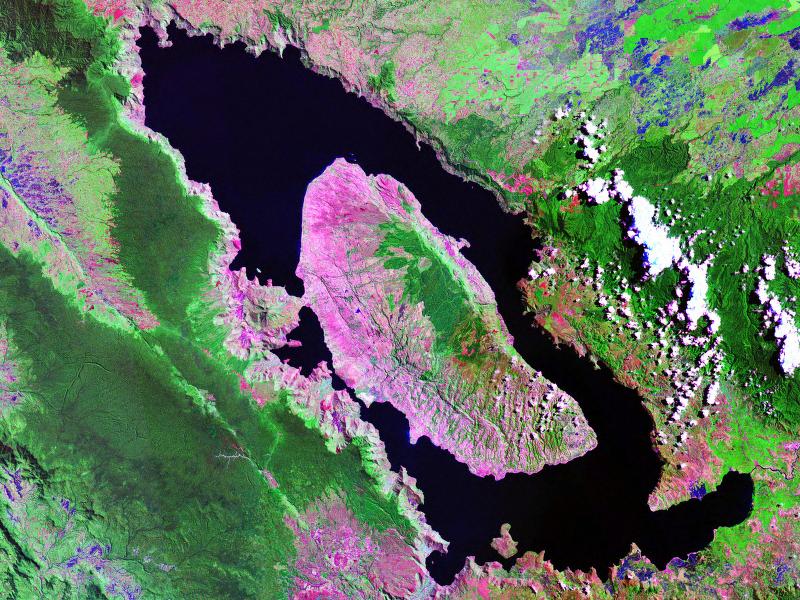
Image: courtesy of Ars Technica
Beyond the Catastrophe: How New Science Rewrites the Story of Mount Toba and Human Survival
For decades, the eruption of the Mount Toba supervolcano 74,000 years ago was widely believed to have caused a 'volcanic winter' that nearly wiped out humanity, reducing our ancestors to a tiny, struggling population. Recent scientific studies, however, are now challenging this long-held theory. New data, particularly from archaeological sites in Africa and refined climate models, suggest the Toba event had a much smaller climate impact than previously thought. This re-evaluation indicates that early human populations not only survived the eruption but likely thrived, demonstrating remarkable adaptability and forcing a fundamental rethink of our species' early history and resilience.
Outlook
Background
The Mount Toba eruption, located on the island of Sumatra, Indonesia, was an event of immense geological scale. Occurring approximately 74,000 to 75,000 years ago, it remains the largest volcanic eruption on Earth in the last 2.6 million years. The sheer volume of material ejected into the atmosphere led scientists, particularly starting in the 1990s, to propose a 'volcanic winter' scenario. This theory posited that the aerosols and ash blocked sunlight for years, causing a drastic global cooling that decimated plant and animal life, including human populations. Some genetic studies of modern humans, which indicated a severe population bottleneck around that time, seemed to support this idea. The 'Toba catastrophe theory' thus became a prominent explanation for a perceived dip in human genetic diversity. However, the foundational assumption — that the climate impact was catastrophic and long-lasting — is now being called into question by new archaeological discoveries and more precise scientific methods. Evidence from multiple sites, particularly in southern Africa, suggests that human populations there not only survived but continued to flourish through the period immediately following the eruption. This challenges the notion of a widespread, near-extinction event, shifting the focus towards regional variations in climate impact and the adaptive capabilities of early humans.
Precedents
The re-evaluation of the Toba catastrophe theory is not an isolated incident in scientific inquiry; it mirrors a common pattern where long-held scientific hypotheses are refined or overturned by new data and improved methodologies. Throughout history, groundbreaking theories—from plate tectonics replacing continental drift, to the asteroid impact theory for dinosaur extinction superseding gradual climate change—have emerged from the accumulation of evidence that challenges existing paradigms. In anthropology and archaeology specifically, the understanding of early human migrations, population sizes, and adaptive strategies is constantly evolving. For instance, early models of human migration out of Africa were often simplified, but new fossil discoveries, genetic analyses, and dating techniques have revealed multiple, more complex waves of dispersal. Similarly, the 'Man the Hunter' narrative, once dominant, has been broadened to include 'Woman the Gatherer' and more nuanced views of early hominin social structures and resource utilization.
The Toba case also reflects a broader trend in climate science, where initial models of extreme events are often refined as more granular data and sophisticated simulations become available. Early climate models, while foundational, sometimes lacked the resolution to capture regional variations or the precise dynamics of atmospheric recovery. The Toba theory, with its dramatic global impact, fit a compelling narrative that aligned with some early genetic interpretations. However, the scientific process is inherently self-correcting. As archaeological fieldwork expands into new regions, as dating techniques like Optically Stimulated Luminescence (OSL) become more precise and are applied to more sites, and as climate modeling incorporates more variables and higher resolution, the picture inevitably becomes more complex and often less dramatic than initial theories suggested. This continuous refinement is a hallmark of scientific progress, demonstrating that what is considered 'fact' is often a working hypothesis, subject to revision in light of new evidence.
The dismissal of the Toba catastrophe theory reshapes our fundamental understanding of human deep history and the resilience of our species. If the largest volcanic eruption in 2.6 million years didn't push humanity to the brink, it implies a level of adaptability and robustness that was previously underestimated. This shift has several profound implications.
First, it forces anthropologists and archaeologists to re-examine what did shape early human population dynamics. If Toba wasn't the bottleneck, then other factors, perhaps more localized environmental shifts, disease, or competition, might have played a more significant role in population fluctuations. This could lead to new research directions, focusing on smaller-scale events and regional adaptations rather than a single global cataclysm.
Second, it highlights the power of scientific methodology in overturning established narratives. The refined OSL dating techniques and more sophisticated climate models are not just tweaking a hypothesis; they are demonstrating how interdisciplinary research, combining archaeology, geology, and climate science, can lead to a more accurate and nuanced understanding of the past. It's a testament to the scientific process itself, where evidence ultimately trumps compelling stories.
Finally, for a species currently facing significant environmental challenges, this revised history offers a different perspective on human resilience. Knowing that our ancestors navigated such a monumental natural event without nearly collapsing suggests an inherent capacity for survival and adaptation, even in the face of extreme conditions. It reframes the narrative from one of near-extinction to one of enduring persistence, offering a different lens through which to view humanity's long-term prospects on a changing planet.
Scenarios
AnalysisThe ongoing scientific re-evaluation of the Toba eruption's impact presents several potential outcomes for our understanding of early human history and scientific methodology:
1. A More Nuanced View of Early Human Adaptability: The most immediate outcome is a deeper appreciation for the adaptive capabilities of early human populations. Instead of a uniform global catastrophe, researchers are likely to explore more regional variations in climate impact and human responses. This could lead to identifying specific strategies our ancestors employed to survive harsh conditions, such as utilizing diverse food sources, developing protective shelters, or migrating to less affected 'refuge' zones. The focus will shift from a singular, dramatic bottleneck to a more complex tapestry of regional challenges and successful adaptations across different continents.
2. Increased Scrutiny and Refinement of Dating Methods and Climate Models: The Toba re-evaluation serves as a powerful validation of advanced dating techniques like OSL and high-resolution climate modeling. This success will likely encourage further investment and application of these methods in other areas of archaeological and paleoenvironmental research. It may also lead to a more critical examination of past climate reconstructions that relied on less precise data, potentially overturning other long-held assumptions about ancient environmental events and their impact on life on Earth. The emphasis will be on integrating multiple lines of evidence—archaeological, genetic, geological, and climatic—to build more robust historical narratives.
Timeline
Frequently Asked Questions
Discussion
Be the first to share your thoughts.