
The Link spacecraft is expected to take several weeks to reach NASA's Swift Observatory. Once rendezvous is achieved, the critical phase of the mission will involve docking with the observatory and then executing the orbital reboost. The success of this reboost will determine whether Swift can continue its scientific observations for several more years or if it will face an imminent deorbit. Beyond the immediate mission, the industry will be watching closely for how Katalyst leverages this demonstration to secure future contracts and expand its commercial satellite servicing offerings.
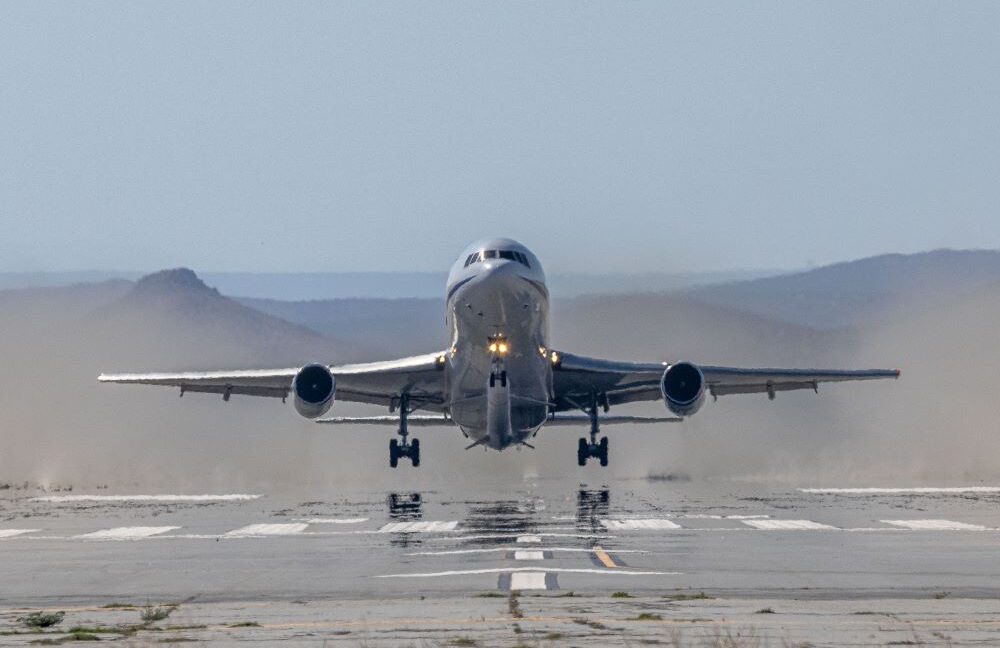
Image: courtesy of Ars Technica
Katalyst's Bold Rescue Mission for NASA's Swift Signals a New Era for Commercial Space Servicing
Earlier this month, Katalyst Space Technologies launched its Link spacecraft to rendezvous with NASA's aging Swift Observatory. The mission, confirmed to be in pursuit of Swift, aims to boost the telescope's orbit and prevent its uncontrolled reentry into Earth's atmosphere. This operation is notable as the first commercial mission to dock with and service a government-owned satellite not originally designed for such maneuvers, marking a significant step in the burgeoning field of in-orbit servicing.
Outlook
Background
NASA's Neil Gehrels Swift Observatory, a gamma-ray and X-ray telescope, has been operating since 2004, far exceeding its initial design life. Over two decades in orbit, Swift's altitude has gradually declined due to persistent atmospheric drag, putting it at risk of an uncontrolled descent. To mitigate this, NASA awarded Katalyst a contract in September 2025, tasking the relatively young company with designing, building, testing, and launching a spacecraft to save Swift within less than a year. This aggressive timeline underscores the urgency of the situation and NASA's confidence in commercial capabilities. Teams at NASA’s Goddard Space Flight Center and Pennsylvania State University’s Eberly College of Science have also implemented operational changes to maintain Swift’s altitude at a minimum of 185 miles (approximately 298 kilometers) as the rescue mission proceeds. The Link spacecraft, launched on Independence Day weekend, is now actively chasing Swift, aiming to deliver the necessary orbital boost.
Precedents
Historically, when government satellites reached the end of their operational lives or faced orbital decay, the primary options were either to let them deorbit naturally, conduct a controlled deorbit burn (if fuel allowed), or replace them with new, expensive spacecraft. The concept of in-orbit servicing (IOS) — repairing, refueling, or reboosting satellites — has been a long-held ambition, but largely confined to a few specialized government or military missions. For example, the Space Shuttle successfully serviced the Hubble Space Telescope multiple times, demonstrating the technical feasibility but also the immense cost and complexity of human-crewed missions.
The commercialization of space in recent decades, driven by companies like SpaceX, has dramatically lowered launch costs and spurred innovation in satellite technology. This shift has now extended to servicing. While there have been previous commercial attempts and demonstrations of satellite servicing, this mission by Katalyst marks a significant departure because it involves a government-owned asset not built with servicing ports or docking mechanisms. This 'non-cooperative' aspect makes the mission technically far more challenging and, if successful, establishes a new precedent for extending the life of existing space infrastructure without prior design considerations. It moves in-orbit servicing from a niche, bespoke capability to a more viable commercial offering, potentially transforming how governments and private companies manage their multi-billion-dollar satellite constellations.
The Katalyst-Swift mission is more than just a satellite rescue; it represents a pivotal moment for the commercial space industry and the long-term economics of space operations. For NASA, a successful reboost of Swift means extending the life of a valuable scientific asset without the massive expense and lead time required to build and launch a replacement. This directly saves taxpayer dollars and preserves critical research capabilities.
For the broader space industry, this mission validates the potential of in-orbit servicing (IOS) as a viable, cost-effective solution for satellite longevity. Until now, the default was often 'launch and leave,' where satellites were disposable. If commercial companies can reliably extend the operational lifespan of existing satellites, it changes the entire capital allocation model for satellite operators, whether government or private. They could potentially defer the need for new launches, reduce overall fleet management costs, and mitigate the growing problem of space debris by preventing uncontrolled reentries.
Furthermore, by demonstrating the ability to dock with a 'non-cooperative' satellite, Katalyst is tackling one of the most complex technical challenges in space. This de-risks future servicing missions, opening up a much larger market for services like refueling, repair, and even the removal of defunct satellites. It suggests a future where space infrastructure is not just launched, but actively maintained and managed, akin to how terrestrial infrastructure is cared for. This shift could make space operations more sustainable, resilient, and economically efficient for everyone involved.
Scenarios
AnalysisOne possible outcome is that Katalyst's Link spacecraft successfully docks with the Swift Observatory and executes the orbital reboost. This would extend Swift's operational life, allowing it to continue its scientific mission for several more years. Such a success would significantly enhance Katalyst's credibility, potentially leading to more contracts from government agencies and commercial satellite operators seeking to extend the life of their assets. It would also accelerate investment and development in the broader in-orbit servicing sector.
Alternatively, the mission could encounter technical difficulties during the rendezvous, docking, or reboost phases. Given the complexity of docking with a satellite not designed for servicing, and Katalyst's relatively short development timeline, there are inherent execution risks. If the mission is unsuccessful, Swift's orbit would continue to decay, leading to an uncontrolled reentry. While a failure would be a setback for Katalyst and the immediate future of Swift, it would still provide valuable data on the challenges of in-orbit servicing, informing future attempts and refining technologies for this critical capability. The industry might also see a more cautious approach to 'non-cooperative' servicing missions until further technological advancements are proven.
Timeline
2004
Swift Observatory Launch
NASA's Neil Gehrels Swift Observatory, a multi-wavelength space telescope, is launched into orbit to study gamma-ray bursts and other transient celestial events.
April 2025
Katalyst Acquires Atomos Space
Katalyst Space Technologies acquires Atomos Space, a company that had previously flown a spacecraft, bringing in valuable experience for future missions.
September 2025
NASA Awards Contract to Katalyst
NASA awards Katalyst the contract for the Swift reboost mission, initiating a rapid development phase for the Link spacecraft.
April 17, 2026
Thermal Vacuum Testing
Katalyst's Link spacecraft undergoes thermal vacuum testing at NASA’s Goddard Space Flight Center in Greenbelt, Maryland, simulating space conditions.
July 2026
Link Spacecraft Launch
Katalyst's Link spacecraft launches on Independence Day weekend to begin its pursuit of NASA's Swift Observatory.
Several Weeks Post-Launch
Rendezvous and Docking (Projected)
The Link spacecraft is expected to rendezvous with, dock, and reboost the Swift Observatory, aiming to extend its operational lifespan.
Frequently Asked Questions
NASA's Swift Observatory, officially named the Neil Gehrels Swift Observatory, is a robotic telescope launched in 2004. It's designed to detect and study gamma-ray bursts (GRBs) and other transient X-ray and ultraviolet phenomena, providing insights into some of the most powerful explosions in the universe.
Discussion
Be the first to share your thoughts.