
Veridact
TechSportsFinanceGaming🎯 Predictions⭐ OpportunitiesAbout
Sign InSign Up
Veridact

Analysis before the headline. Veridact examines technology, finance, sports, and gaming events before they unfold through forecasting, probability modeling, historical precedent, and public prediction tracking.

Stay ahead of what's next

Forecasts, analysis, and prediction updates delivered to your inbox.

Coverage

  • Tech
  • Sports
  • Finance
  • Gaming

Company

  • About Us
  • Privacy Policy

© 2026 Veridact. Forecasting & analysis platform.

Content may include AI-assisted research and analysis. Predictions and opinions should not be considered financial, legal, medical, or investment advice.

tech
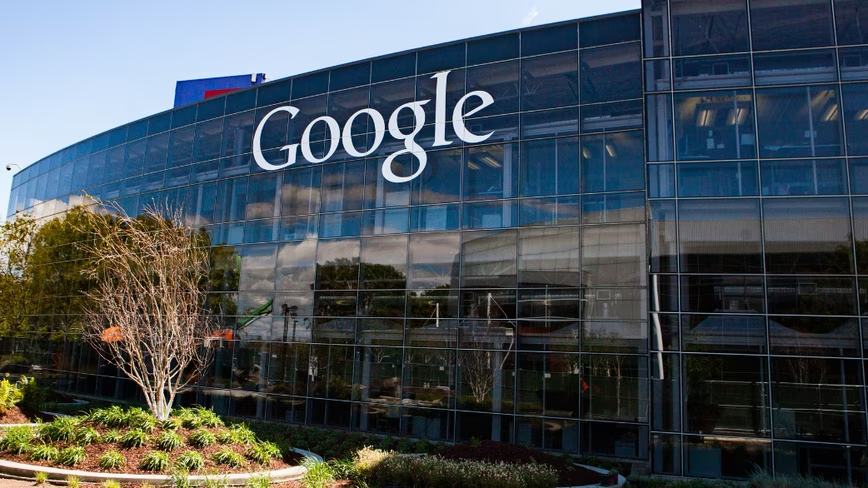
A judge just told Google to stop making rival app stores hard to install

Image: courtesy of Thenextweb

techAugust 15, 2026By Veridact EditorialUpdated Aug 15

Google Must Truly Open Android: What The Judge's Order Means For Your Phone

A federal judge has ordered Google to significantly ease the process of installing rival Android app stores, citing the company's previous efforts as 'unacceptable.' This ruling, part of the remedies stemming from Epic Games' antitrust victory against Google, aims to dismantle what the court called 'anticompetitive friction' that has long favored Google Play. The decision compels Google to remove unnecessary steps, warnings, and confirmation screens that hinder users from accessing alternative app distribution platforms, potentially reshaping the Android app ecosystem and offering users more choice, alongside new considerations for security.

Outlook

Android users should anticipate a notably streamlined process for installing third-party app stores in the coming months. Currently, installing an app store outside of Google Play often involves navigating through multiple layers of system settings, dismissing several warning prompts about potential security risks, and confirming intentions repeatedly. This process, often referred to as 'sideloading,' is designed by Google to be cumbersome, discouraging users from venturing beyond its official storefront.

Following Judge James Donato's order issued on August 13, 2026, Google is now required to strip away these layers of friction. This means the default experience for enabling 'unknown sources' – the setting that permits installations from non-Google Play stores – will likely become a single, clear action rather than a multi-step hurdle. Users could see fewer, or less alarmist, pop-up warnings when they attempt to download an app from an alternative store. The goal is to make the experience comparable to installing an app from Google Play itself, removing the punitive design choices that have long been a point of contention for rival developers and antitrust regulators.

For developers, this could open a clearer path to reach users without paying Google's fees or adhering to its strict content policies. For consumers, it means the theoretical choice of app stores, which Android has always offered, will become a practical reality. The specific technical changes Google will implement are still being worked out, but the directive is clear: the company must make rival app store installation 'significantly easier.'

Background

The judge's order is the latest development in a legal battle that has spanned years, originating from a lawsuit filed by Epic Games, the developer behind Fortnite. Epic accused Google of maintaining an illegal monopoly over app distribution on Android devices through its Google Play Store, effectively stifling competition and forcing developers to use its billing system, which takes a commission of up to 30%.

In December 2023, a jury sided with Epic Games, finding that Google indeed held an illegal monopoly. That verdict was a significant blow to Google's business model, which relies heavily on revenue from its app store. The subsequent phase of the lawsuit focused on remedies – what Google would be required to do to rectify its anticompetitive behavior.

As part of these remedies, Google was already mandated to allow competing app stores to be listed within Google Play and to grant them access to its app catalog. However, the core issue of how difficult it was for users to install these rival stores in the first place remained. Google's initial proposals for easing this process were presented to Judge Donato, but he found them insufficient. During a compliance hearing on August 13, 2026, Epic's legal team demonstrated the continued complexity users faced, showcasing multiple prompts and warnings. The judge's sharp rebuke – 'That is not acceptable' – underscored his view that Google was not genuinely complying with the spirit of the antitrust ruling, leading directly to this new, more stringent order.

See also

We tried Google’s AI glasses and they’re almost there→

Precedents

The fight over software distribution and platform control is not new; it echoes historical antitrust battles that reshaped the technology industry. The most prominent parallel is the United States v. Microsoft case of the late 1990s. Microsoft was found to have illegally maintained its monopoly in the PC operating system market by integrating its Internet Explorer browser, making it difficult for users to choose rival browsers like Netscape. The remedies in that case aimed to prevent Microsoft from tying its browser to Windows and to open up the operating system to third-party applications.

Similarly, the European Union has repeatedly fined Google for anticompetitive practices related to Android, specifically for bundling its search and browser apps and pushing manufacturers to pre-install them. These historical interventions show a consistent regulatory concern: when a dominant platform leverages its power to disadvantage competitors, authorities tend to step in. The core principle is that a platform owner should not use its essential infrastructure to unfairly promote its own services or hinder those of rivals. This current ruling against Google fits squarely within this established pattern of addressing dominant tech companies' control over their ecosystems.

This isn't just a technical tweak; it's a fundamental challenge to how Google controls access to the vast Android app economy. For Google, the ruling threatens a significant revenue stream and a core mechanism of its platform control. The company has long argued that the existing security warnings and multi-step installation process are essential for user safety, preventing the accidental installation of malicious software from unvetted sources. While there's a legitimate concern about malware, critics argue Google has used this argument to maintain its monopoly.

For developers, the implications are substantial. A truly open Android ecosystem could mean more choice in how they distribute their apps, potentially leading to lower commission fees and greater flexibility in app design and content policies. Smaller developers, in particular, might find it easier to reach users without being entirely dependent on Google Play's terms.

For consumers, the promise is greater choice and potentially more competitive pricing for in-app purchases. However, this increased freedom comes with an earned question: what about security? If installing third-party app stores becomes as easy as installing Google Play, users will need to exercise more caution. Not all app stores offer the same level of security vetting, and a less restrictive installation process could, in theory, expose less tech-savvy users to greater risks. The challenge will be for Google to implement the judge's order while still providing clear, intelligible warnings about potential risks, rather than the 'anticompetitive friction' it was accused of creating.

Scenarios

Analysis

The judge's order sets a clear direction, but the exact path forward and its ultimate impact remain subject to several factors.

Outcome 1: Genuine Market Diversification

One possible outcome is that Google will comply with the order by implementing a genuinely simplified installation process. This could lead to a significant increase in the adoption and usage of alternative app stores. Developers, no longer facing prohibitive barriers, might launch more apps on these rival platforms, fostering a more competitive app market. This would mean more options for users, potentially leading to innovation in app store features, pricing, and content curation. New app stores, perhaps specializing in certain types of content or offering more developer-friendly terms, could emerge and gain traction.

Outcome 2: Google's Measured Compliance and Ongoing Scrutiny

Alternatively, Google might implement changes that technically meet the letter of the order but still present subtle hurdles or maintain some level of discouraging messaging. While the judge has been firm, the interpretation of 'significantly easier' could still leave room for Google to prioritize its own interests while avoiding direct contempt of court. This approach would likely lead to continued scrutiny from Epic Games and other antitrust advocates, potentially resulting in further legal challenges or regulatory actions if the competitive landscape doesn't meaningfully shift. The initial 'unacceptable' compliance suggests Google may seek to do the minimum necessary.

Outcome 3: User Apathy and Security Concerns

Even with easier installation, a significant portion of Android users might simply stick with Google Play out of familiarity, convenience, or perceived security. The habit of using the default store is strong, and many users may not see a compelling reason to seek alternatives. Furthermore, if warnings about security risks become less prominent, some users might become more vulnerable to malicious apps from less reputable stores. This could lead to a public relations challenge for Google, which might be blamed for security incidents, even if they originate from third-party platforms.

Timeline

2023-12-11
Epic Games Wins Antitrust Lawsuit Against Google
A federal jury finds Google operates an illegal monopoly with its Google Play Store, siding with Epic Games in a landmark antitrust case.
2024-01-01
Remedy Phase Begins
Following the verdict, the court enters a phase to determine the remedies Google must implement to address its anticompetitive practices.
2026-07-01
Google's Initial Compliance Proposal
Google presents its plan to the court on how it intends to open up Android app distribution, including allowing rival app stores within Google Play.
2026-08-13
Judge Deems Google's Plan 'Unacceptable'
During a compliance hearing, Judge James Donato criticizes Google's efforts to ease rival app store installations, stating the proposed changes do not go far enough to remove 'anticompetitive friction.' Epic's lawyers demonstrate the continued difficulty users face.
2026-08-13
Judge Orders Google to Ease Rival App Store Installs
Judge Donato formally orders Google to remove barriers and make rival Android app stores significantly easier to find and install, requiring the removal of unnecessary steps and warnings.

Frequently Asked Questions

'Anticompetitive friction' refers to the deliberate design choices Google made that make it difficult for users to install app stores or apps from sources other than Google Play. This includes multiple warning screens, obscure settings, and complex steps that discourage users and effectively protect Google's dominant position.

Discussion

0/100
0/1000

Be the first to share your thoughts.

Related Coverage

tech

JPMorgan's $5 Billion Bet on Volta: The Shifting Economics of AI Infrastructure

Aug 28
tech

The Unsleeping AI: What OpenAI's Persistent Agent Means for Control and Capability

Aug 28
tech

The UK's Power Grid Is Overwhelmed by 'Phantom' Data Centers. What This Means for AI Ambitions

Aug 28
tech

Google Engineer's 'Gambling' Defense Tests Legal Limits of Prediction Markets

Aug 28

Stay ahead of the story

AI analysis delivered before events unfold. No spam.

ⓘ

Methodology: Veridact combines public data, historical precedent, and analytical models to evaluate the likelihood of future outcomes.