
The coming weeks will likely see continued quiet discussions between Bezos's representatives, the Bhatia-led consortium, and Fenway Sports Group. The complexity of a high-value minority stake deal, especially one involving a figure of Bezos's stature and a club like Liverpool, means that any formal announcement or definitive rejection may take time. The market will be watching for signals regarding Bezos's long-term strategic interest in sports.
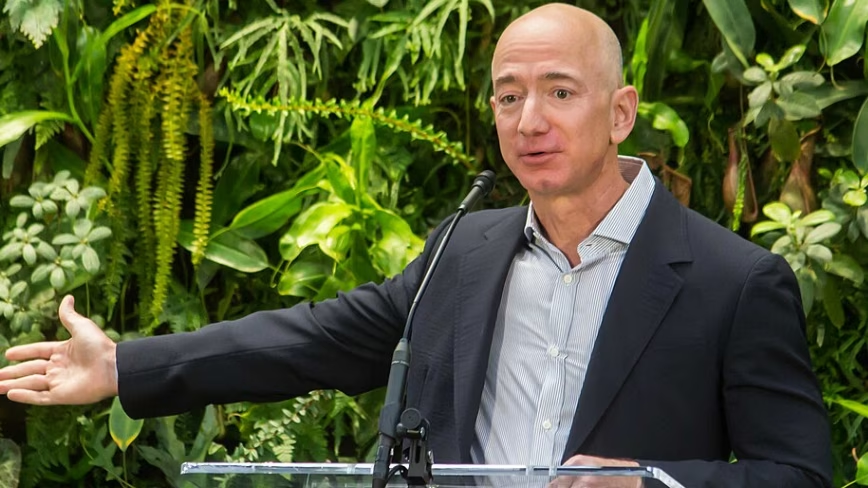
Image: courtesy of Thenextweb
The Strategic Play: What Jeff Bezos's Interest in Liverpool FC Really Means for Sports and Amazon
Jeff Bezos, the founder of Amazon, has been approached by a consortium led by Amit Bhatia to acquire a 30% minority stake in Liverpool FC. This potential £1.35 billion investment, which values the club at £4.5 billion, marks a significant moment given Bezos's lack of prior sports team ownership and Amazon's existing Premier League broadcasting rights. Talks are in their early stages, but the prospect raises questions about the future of sports ownership, media integration, and the commercial direction of elite football.
Outlook
Background
The news that Jeff Bezos, the founder of Amazon, has been approached to buy a stake in Liverpool FC has sent ripples through both the sports and technology sectors. On July 23, 2026, reports confirmed that a consortium led by businessman Amit Bhatia made an offer for a 30% minority stake in the Premier League club.
This offer values the 30% share at £1.35 billion, which implies a total valuation of £4.5 billion for Liverpool Football Club. Fenway Sports Group (FSG), the current owners of Liverpool, confirmed Bhatia's interest in securing a "strategic minority investment" in the club.
What makes this approach particularly notable is two-fold. Firstly, Bezos himself has never held ownership of a professional sports team, despite his extensive business career. Secondly, Amazon, the e-commerce and tech giant he founded, already holds significant broadcasting rights for Premier League matches. These talks are confirmed to be in their early stages, with no final decision yet made.
Precedents
The acquisition of sports franchises by high-net-worth individuals and corporate entities is a well-established trend, particularly in global football. Over the past two decades, English Premier League clubs have increasingly become attractive assets for billionaires seeking prestige, investment diversification, and access to a globally passionate fanbase. Owners like Roman Abramovich at Chelsea, Sheikh Mansour at Manchester City, and John Henry's Fenway Sports Group at Liverpool itself, exemplify this pattern.
Beyond individual wealth, the convergence of media companies and sports assets has also been a powerful force. Traditional broadcasters like Disney (with ESPN) have long integrated content creation with distribution. However, the rise of streaming services has intensified this, with platforms like Amazon Prime Video and Apple TV+ investing heavily in live sports rights. This often creates a natural synergy, where the distributor seeks to deepen its connection to the content.
Minority stakes, while not granting full control, are a common entry point into club ownership. They allow investors to gain influence, share in potential growth, and often serve as a precursor to larger acquisitions or strategic partnerships. For top-tier clubs, valuations have consistently climbed, driven by lucrative global broadcast deals, robust commercial revenues, and the sheer power of their international brands. The £4.5 billion valuation for Liverpool, while substantial, fits within the escalating market for elite football properties.
A potential investment by Jeff Bezos in Liverpool FC is not merely another high-profile financial transaction; it represents a significant inflection point for sports ownership, media strategy, and the commercial future of elite football.
For Liverpool, the immediate consequence could be immense. Bringing in a figure of Bezos's financial power and strategic acumen, even in a minority capacity, could unlock unprecedented commercial opportunities. This might manifest in accelerated global brand expansion, innovative fan engagement platforms leveraging Amazon's tech ecosystem, and potentially more capital for player recruitment or infrastructure projects. The club's strategic direction could shift, aligning it more closely with cutting-edge digital media trends.
For Amazon, this move could deepen its involvement in sports content beyond just broadcasting. Currently, Amazon Prime Video streams Premier League matches, positioning it as a distributor. If Bezos, through this consortium, were to personally invest in a club, it could blur the lines between content distribution and content ownership. This implies a future where Amazon could create deeply integrated experiences for its Prime subscribers – from exclusive behind-the-scenes content and merchandise integration to advanced statistical overlays and interactive viewing options, all tied to a club it has a direct stake in. This would position Amazon as a more direct and powerful player within the sports ecosystem, potentially setting a new standard for how tech companies engage with live sports.
For the Premier League itself, Bezos's entry would further elevate its already global profile, potentially attracting even more high-net-worth investors and tech-savvy capital. It would, however, also spark crucial discussions about potential conflicts of interest. The league would need to carefully navigate how a major media rights holder (Amazon) might coexist with an owner (Bezos) of one of its most prominent clubs, ensuring competitive fairness and transparency. This potential deal signals a future where tech giants and their founders are not just content distributors but increasingly direct owners of the content-generating assets, fundamentally reshaping the economic models and power dynamics within the sports industry.
Scenarios
AnalysisThe early stage of these discussions means several paths could emerge for Jeff Bezos and Liverpool FC:
1. Bezos joins the consortium, minority stake acquired: This is the most discussed scenario. If Bezos decides to invest, it would bring substantial capital and strategic insight to Liverpool. This could lead to innovative fan experiences, accelerated commercial growth for the club, and a deeper integration between the club's brand and Amazon's global ecosystem. Fenway Sports Group (FSG) would retain majority control but gain a powerful, influential partner, potentially paving the way for future collaborations or even a larger sale down the line. This outcome could redefine how top-tier football clubs leverage global tech and media partnerships.
2. Bezos declines, consortium proceeds without him: Jeff Bezos may ultimately decide not to join the Bhatia-led consortium. This could be due to a lack of strategic fit, personal interest, or an inability to agree on terms. The consortium might still proceed with other investors, potentially securing the 30% stake. However, without Bezos's involvement, the deal might carry less immediate strategic weight and global prestige. It would still be a significant investment for Liverpool but would lack the unique 'Amazon factor' that has captured market attention.
3. The entire deal collapses: It is always possible that the consortium, even with or without Bezos, fails to secure enough funding, or cannot agree on terms with Fenway Sports Group. High-value transactions involving global sports brands are complex and can fall apart for various reasons, including valuation disagreements, regulatory hurdles, or a shift in investor priorities. If the deal collapses, FSG might then seek other investors for a minority sale or decide to hold off on such an investment for the foreseeable future.
Timeline
2026-07-22
Initial Reports Surface
Sky Sports News first reports that Jeff Bezos, the Amazon founder, has been approached to join a consortium led by Amit Bhatia, which is in talks to buy a minority stake in Liverpool FC.
2026-07-23
Details of the Offer Emerge
Various reports confirm the approach for a 30% stake in Liverpool FC, valuing the club at £4.5 billion, with the stake itself priced at £1.35 billion. The reports also highlight Amazon's existing Premier League TV rights and Bezos's lack of prior sports team ownership.
2026-07-23
Confirmation of Early Talks
Sources close to the discussions confirm that talks are in their early stages and no final decision has been made regarding Bezos's potential involvement or the overall transaction.
Frequently Asked Questions
Amit Bhatia is a businessman known for his previous involvement in football as a director and co-owner of Queens Park Rangers FC. He is also the son-in-law of Indian billionaire Lakshmi Mittal, a prominent figure in the steel industry.
Discussion
Be the first to share your thoughts.