
Veridact
TechSportsFinanceGaming🎯 PredictionsAbout
Sign InSign Up
Veridact

Analysis before the headline. Veridact examines technology, finance, sports, and gaming events before they unfold through forecasting, probability modeling, historical precedent, and public prediction tracking.

Stay ahead of what's next

Forecasts, analysis, and prediction updates delivered to your inbox.

Coverage

  • Tech
  • Sports
  • Finance
  • Gaming

Company

  • About Us
  • Privacy Policy

© 2026 Veridact. Forecasting & analysis platform.

Content may include AI-assisted research and analysis. Predictions and opinions should not be considered financial, legal, medical, or investment advice.

tech
Google finally releases a Finance Android app, promises iOS version later in 2026

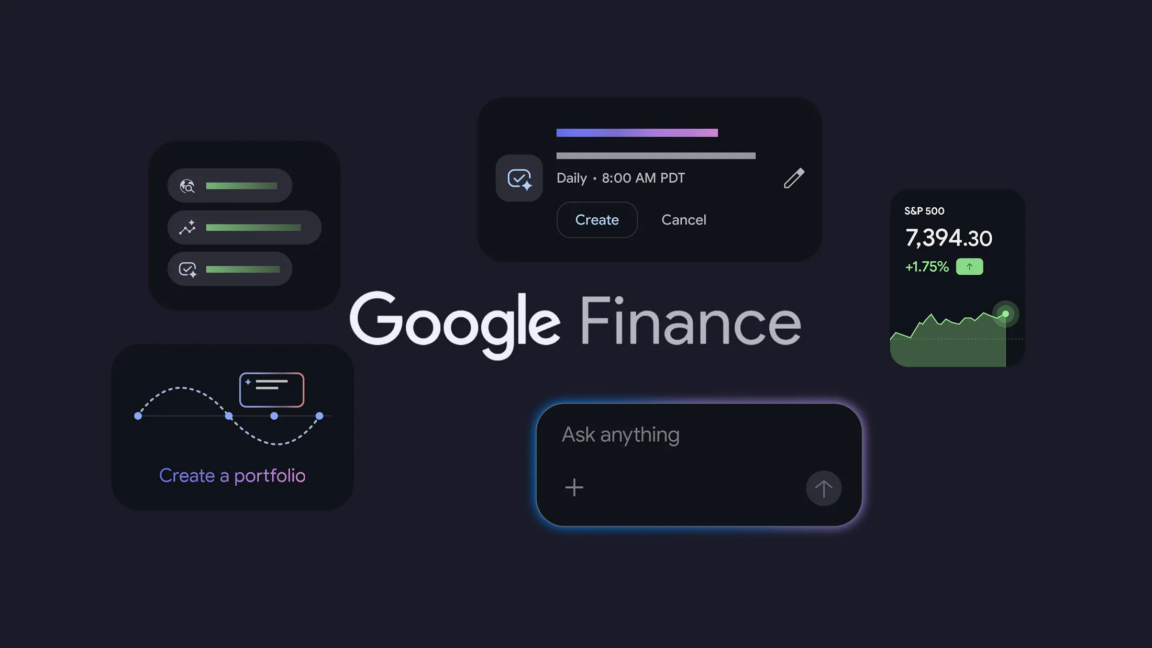
Image: courtesy of Ars Technica

techJune 26, 2026By Veridact EditorialUpdated Jun 26

Google Finance Returns to Mobile with Dedicated Android App, iOS Version Promised for Later This Year

Google has launched a standalone Google Finance app for Android devices, marking a renewed push into the mobile financial data space. The app, released on June 25, 2026, offers real-time market data, a live financial news feed, and AI-powered insights, including a 'Key Moments' feature that explains stock movements. A version for iOS devices is expected later in 2026.

Outlook

Users of the new Google Finance Android app can expect a streamlined experience focused on portfolio tracking and market intelligence. The app provides real-time updates on stock prices and other financial instruments, aiming to keep investors informed without needing to switch between multiple platforms. A central feature is the integration of Google's AI capabilities, specifically the 'Key Moments' tool. This feature is designed to cut through the noise, offering concise explanations for significant stock price changes, which could be a substantial value proposition for both experienced traders and casual investors trying to understand market volatility.

The app also includes a live financial news feed, pulling information directly into the user's interface, ensuring they have access to relevant stories as they break. This integration of data, news, and AI-driven analysis within a single, dedicated application represents a more cohesive approach than Google's previous fragmented offerings. For Android users, this means a more direct path to managing their investment watchlists and staying abreast of market developments, all within Google's ecosystem. The eventual iOS release is expected to mirror these functionalities, bringing the same set of tools and insights to Apple device users.

Background

For years, Google Finance has existed primarily as a web-based service, often integrated into the broader Google Search experience or accessible through a desktop browser. While it offered robust data and news aggregation, it lacked the immediacy and dedicated user experience that a standalone mobile application provides. This absence left a notable gap in Google's mobile ecosystem, especially when compared to rivals like Apple, which has its own native Stocks app, or a multitude of third-party fintech applications.

The decision to launch a dedicated app now, starting with Android, suggests a strategic re-evaluation of its role in personal finance. The timing aligns with a broader industry trend of increased retail investor participation and a growing demand for accessible, real-time financial tools. Furthermore, Google's emphasis on AI-powered insights reflects the company's overarching strategy to embed artificial intelligence into its core products, leveraging its technological strengths to differentiate its offerings in competitive markets. This move is not merely about providing data; it's about providing context and insights, which AI is uniquely positioned to deliver. The initial focus on Android underscores Google's commitment to its own operating system while setting the stage for a wider rollout.

See also

We tried Google’s AI glasses and they’re almost there→The Electric Ferrari Luce Is Finally Here→SoftBank hits a fresh record as Tokyo bets the OpenAI IPO is finally coming→

Precedents

Google's history with financial services has been a winding path, marked by experimentation and occasional shifts in focus. The original Google Finance website, launched in 2006, quickly became a popular destination for market data and news, offering a clean interface and powerful search capabilities. However, over the years, its prominence waned, and the service saw periods of neglect, with some features being deprecated or absorbed into other Google products. This on-again, off-again approach left many users looking for more consistent and dedicated financial tools elsewhere.

This isn't the first time a major tech company has attempted to deeply integrate financial tools into its ecosystem. Apple's native Stocks app has been a staple on iOS for years, providing basic market tracking. Meanwhile, giants like Microsoft have also offered financial services, often through MSN Money. What often determines success in this arena is not just the data itself, but the user experience, the depth of analysis, and the ability to seamlessly integrate with other aspects of a user's digital life.

The re-emergence of a dedicated Google Finance app, especially one touting AI integration, recalls a pattern seen across the tech industry: companies often cycle back to areas they once explored, armed with new technology or a refined strategy. The difference this time is the maturity of AI and its potential to transform how users interact with complex financial information, moving beyond simple data display to proactive insight generation. This current iteration appears to be a more serious, long-term play, signaling Google's intent to capture a share of the burgeoning retail investment market and to showcase its AI prowess in a practical, high-value application.

The re-entry of Google Finance as a dedicated mobile application carries significant implications, not just for Google, but for the broader fintech industry and individual investors. For Google, it represents a strategic effort to solidify its position in personal finance, a domain where it has previously had a less defined presence compared to its search or advertising businesses. By offering a robust, AI-powered finance app, Google aims to keep users within its ecosystem, preventing them from migrating to competing platforms for their financial intelligence needs. This could strengthen user loyalty and create new avenues for data-driven service offerings in the future.

For the fintech sector, Google's move introduces a formidable competitor. Existing financial news providers, brokerage apps, and personal finance management tools will now contend with a product backed by Google's immense resources, data infrastructure, and advanced AI research. The 'Key Moments' feature, in particular, could set a new standard for how financial information is consumed, pushing competitors to innovate their own analytical tools. This heightened competition could ultimately benefit consumers through improved features and more accessible insights.

For investors, the app offers the promise of democratized access to sophisticated financial analysis. The AI's ability to explain market movements could lower the barrier for entry into understanding complex financial dynamics, potentially empowering a new generation of retail investors. However, it also raises questions about the scope of these AI insights and the extent to which users should rely on automated explanations without deeper human analysis. The success of this app will depend on its ability to deliver accurate, timely, and actionable insights that build trust with a diverse user base, from seasoned traders to those just starting to track their first stock.

Scenarios

Analysis

One potential outcome is that the new Google Finance app, particularly with its AI-driven features, could quickly become a dominant player in the mobile financial data space. Google's brand recognition and the app's deep integration with the Android ecosystem could drive rapid adoption. If the 'Key Moments' feature proves genuinely useful and accurate, it could attract a significant user base away from existing general-purpose finance apps and even some specialized trading platforms that lack similar AI explanations. This might force competitors to accelerate their own AI integration or risk losing market share, leading to an overall uplift in the quality of financial tools available to consumers.

Another possible scenario is that the app finds a niche but struggles to displace established players. While Google has immense reach, the financial app market is mature and fragmented, with many users deeply entrenched in their preferred platforms for trading, portfolio management, and financial news. Building trust and convincing users to switch from services they've used for years could be a challenge, especially if the app's AI insights are perceived as superficial or less reliable than human-curated analysis. In this outcome, Google Finance might serve primarily as a supplementary tool for existing Google users rather than a primary financial hub, perhaps appealing more to casual investors than serious market participants. The success of the iOS version, when it arrives, will also be critical in determining its broader market impact, especially given Apple's native Stocks app and the preference many iOS users have for curated app experiences.

Timeline

2006
Google Finance Website Launch
Google initially launched its web-based Google Finance service, providing market data, news, and portfolio tracking functionalities.
2026-06-25
Android App Release
Google released a standalone Google Finance app for Android devices, featuring real-time market data, a live financial news feed, and AI-powered 'Key Moments' insights.
Later in 2026
Promised iOS App Release
Google has committed to releasing a standalone Google Finance app for iOS devices, bringing similar features to Apple users.

Frequently Asked Questions

It is a standalone mobile application for tracking investment portfolios, accessing real-time market data, and receiving financial news. It also includes AI-powered insights, such as 'Key Moments' that explain stock price movements.

Discussion

0/100
0/1000

Be the first to share your thoughts.

Related Coverage

tech

Patronus AI Secures $50 Million to Build 'Digital Worlds' for Stress-Testing AI Agents

Jun 26
tech

White House Curbs OpenAI's GPT 5.6 Rollout Amid Rising AI Security Fears

Jun 26
tech

Xbox Consoles See Major Price Hikes Amid Soaring Component Costs

Jun 26
tech

Instagram’s Big Screen Play: How Meta Plans to Capture More of Your Attention and What It Means for Ads

Jun 26

Stay ahead of the story

AI analysis delivered before events unfold. No spam.

ⓘ

Methodology: Veridact combines public data, historical precedent, and analytical models to evaluate the likelihood of future outcomes.