
The immediate focus will be on the ongoing negotiations between Hyundai management and the labor union in South Korea. A quick resolution, while possible, appears challenging given the deep-seated fears around job displacement and the broader economic demands. The outcome of these talks could establish a precedent for how other major industries, particularly manufacturing, approach the integration of advanced humanoid robotics and manage labor concerns in the coming years. Hyundai's ambitious deployment schedule for its Boston Dynamics-developed Atlas robots, set to begin in US factories by 2028, will likely face intense scrutiny depending on how this current dispute unfolds.
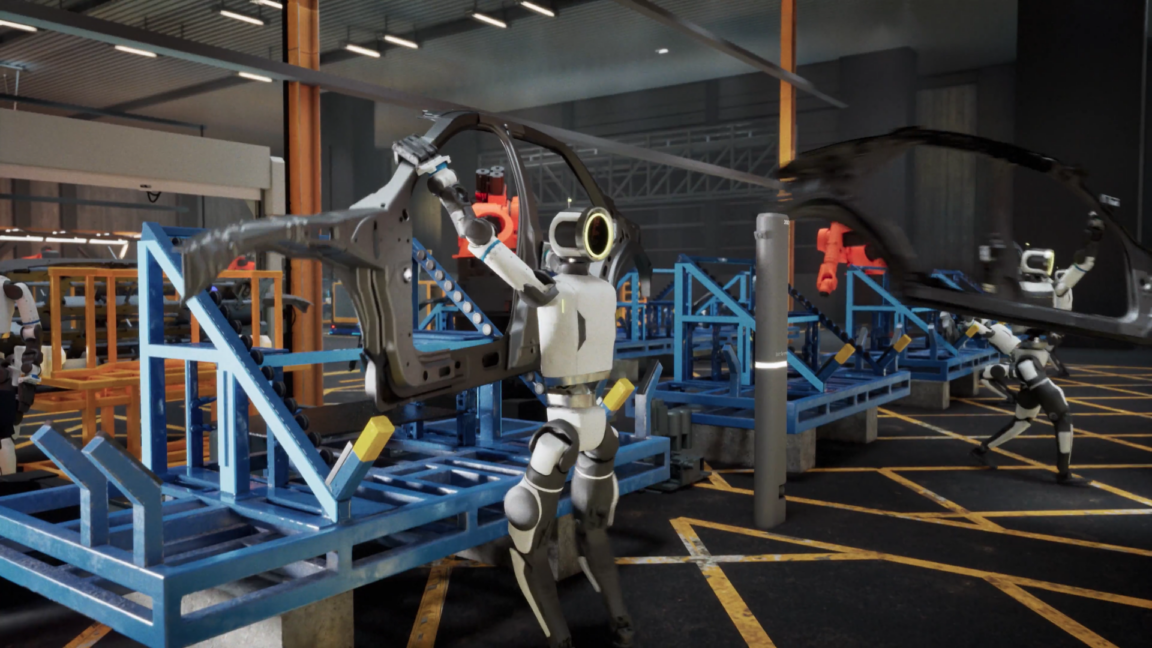
Image: courtesy of Ars Technica
Hyundai's Robot Strike Signals the New Front in the Automation War
Hyundai workers in South Korea initiated a partial strike this week, protesting the company's plans to introduce humanoid robots into its factories. This industrial action, which also includes demands for higher wages and improved working conditions, marks the first time a labor dispute in the global car industry has focused specifically on humanoid robots. The union, representing approximately 40,000 workers, has stated its support for new technology but insists on job security guarantees as the automaker prepares to deploy 25,000 Atlas robots starting in 2028.
Outlook
Background
The dispute centers on Hyundai's strategy to incorporate advanced robotics into its manufacturing operations, a move amplified by its ownership of Boston Dynamics. The company has confirmed plans to deploy 25,000 Atlas humanoid robots, beginning with its US facilities in 2028. These robots, unlike traditional fixed-arm industrial machines, are designed to mimic human movement and dexterity, raising concerns among workers about their potential to directly replace human labor on the assembly line. The union has publicly stated it supports technological advancement but is seeking concrete assurances regarding job protection and the economic benefits for its members. The strike, therefore, is not just about wages, but about defining the terms of engagement between human workers and increasingly sophisticated machines.
Precedents
Fears of automation replacing human jobs are not new. From the Luddite movement of the early 19th century, which saw textile workers destroy machinery, to the introduction of industrial robots in auto factories in the 1970s and 80s, each wave of technological progress has brought anxieties about job security. However, the current situation with humanoid robots presents a distinct challenge. Previous automation often involved machines performing specialized, repetitive tasks that humans found difficult or dangerous. Humanoid robots, like Boston Dynamics' Atlas, are designed for greater versatility and adaptability, potentially capable of performing a wider array of tasks traditionally reserved for human workers. This suggests a more direct competitive threat to human employment across various roles, unlike the augmentation or replacement of highly specific tasks seen with earlier generations of industrial robots. The auto industry, in particular, has a long history of negotiating automation, but the human-like form and capability of these new robots introduce a new dimension to these discussions, potentially requiring entirely new frameworks for labor agreements.
This strike at Hyundai is more than just another labor dispute; it is a bellwether event for the future of industrial employment globally. It represents the first significant pushback from human workers against the explicit threat of humanoid robots, setting a critical precedent. The way Hyundai and its union resolve this conflict could provide a blueprint — or a warning — for other manufacturers and labor organizations grappling with the rapid advancement of artificial intelligence and robotics. For companies, it tests the balance between efficiency gains from automation and the social and economic stability of their workforce. For workers, it highlights the urgent need for new strategies to protect jobs, secure fair compensation, and ensure retraining opportunities in an increasingly automated economy. The outcome will influence investment in robotics, labor policy, and ultimately, the pace and nature of the transition to a more automated industrial future.
Scenarios
AnalysisThe ongoing strike and negotiations at Hyundai could lead to several distinct outcomes, each with broader implications for the industry:
1. A Negotiated Settlement with Job Guarantees: Hyundai and the union could reach an agreement that includes specific commitments to job security, retraining programs for workers whose roles may be impacted by robots, and perhaps a share of the efficiency gains through performance bonuses or wage increases. This outcome could serve as a model for other companies looking to integrate humanoid robots while mitigating labor unrest.
2. Prolonged Industrial Action and Production Delays: If negotiations stall, the strike could escalate, leading to significant production disruptions for Hyundai. This might force the company to slow its robot deployment timeline or even re-evaluate the scale of its initial humanoid robot integration, demonstrating the power of organized labor to influence technological adoption.
3. Widespread Adoption of 'Robot Clauses' in Labor Contracts: Regardless of the immediate resolution, this strike is likely to prompt labor unions in other industries to demand explicit 'robot clauses' in future collective bargaining agreements. These clauses would aim to protect workers from displacement, ensure fair compensation, and establish clear guidelines for the introduction of advanced automation, thus standardizing how such technology is rolled out.
4. Accelerated Push for Fully Automated Factories: In response to persistent labor challenges, some companies might accelerate efforts towards more fully automated factories with minimal human intervention, especially in regions with high labor costs or strong union presence. This could lead to a two-tiered manufacturing system globally, with some regions embracing full automation and others maintaining a human-centric approach.
Timeline
2026-07-15
Hyundai Workers Begin Partial Strike
Workers at Hyundai's South Korean factories initiate a partial strike, citing fears of job displacement due to the company's plans to deploy humanoid robots. The strike also includes demands for higher wages and improved working conditions.
2028
Hyundai Plans Atlas Robot Deployment
Hyundai aims to begin deploying 25,000 Atlas humanoid robots, developed by its subsidiary Boston Dynamics, starting with its factories in the United States.
Frequently Asked Questions
Hyundai workers in South Korea are striking primarily due to fears that the company's planned deployment of humanoid robots will lead to job losses. They are also demanding higher wages and better working conditions.
Discussion
Be the first to share your thoughts.