
The first EVgo-owned and operated Tesla Supercharger sites are scheduled to open in the second half of 2026, with deployments beginning this fall. Drivers can expect to see these high-power V4 Superchargers, complete with Magic Dock adapters for CCS1 vehicles, integrated into Tesla's native navigation and route planning tools. This means Tesla drivers will be automatically routed to these EVgo locations as if they were traditional Superchargers, a crucial step towards seamless interoperability for the dominant EV brand.
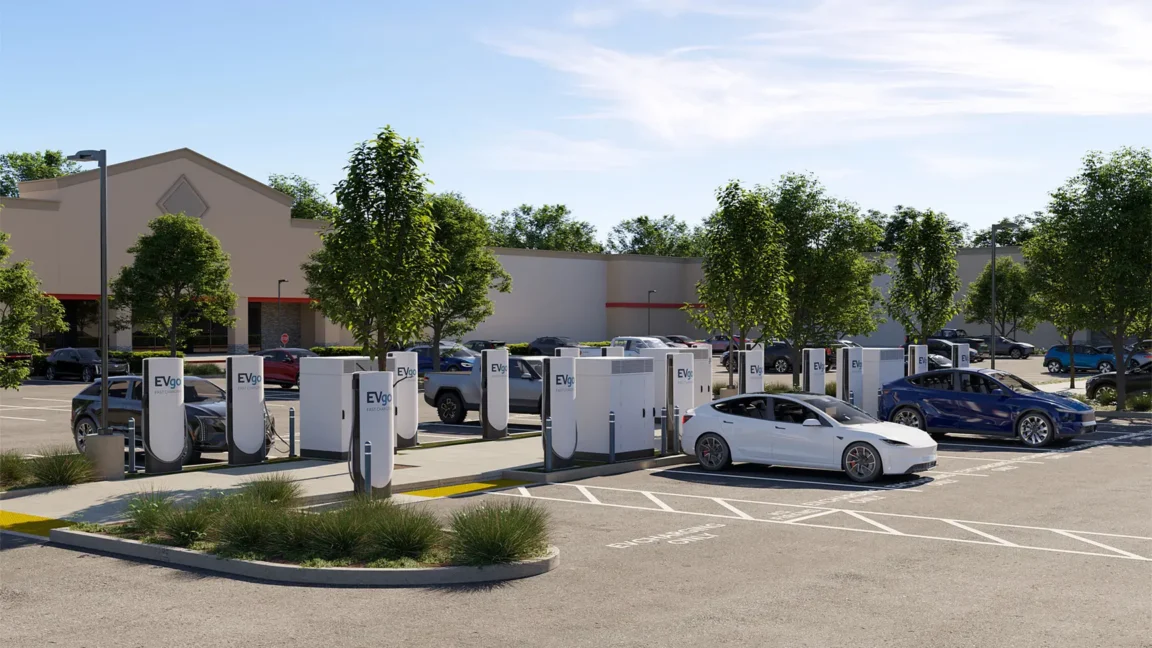
Image: courtesy of Ars Technica
EVgo's Tesla Supercharger Deal: What It Means for the Fragmented EV Charging Market
EVgo has begun building Tesla V4 Superchargers under a licensing agreement, a move that could significantly reshape the public electric vehicle charging landscape. These new stations, capable of delivering up to 500 kW, will support both NACS and CCS1 plugs and critically, will appear directly within Tesla's in-car navigation system. The partnership positions EVgo to draw in a substantial segment of Tesla drivers, while further solidifying the NACS standard across the industry.
Outlook
Background
For years, electric vehicle ownership has been shadowed by a persistent concern: charging infrastructure. While Tesla built out its proprietary Supercharger network, known for its reliability and ease of use, other networks like EVgo have often struggled with consistency, speed, and widespread availability. This created a bifurcated experience, with Tesla owners enjoying a relatively smooth charging journey while drivers of other brands faced a more fragmented and often frustrating reality.
The industry has been moving towards standardizing charging connectors. Tesla's North American Charging Standard (NACS) has gained significant momentum, with most major automakers announcing plans to adopt it for their future EVs. This shift means that eventually, most new EVs will natively use the NACS connector, which has been Tesla's standard. However, a large fleet of existing non-Tesla EVs still relies on the Combined Charging System (CCS1).
EVgo, as one of the largest public fast-charging providers in the U.S., has been at the forefront of this evolving market. The company has reported a surge in consumer demand, with network usage increasing over 700% in the last three years. This growth, however, also highlights the intense pressure on charging providers to scale up, improve uptime, and offer a user experience that rivals gasoline fueling.
Tesla's 'Supercharger for Business' program is a strategic play. It allows third-party businesses to build and own Tesla-designed charging infrastructure under license. This approach expands the Supercharger network's reach without Tesla bearing the full capital expenditure and operational burden of every single site. For EVgo, this partnership offers access to Tesla's highly regarded charging technology and, perhaps more importantly, direct integration into the Tesla driver ecosystem, a customer base previously largely inaccessible to non-Tesla networks.
Precedents
The history of transportation infrastructure is rife with competing standards and eventual consolidation. From railroad gauges in the 19th century to video formats in the 20th, industries often converge on a dominant standard, driven by consumer convenience and economic efficiency. In the EV charging world, the initial fragmentation — with different plug types like CHAdeMO, CCS1, and NACS — created friction for drivers and slowed adoption.
Tesla's Supercharger network has long been considered the gold standard for public fast charging, often cited for its reliability, speed, and seamless integration with the vehicle's navigation. Other networks have faced challenges with uptime, payment systems, and overall user experience, leading to widespread 'range anxiety' among non-Tesla EV owners.
Previous attempts at interoperability, such as installing multiple connector types at a single station, have been a stopgap. The more significant shift began when Ford, General Motors, and then a cascade of other automakers announced their adoption of NACS, effectively making it the de facto standard in North America. This EVgo partnership represents a critical next step: a major third-party network not just adapting to NACS, but building Tesla's actual hardware, under license, and integrating directly into Tesla's user interface. This goes beyond simply adding an adapter; it's about replicating the core Supercharger experience on a third-party network, a level of integration previously unseen.
This partnership represents more than just additional charging stations; it is a strategic alignment that could fundamentally alter the competitive dynamics of the North American EV charging market.
For EVgo, the immediate benefit is access to the vast and loyal Tesla customer base. By deploying Supercharger hardware and appearing in Tesla's navigation, EVgo can effectively tap into a segment of drivers known for their high charging demands and preference for reliability. This could significantly boost utilization rates at EVgo stations, which is critical for the profitability of charging infrastructure.
For Tesla, the 'Supercharger for Business' program allows for an accelerated expansion of the NACS ecosystem without direct capital investment. It also strengthens NACS's position as the leading charging standard, making it even more challenging for any competing standard to gain traction. The more NACS-compatible chargers exist, the more attractive Tesla vehicles become, and the more seamless the experience for all NACS-equipped EVs, regardless of brand.
The real stakes lie in reliability and user experience. If EVgo can successfully replicate the Supercharger experience — meaning high uptime, consistent power delivery, and effortless payment — it could set a new benchmark for the entire industry. This would put immense pressure on other charging networks to either adopt similar licensing models or drastically improve their own infrastructure. A more reliable and integrated charging experience across multiple networks is a direct answer to one of the biggest deterrents to EV adoption: charging anxiety. It signals a move towards a more mature and user-friendly charging ecosystem, which ultimately benefits all EV drivers and manufacturers.
Scenarios
AnalysisOne possible outcome is that this partnership accelerates the broader adoption of Tesla's NACS standard. As more third-party networks license Tesla's hardware and integrate with its navigation, the NACS ecosystem becomes even more robust, potentially pushing any remaining holdouts to switch.
Another scenario suggests that this move will significantly improve the overall reliability and user experience of public charging, particularly for Tesla drivers on third-party networks. If EVgo's Supercharger sites deliver on the promise of 500 kW charging and seamless integration, it could set a new bar for what consumers expect from public charging, forcing competitors to upgrade their own services.
Conversely, there is the risk of operational challenges. While the hardware is Tesla-designed, EVgo will own and operate these stations. Maintaining the 'Supercharger reliability' standard across a distributed network managed by a different entity could present unforeseen hurdles. If these EVgo-branded Superchargers do not consistently perform at the level Tesla drivers expect, it could dilute the Supercharger brand's reputation and lead to customer frustration.
Finally, this partnership could trigger a wave of similar agreements. Other charging networks, seeing the potential for increased utilization and improved customer satisfaction, may pursue their own licensing deals with Tesla, leading to a more consolidated and standardized charging landscape in the coming years.
Timeline
2026-08-05
EVgo Announces Supercharger Deployment
EVgo confirmed it has started building Tesla V4 Superchargers under license, with plans to deploy hundreds across major U.S. cities.
2026-09-01
Deployment Commences
Installations of the new EVgo-owned Tesla Superchargers are slated to begin this fall, marking the physical start of the partnership.
2026-07-01
First Sites Operational
The first EVgo Supercharger sites are expected to be fully operational and open to the public in the second half of 2026.
Frequently Asked Questions
It means EVgo is using Tesla's V4 Supercharger hardware design and technology, but EVgo itself will own and operate these physical charging stations. They are not directly owned or managed by Tesla, but they leverage Tesla's proven charging architecture.
Discussion
Be the first to share your thoughts.