
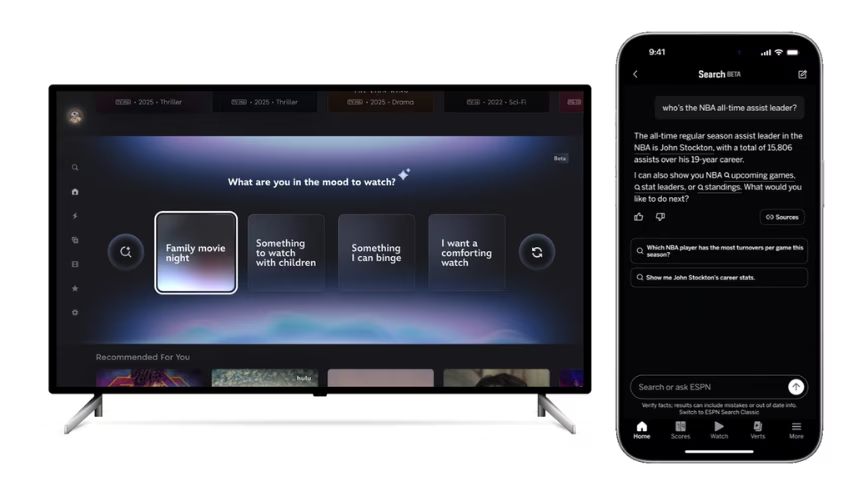
The current tests represent Disney's push to move beyond traditional keyword searches and static recommendation algorithms. For ESPN, a select group of users can now ask complex sports questions in plain language. Instead of simply searching for 'Lakers scores,' a user could ask, 'Who was the MVP when the Lakers last won the championship, and show me highlights from that season?' The AI then pulls answers, statistics, and related video content from ESPN’s extensive archives, including decades of articles, videos, research data, and internal knowledge.
On Disney+, the AI-powered discovery feature is designed to understand a user's immediate viewing intent rather than solely relying on past watch history. This means a subscriber could use natural language or voice commands to say something like, 'Show me a feel-good animated movie for family night' or 'I want a classic sci-fi film I haven't seen in a while.' The system then suggests content based on these nuanced descriptions, potentially opening up parts of the library that traditional recommendations might miss.
The most ambitious of these features is Disney+'s 'Personal Intelligence' tool. This opt-in function allows subscribers to link their Google Calendar and Gmail accounts directly to the app. The stated purpose is to provide personalized answers and integrate daily life information within the Disney+ experience. For example, a user could ask the app, 'What time does my flight land tomorrow?' and receive an answer without leaving the streaming interface. The feature is off by default and designed to retain conversation history, allowing users to pick up trip planning or other tasks across different sessions. This level of data integration suggests Disney is exploring a much broader role for its streaming platform than just content consumption.