
This article explores the extraordinary engineering and scientific coordination behind the 1973 Concorde eclipse flight. We will examine the specific challenges of matching the Moon's shadow speed, the scientific breakthroughs enabled by this extended observation, and why, despite decades of technological advancement, this record has yet to be surpassed. The enduring legacy of this mission, particularly its influence on subsequent airborne astronomical programs, provides a deeper understanding of its place in both aviation and scientific history.
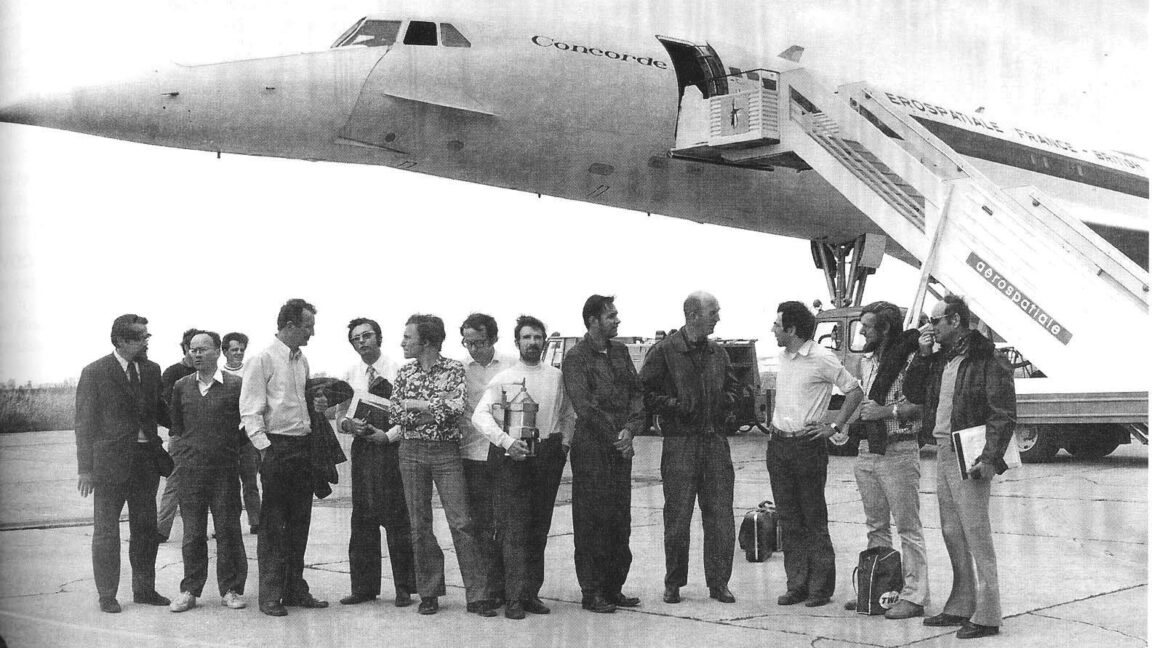
Image: courtesy of Ars Technica
Concorde's Unbroken Eclipse Record: Why the Supersonic Chase of 1973 Still Matters
More than five decades ago, a specially modified Concorde 001 embarked on an audacious scientific mission: to chase a total solar eclipse across Africa. On June 30, 1973, the supersonic jet flew at Mach 2 speeds and an altitude of 55,000 feet, successfully intercepting the Moon's shadow and extending the period of total eclipse observation to an unprecedented 74 minutes. This record for the longest total solar eclipse observation remains unbroken, a testament to a unique convergence of aviation technology and astronomical ambition.
Outlook
Background
On June 30, 1973, Concorde 001, the first prototype of the iconic supersonic jet, took off from Gran Canaria Airport (LPA) with a team of astronomers and scientists on board. Their objective was to intercept the Moon's shadow as it swept across the Earth during a total solar eclipse. The challenge was immense: the Moon's shadow was moving eastward over Africa at a speed exceeding 1,300 miles per hour.
To counter this, the Concorde, pushing its four Olympus 593 engines to full afterburner, reached speeds of Mach 2, or roughly 1,400 miles per hour, at an altitude of 55,000 feet. The initial projection was to maintain totality for 80 minutes, but headwinds reduced the actual observation time to 74 minutes. This still shattered all previous records for eclipse observation from any platform, including ground-based sites which typically offer only a few minutes of totality. Donald Liebenberg, a scientist from Los Alamos National Laboratory who was on the flight, confirmed the 74-minute record upon landing in Chad.
Precedents
Before the Concorde mission, total solar eclipse observations were largely limited by fixed ground locations or slower, lower-flying aircraft. Ground observers typically experience totality for a maximum of seven minutes. The idea of using an aircraft to extend this period had been explored, but no platform possessed the necessary combination of speed, altitude, and range to truly 'chase' the shadow effectively.
This mission was not merely an aviation stunt; it was a pioneering effort in mobile astronomy. It demonstrated that high-altitude, high-speed platforms could offer invaluable advantages for scientific research, particularly for phenomena requiring extended observation without atmospheric interference. The success of the 1973 flight directly inspired NASA's later airborne programs, like the Kuiper Airborne Observatory and the Stratospheric Observatory for Infrared Astronomy (SOFIA), which used modified aircraft for astronomical observations, albeit not at supersonic speeds to chase eclipses.
The Concorde's 1973 eclipse chase was more than a record-setting flight; it was a foundational moment for airborne science. By extending the observation window from minutes to more than an hour, scientists gained an unprecedented opportunity to study the Sun's corona and other phenomena in ways impossible from the ground. This extended view allowed for more detailed spectroscopic analyses, capturing subtle changes in the solar atmosphere that unfold over longer timescales.
The mission proved the viability of using advanced aviation as a scientific instrument, influencing how future astronomical and atmospheric research would be conducted. It underscored the value of combining cutting-edge technology with scientific inquiry, pushing the boundaries of what was thought possible in both fields. Even today, the 74-minute record serves as a benchmark, a reminder of the unique capabilities Concorde brought to both commercial aviation and specialized scientific endeavors.
Scenarios
AnalysisThe 1973 Concorde eclipse chase stands as a singular achievement in scientific aviation, and its record remains unbroken.
One likely outcome is that the 74-minute record will continue to stand for the foreseeable future. The specific confluence of factors — a supersonic passenger jet capable of Mach 2, a precisely calculated eclipse path over open terrain, and the political will to dedicate such an expensive asset to a scientific mission — is unlikely to be replicated. Modern aircraft, even military jets, typically lack the endurance and instrumentation space for such an extended, high-altitude scientific chase. Developing a new civilian supersonic transport for such a niche purpose would face immense economic and regulatory hurdles.
However, one speculative outcome is that future advancements in drone technology or uncrewed aerial vehicles (UAVs) could, in theory, challenge this record. A purpose-built, high-altitude, long-endurance supersonic drone, unconstrained by human physiological limits, might be designed to follow an eclipse path. Such a development would require significant technological leaps in autonomous flight, power systems, and payload capacity, along with substantial investment. Even then, the logistical and financial costs may make it an impractical endeavor for a specialized scientific mission, unless broader commercial or military applications drive the development of such platforms.
Timeline
1973-06-30
Concorde 001 Takes Flight
The first prototype Concorde, '001', departs from Gran Canaria Airport (LPA) for its historic eclipse chase mission.
1973-06-30
Eclipse Interception and Record Observation
Concorde 001 intercepts the Moon's shadow over Africa, flying at Mach 2 and 55,000 feet, achieving an unprecedented 74 minutes of total solar eclipse observation.
1973-06-30
Landing in Chad
After successfully completing its mission, the Concorde lands in Chad, with scientists confirming the new record for eclipse totality observation.
2015
Book Publication by Pierre Léna
Pierre Léna, one of the scientists on the flight, publishes 'Racing the Moon's Shadow with Concorde 001', detailing the mission's scientific and aviation achievements.
Frequently Asked Questions
The primary goal was to extend the observation time of a total solar eclipse far beyond what was possible from the ground. By flying at supersonic speeds along the path of the Moon's shadow, scientists aimed to gather more extensive data on the Sun's corona and other solar phenomena.
Discussion
Be the first to share your thoughts.