
Consumers in China who own affected electric vehicles, including models from Tesla, Xiaomi, and Xpeng, can expect to receive notifications from their manufacturers regarding the recall. The fixes will primarily involve either the application of warning labels to highlight the emergency release lever or software updates for vehicles with electronic release mechanisms. These updates are intended to make the emergency door releases more visible and accessible. For automakers, the recall necessitates a review of current and future vehicle designs to ensure compliance with China's evolving safety standards, particularly the upcoming 2027 ban on concealed door handles. This could lead to a broader industry re-evaluation of minimalist interior designs that might compromise safety features.
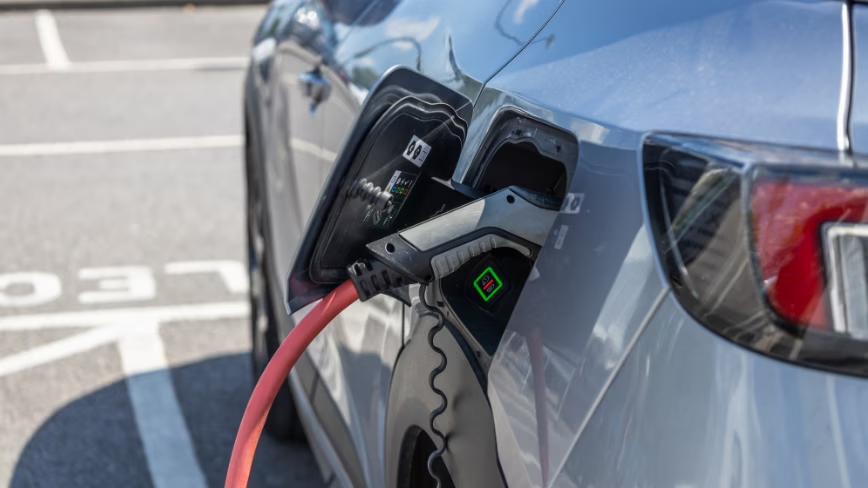
Image: courtesy of Thenextweb
China's Massive EV Recall: A Design Safety Reckoning for the Global Auto Industry
China's market regulator has ordered the recall of over 4 million electric vehicles, including nearly 3 million Teslas, because their emergency door release mechanisms blend too closely with the interior trim, making them difficult to locate and operate during an emergency. The recall, which begins September 25, 2026, involves fixes like warning labels and software updates. This sweeping action comes ahead of a 2027 standard in China that will ban concealed door handles, signalling a significant shift in automotive safety regulations and design priorities for the world's largest EV market.
Outlook
Background
The recall, initiated by China's State Administration for Market Regulation (SAMR), encompasses more than 4 million vehicles, making it one of the largest automotive safety interventions in the country's history. A substantial portion of this recall, nearly 2.98 million vehicles, belongs to Tesla, covering both China-made and imported models. This marks Tesla's most extensive recall within the Chinese market to date. The core issue revolves around the aesthetic choice of integrating emergency door release levers or buttons so seamlessly into the vehicle's interior trim that they become hard to find or operate, especially under duress.
This design trend has been driven by a desire for sleek, uncluttered cabin aesthetics, often prioritizing visual minimalism. However, in an emergency, particularly one involving a power failure or vehicle damage, the ability to quickly and intuitively locate an emergency exit mechanism is critical. China's move to address this now, ahead of a specific 2027 regulatory standard that will explicitly prohibit concealed handles, indicates a proactive stance on passenger safety and a willingness to mandate design changes even for globally prominent manufacturers.
See also
Precedents
Automotive recalls are a regular feature of the industry, often triggered by safety concerns discovered post-production. Historically, recalls have ranged from issues with airbags and brakes to software glitches. What sets this particular recall apart is its focus on a design aesthetic that has become prevalent in modern electric vehicles, rather than a purely mechanical or software defect. The tension between design innovation and practical safety has always existed, but it is particularly acute in the rapidly evolving EV sector where new technologies and design philosophies are constantly being introduced.
China's regulatory bodies have shown increasing assertiveness in overseeing the automotive market, especially as it relates to electric vehicles. In recent years, Beijing has tightened various safety and data security regulations for automakers operating within its borders. This recall follows a pattern of Chinese regulators setting specific standards that influence global automotive design, given the sheer size and importance of the Chinese market. Companies often adapt their vehicles to meet these unique local requirements, which can sometimes lead to different specifications for cars sold in China compared to other regions. This recall, and the forthcoming 2027 standard, suggest a continued trajectory of China influencing global automotive design through its regulatory framework.
This recall is more than just a logistical challenge for automakers; it represents a significant re-evaluation of core design principles within the electric vehicle industry, particularly regarding the balance between aesthetics and safety. For consumers, the ability to exit a vehicle quickly in an emergency is paramount, and a hidden release mechanism can turn a minor incident into a life-threatening one. The sheer scale of the recall, affecting millions of vehicles from major players like Tesla, highlights how widespread this design oversight has become.
For manufacturers, the immediate impact is the cost and logistical complexity of implementing fixes across a vast fleet. More importantly, the upcoming 2027 standard banning concealed handles in China forces a fundamental rethink of interior and exterior door design for any vehicle destined for that market. This could lead to a divergence in design standards between China and other regions, or it could prompt global manufacturers to adopt a single, more visible emergency release standard across all their markets to streamline production and avoid future recalls. The incident also serves as a reminder of the increasing influence of Chinese regulatory bodies on global automotive product development, pushing safety considerations to the forefront even for features traditionally considered stylistic choices.
Scenarios
Analysis1. Global Design Convergence on Safety: One possible outcome is that the 2027 Chinese standard, coupled with this large-scale recall, could prompt global automakers to standardize more visible and easily accessible emergency door releases across all their models, regardless of the market. This would simplify manufacturing and reduce the risk of similar recalls in other jurisdictions. It could also influence regulatory bodies in other major automotive markets to consider similar mandates, recognizing the universal safety concern.
2. Increased Scrutiny on EV Interior Design: The recall may lead to heightened regulatory scrutiny on minimalist or 'digital-first' interior designs in electric vehicles globally. Regulators might begin to question other design choices that prioritize aesthetics over intuitive functionality, particularly for critical safety features. This could slow down some of the more radical interior design innovations in EVs, pushing designers to integrate safety features more overtly.
3. Competitive Advantage for Compliant Manufacturers: Automakers who quickly adapt their designs to meet the new Chinese standard, or who already incorporate more visible emergency releases, could gain a competitive edge. This could be particularly true for domestic Chinese brands that are often quicker to respond to local regulatory shifts. Conversely, companies perceived as slow to react, or those with multiple similar recalls, might face a hit to their brand reputation and consumer trust in a highly competitive market.
Timeline
Frequently Asked Questions
Discussion
Be the first to share your thoughts.