
This article explores the deep entanglement of Tesla's global strategy with its China operations, detailing the scale of its manufacturing and sales in the country. It examines the dual pressures of escalating local competition and tightening U.S. regulations that aim to limit the presence of Chinese-linked technology in American cars. We will also unpack the speculative discussions around a potential divestment of Tesla's China assets, its implications for the company's financial health and stock performance, and what such a move might mean for its broader ambitions, including a possible merger with SpaceX.
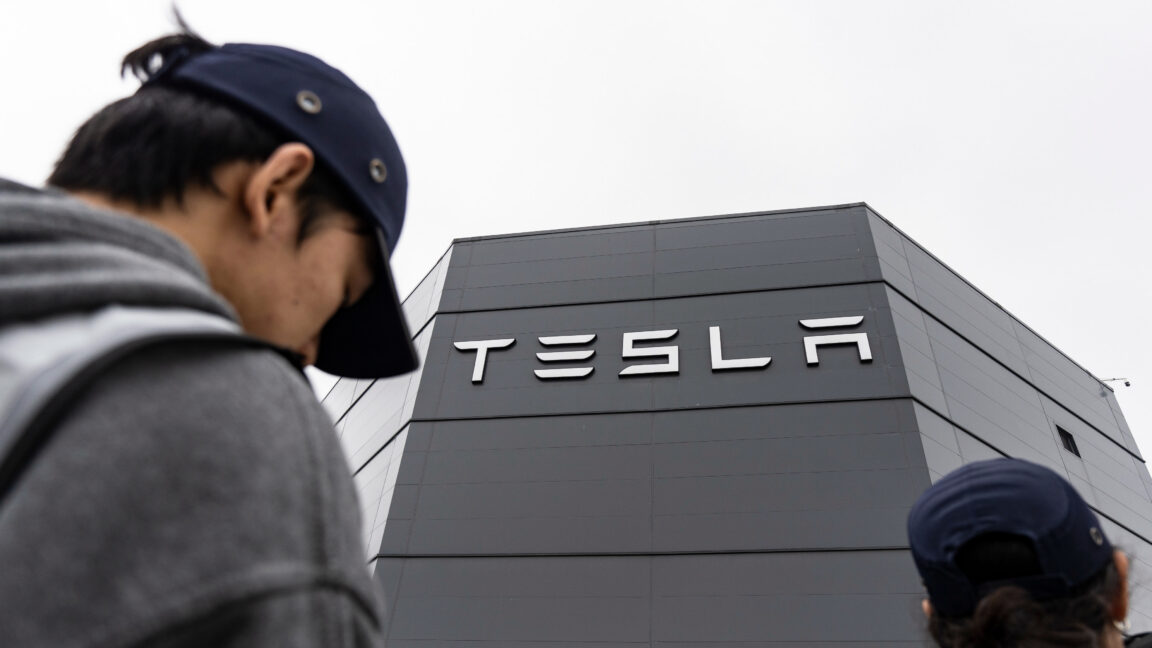
Image: courtesy of Ars Technica
Tesla's China Dilemma: Regulatory Walls, Local Competition, and a Possible SpaceX Pivot
Tesla's significant reliance on its China operations, particularly the Shanghai Gigafactory which produces 60% of its global vehicle output, is facing increasing pressure. While China remains crucial for the company's revenue and global supply chain, new U.S. regulations are set to restrict Chinese-linked software and hardware in American-market vehicles. Simultaneously, local competition has led to price reductions in China, eroding margins. Amid these challenges, analysts are debating a Wall Street Journal report suggesting Tesla is weighing a sale of its China business to help fund a potential merger with SpaceX, a move that could fundamentally reshape the automaker's global strategy and valuation.
Outlook
Background
For years, China has been more than just a market for Tesla; it has been a cornerstone of its global manufacturing and a significant contributor to its bottom line. The Shanghai Gigafactory stands as Tesla's largest and most efficient production facility worldwide. This single factory is responsible for manufacturing approximately 60% of all vehicles the company delivers globally, serving not only the Chinese domestic market but also acting as a crucial export hub for customers across Europe, Canada, and the broader Asia-Pacific region.
Despite this operational importance, China accounted for about 18% of Tesla's sales in the first half of 2026. This discrepancy between production volume and in-country sales highlights Shanghai's role as a global supply artery rather than solely a domestic sales engine. However, the domestic sales picture itself has grown more challenging. Local competition from Chinese electric vehicle makers has intensified, forcing Tesla to adjust its pricing strategy. Earlier this year, the company lowered the price of its Model 3 in China to around $42,919, down from an original price tag of $50,000. This move, while aimed at boosting sales, suggests a squeeze on profit margins in a rapidly maturing and competitive market.
Adding another layer of complexity are new regulatory measures in the United States. These regulations, which target Chinese-linked connected car software, went into effect for model-year 2027 vehicles – meaning cars expected on U.S. roads within the next two years. A more extensive ban on Chinese-linked hardware is slated to follow for model-year 2030. These rules are designed to reduce American dependency on Chinese technology within critical automotive infrastructure. In response, Tesla has already been working to reduce its reliance on China for vehicles it sells in the U.S. market, and it now appears to no longer import China-made cars for sale in the United States. This shift indicates a deliberate effort to insulate its largest market from geopolitical and regulatory friction, even as its global production remains deeply intertwined with China.
See also
Precedents
Tesla's journey in China has been unique among foreign automakers. Unlike many Western peers who were historically required to enter joint ventures with local companies, Tesla secured a crucial concession from the Chinese government in 2018: full ownership of its Shanghai Gigafactory. This move, following an earlier 5% stake sale to Tencent Holdings in 2017, allowed Tesla unprecedented control over its operations, supply chain, and intellectual property within China. This autonomy was a significant competitive advantage, enabling faster decision-making and direct integration of its global strategies.
Historically, Tesla has leveraged its Shanghai factory's efficiency to drive down costs and, in turn, adjust prices in the highly competitive Chinese market. The price reductions seen earlier this year for the Model 3 are not isolated incidents; Tesla has a track record of adjusting prices to stimulate demand and respond to local competitive pressures. This strategy has allowed it to maintain a strong, albeit challenged, position against a rising tide of domestic EV brands like BYD, Nio, and Xpeng, which offer increasingly sophisticated and cost-effective alternatives.
The broader pattern for Western companies operating in China has been one of balancing market access with increasing geopolitical and regulatory scrutiny. As the U.S. and China diverge on technology and trade policies, companies with deep ties to both economies face difficult choices. The U.S. government's recent actions, such as the bans on Chinese-linked automotive software and hardware, reflect a wider trend towards economic decoupling in strategic sectors. This creates a challenging environment for companies like Tesla, which have built global supply chains optimized for efficiency, now potentially requiring them to re-architect their operations along more politically aligned lines.
The confluence of these factors — China's pivotal role in production, intensifying local competition, new U.S. regulations, and the speculative sale of its China business — carries profound implications for Tesla, its investors, and the broader automotive industry.
For Tesla, a divestment of its China operations would represent a seismic shift in its global strategy. The Shanghai Gigafactory is not merely a production site; it is a cash-generating engine that has funded significant portions of Tesla's growth and capital expenditures. While the company reported $4.7 billion in operating cash flow, an 85% gain from the previous year, its free cash flow turned negative at $1.1 billion. This occurred during a period where Chief Financial Officer Vaibhav Taneja confirmed capital expenditures would exceed $25 billion in 2026. Tesla does hold a substantial cash reserve of $43.5 billion, well above its short-term debt of $1.4 billion, but a massive capital outlay like $25 billion underscores the ongoing need for robust cash generation.
Selling the China business, if it were to happen, could inject substantial capital into Tesla, potentially freeing up funds for other ventures. The Wall Street Journal report suggests this could pave the way for a merger with SpaceX, a move that would fundamentally reshape the corporate structure and focus of Elon Musk's empire. Such a merger would combine two highly capital-intensive, yet potentially transformative, businesses under a single umbrella, creating a diversified technology and manufacturing giant.
However, analysts caution that selling the China business could be a significant negative for Tesla stock. Losing its largest and most efficient factory, along with direct access to the world's largest EV market, would mean sacrificing a substantial portion of its production capacity and future growth potential. It would force Tesla to rapidly scale up production elsewhere, likely at higher costs and with significant execution risk. This could lead to a re-evaluation of Tesla's long-term revenue and earnings projections, potentially impacting its valuation.
Beyond Tesla, this situation highlights the growing challenges for multinational corporations navigating a bifurcating global economy. Companies that have optimized for global efficiency are increasingly being forced to choose sides or at least de-risk their supply chains from geopolitical tensions. The outcome of Tesla's strategic decisions in China could set a precedent for how other major manufacturers approach their operations in politically sensitive regions, influencing capital allocation, market access strategies, and the future of globalized production.
Scenarios
AnalysisTesla's strategic path forward in China presents a range of complex possibilities, each with significant consequences for its global footprint and financial health.
1. Divestiture of China Operations and SpaceX Merger:
One potential outcome, heavily discussed by analysts, is that Tesla could proceed with the sale of its China business. This would likely involve divesting the Shanghai Gigafactory and its associated sales and distribution networks. The primary driver for such a move, as suggested by the Wall Street Journal report, would be to generate a substantial cash infusion, which could then be used to facilitate a merger with SpaceX. This outcome would allow Tesla to de-risk its supply chain from future U.S.-China tensions and focus its resources on its U.S. and European operations, alongside the ambitious goals of a combined Tesla-SpaceX entity. The immediate financial impact could be a short-term boost from the sale proceeds, but it would come at the cost of losing a highly efficient production base and significant market access, potentially leading to a re-rating of its growth prospects by investors.
2. Strategic Retrenchment and Regionalization:
Alternatively, Tesla might opt for a more measured retrenchment rather than a full divestiture. This could involve significantly scaling back its China operations, perhaps by reducing export volumes from Shanghai and focusing the factory almost exclusively on serving the domestic Chinese market. This strategy would align with the new U.S. regulations by ensuring that vehicles sold in the U.S. are not produced with Chinese-linked components or software, while still maintaining some presence in the lucrative Chinese market. Such a move would require substantial investment in new production capacity in other regions, like North America or Europe, to compensate for the reduced global output from Shanghai. It would be a costly and time-consuming endeavor, but it could offer a middle ground, allowing Tesla to mitigate geopolitical risks without completely abandoning the Chinese market.
3. Continued Operation with Local Adaptation:
Despite the pressures, Tesla could choose to maintain its existing operational model in China, albeit with significant adaptations. This would involve a dual strategy: continuing to produce for the Chinese market and other export destinations (excluding the U.S. where regulations apply), while simultaneously investing heavily in localizing its supply chain within China to meet regulatory requirements and reduce costs further. This path would require Tesla to navigate the tightening competitive landscape by continuously innovating and adjusting prices. It would also demand careful management of its brand and market position against domestic rivals. While this maintains market access and production efficiency, it exposes Tesla to ongoing geopolitical risks and the potential for further erosion of its market share and margins in China.
Timeline
2017
Tencent Holdings Investment
Tesla sells a 5% stake in the company to Chinese internet giant Tencent Holdings for $1.8 billion, signaling its commitment to the Chinese market.
2018 October
Shanghai Gigafactory Announcement
Tesla officially announces its plan to build its first overseas Gigafactory in Shanghai, becoming the first foreign automaker to fully own a factory in China, following the government's end to joint venture requirements for EV manufacturers.
Early 2026
Model 3 Price Reduction in China
Tesla lowers the price of its China-made Model 3 to approximately $42,919 from $50,000, a move likely in response to increased local competition.
First Half of 2026
China Sales and Global Production Data
China accounts for roughly 18% of Tesla's sales, while the Shanghai Gigafactory produces 60% of the company's global vehicle output, highlighting its role as an export hub.
2026-08-04
Report on Potential China Business Sale
Reports emerge, citing analyst discussions on a Wall Street Journal article, suggesting Tesla is weighing the sale of its China business to pave the way for a merger with SpaceX. This is a speculative discussion among analysts, not a confirmed company plan.
Model Year 2027
US Connected Car Software Ban Takes Effect
New U.S. regulations banning Chinese-linked connected car software go into effect for vehicles slated to be on American roads within two years. Tesla has already begun to reduce its dependency on China for cars sold in the U.S.
Model Year 2030
US Hardware Ban Takes Effect
A similar U.S. ban on Chinese-linked hardware in connected cars comes into effect, further tightening restrictions on automotive components.
Frequently Asked Questions
China is crucial because Tesla's Shanghai Gigafactory is its largest and most efficient production facility, responsible for manufacturing 60% of its vehicles globally. These cars are sold not only in China but also exported to Europe, Canada, and other parts of Asia, making Shanghai a key hub for Tesla's global supply chain and revenue.
Discussion
Be the first to share your thoughts.