
The legislative clash over Introduction 0518-2026 will intensify in the coming weeks, pitting corporate supply chain leverage against municipal labor advocates. Expect increased lobbying expenditures, public rallies, and targeted consumer messaging as both sides attempt to shape public opinion before any formal council vote takes place.
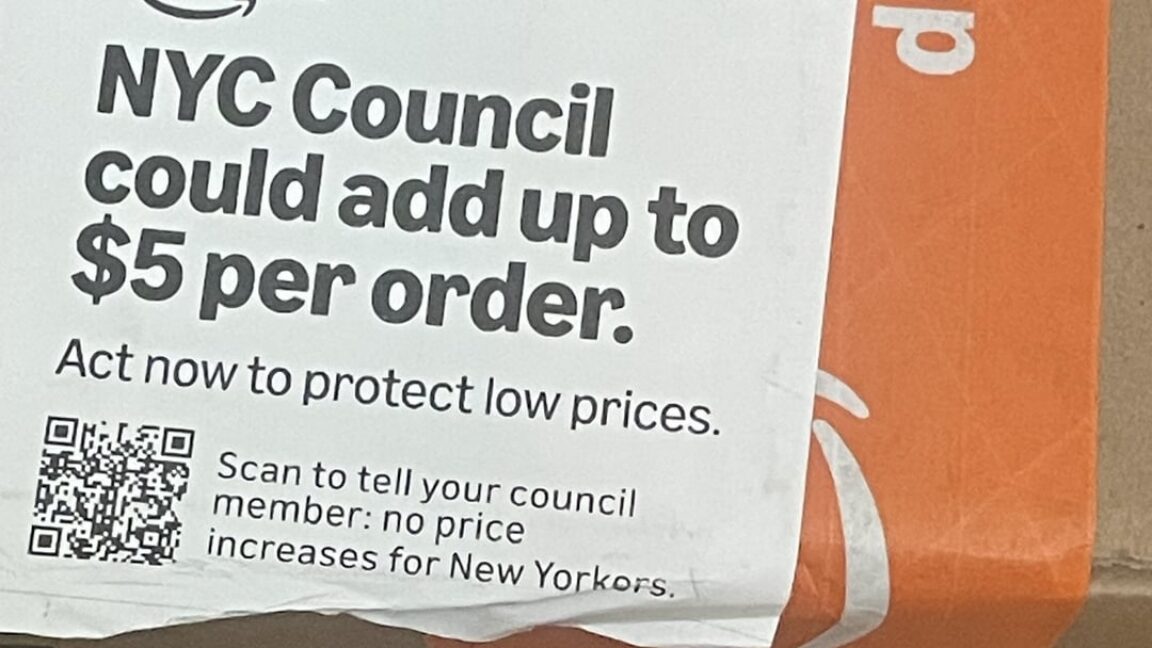
Image: courtesy of Ars Technica
Why Amazon Is Warning New York City Shoppers About a $5 Surcharge On Their Doorsteps
Amazon has turned its physical shipping labels and mobile app notifications into political billboards, warning New York City residents that the proposed Delivery Protection Act could hike delivery costs by up to $5 per order. The legislative battle centers on labor classifications for last-mile drivers and reveals how big tech companies mobilize consumers against municipal regulation.
Outlook
Background
The Delivery Protection Act, backed by Mayor Zohran Mamdani and municipal labor groups, targets the independent contractor model that underpins modern e-commerce fulfillment. Currently, Amazon relies on a vast network of Delivery Service Partners—independent businesses that employ local drivers and manage van fleets. The proposed bill mandates that last-mile facilities obtain city licenses and directly employ their driving workforces, a structural change that Amazon claims will dismantle its efficient urban logistics network and force it to relocate distribution hubs outside the five boroughs.
Precedents
Major logistics providers have a long history of fighting local labor regulations by warning consumers of imminent price hikes and service disruptions. When cities attempt to mandate specific employment models or wages for gig and delivery workers, platform companies routinely deploy consumer-facing alerts to turn public pressure against municipal lawmakers. Similar battles have played out across California and various European capitals regarding app-based driver classifications, where platforms argued that direct employment would destroy operational flexibility.
The outcome of this municipal dispute sets a crucial precedent for urban logistics across the United States. If New York City successfully forces a major retailer to abandon its independent contractor model for last-mile delivery, other metropolitan areas facing similar congestion and labor pressures could adopt identical licensing frameworks. For consumers, the core issue is whether corporate efficiency will be traded for direct worker protections, and who ultimately absorbs the cost of that transition.
Scenarios
AnalysisAnalyst projections suggest the conflict could evolve down several distinct paths depending on council negotiations and legal challenges:
- The New York City Council may pass the bill in its current form, prompting Amazon to file federal lawsuits challenging municipal labor mandates while threatening to scale back its local distribution footprint.
- Lawmakers and corporate representatives could negotiate a compromise, modifying the licensing requirements or phasing in worker protections over a longer period to avoid drastic price increases.
- The legislation could stall amid intense lobbying and public relations pressure, leaving the existing Delivery Service Partner network intact while sparking renewed state-level legislative efforts.
Timeline
Earlier this year
Introduction of Intro 518
The New York City Council formally introduced the Delivery Protection Act, proposing mandatory licensing for last-mile facilities and direct employment requirements for delivery workers.
November 2026
Escalation to Consumer Interfaces
Amazon began displaying warnings on its website, mobile app push notifications, and physical package shipping labels claiming the bill could add up to $5 per order.
Frequently Asked Questions
Also known as Introduction 0518-2026, the proposed New York City legislation requires companies operating last-mile delivery facilities to obtain city licenses and directly employ their delivery drivers rather than relying on third-party contractors.
Discussion
Be the first to share your thoughts.