
The tension between the immediate, massive energy needs of AI data centers and long-term climate goals is setting the stage for ongoing policy debates and regulatory skirmishes. Expect continued pressure from technology companies for reliable, scalable power sources, likely maintaining demand for natural gas. Simultaneously, environmental groups and renewable energy developers will intensify their efforts to influence utility commissions and state legislatures, advocating for grid modernization, energy efficiency, and faster integration of clean energy. The pace of new gas plant approvals, particularly for facilities directly tied to data centers, will remain a key indicator of this unfolding struggle. The U.S. Energy Information Administration (EIA) has already significantly revised its forecasts for new gas plant capacity, suggesting this trend is far from peaking.
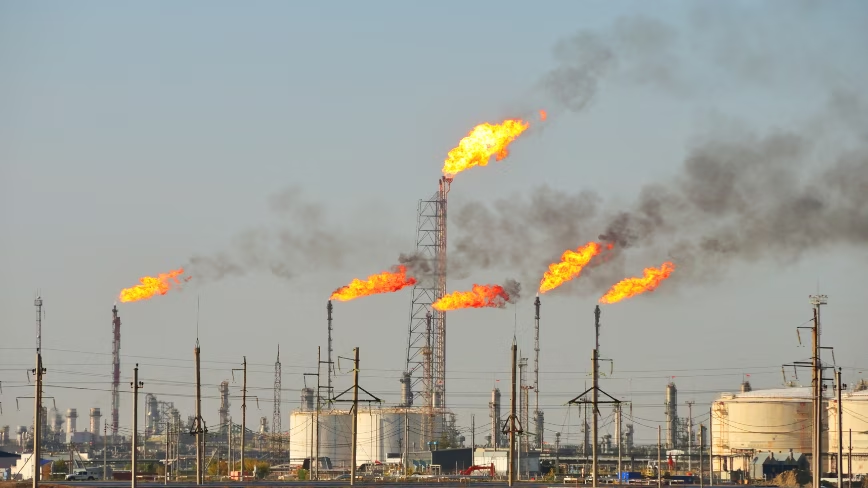
Image: courtesy of Thenextweb
AI's Power Hunger Ignites a Natural Gas Boom, Setting Up a Quiet Battle Over the Grid
The rapid expansion of artificial intelligence is fueling an unprecedented surge in natural gas-fired power plant construction across the United States. This boom is driven by the enormous energy demands of new data centers, some of which consume more power than entire mid-sized cities. While tech giants race to build out AI infrastructure, environmental advocates and clean energy proponents are mobilizing to push for cleaner alternatives, sparking a regulatory and policy clash over the future of the nation's energy supply.
Outlook
Background
The artificial intelligence industry's rapid growth has created an extraordinary demand for electricity. Data centers, the physical infrastructure housing AI computation, are consuming power at a scale previously unseen, often requiring dedicated energy generation. This has led to the largest construction boom in natural gas-fired power plants in history.
CONFIRMED: The U.S. Energy Information Administration has nearly tripled its prediction for new gas plant capacity over the next few years.
CONFIRMED: This surge is directly linked to the expansion of data centers, many of which are being built specifically to power AI and cryptocurrency operations, as well as general cloud computing needs.
CONFIRMED: Some individual data centers require more energy than a mid-size city, putting immense strain on existing power grids.
CONFIRMED: Across Ohio, for example, ten gas-fired power plants are either proposed or under construction, specifically to serve these data centers, not residential homes.
CONFIRMED: One such facility, the Apollo plant, was approved by the Ohio Power Siting Board on February 3, 2026, less than three months after its plans were submitted, highlighting the speed at which these projects are moving through regulatory processes.
CONFIRMED: Michael Cork, a postdoctoral researcher at Harvard University, has stated that the AI industry's reliance on 'off-the-grid' natural gas generation is 'emerging as one of the largest under-examined air-quality risks in the country.'
INFERRED: The quick approval processes for these plants indicate a prioritization of immediate power supply for economic development, potentially at the expense of thorough environmental review or consideration of alternative energy solutions.
CONFIRMED: Environmental advocates and clean energy corporations are actively working to challenge these developments, engaging with regulatory bodies and monopoly utilities that control energy supply and grid access. Their efforts focus on promoting renewable energy sources and more sustainable grid management.
Precedents
The current acceleration in gas plant construction to meet immediate, high-volume energy demand echoes historical patterns of energy infrastructure development during periods of rapid industrial or technological growth. In the early 20th century, the expansion of manufacturing and electrification led to a rapid build-out of coal-fired power plants. Similarly, the dot-com boom and later the rise of cloud computing spurred significant, though less dramatic, investments in data center infrastructure and associated power needs.
What makes the current situation distinct is the sheer scale and speed of AI's energy requirements, coupled with a global imperative to decarbonize. Historically, utilities have favored natural gas for its reliability, relative affordability, and ability to be dispatched quickly to meet fluctuating demand, making it an attractive 'bridge fuel' as grids transition away from coal. However, the current boom suggests natural gas is being positioned not just as a bridge, but as a primary, long-term power source for a critical new industry.
INFERRED: The 'fast-tracked' approvals for facilities like Ohio's Apollo plant reflect a governmental and industrial tendency to prioritize economic and technological competitiveness over slower, more deliberative environmental planning, especially when faced with urgent demand.
INFERRED: The fight by renewable energy allies to push back against this trend also has historical precedent, recalling past battles against fossil fuel expansion, but now with the added complexity of a rapidly evolving technological sector driving the demand.
This rapid build-out of natural gas plants for AI data centers carries significant consequences for climate action, air quality, and the broader energy transition.
First, it directly conflicts with efforts to reduce carbon emissions and combat climate change. Natural gas, while cleaner than coal, is still a fossil fuel that releases greenhouse gases when burned. A boom in new gas infrastructure risks locking in decades of emissions at a time when global climate targets demand aggressive decarbonization.
Second, it raises serious public health concerns. Harvard's Michael Cork warns of 'under-examined air-quality risks' from these 'off-the-grid' generation facilities. These plants emit pollutants that can contribute to respiratory illnesses and other health problems, particularly in communities located near the sites.
Third, the sheer power consumption of data centers fundamentally alters the calculus for energy planning. Utilities and regulators are forced to grapple with unprecedented demand spikes, potentially diverting investment from renewable energy projects and grid modernization efforts towards more traditional, faster-to-deploy fossil fuel solutions. This could slow the broader energy transition by creating a perceived need for fossil fuel reliability.
Finally, it exposes a growing tension between technological advancement and environmental sustainability. As AI becomes more integral to the global economy, its environmental footprint will draw increasing scrutiny, potentially leading to new regulatory frameworks or public pressure on tech companies to source cleaner power.
Scenarios
AnalysisThe clash between AI's energy demands and climate objectives could lead to several distinct outcomes:
1. Continued Gas Dominance with Mitigated Pushback: The immediate need for reliable, scalable power for AI data centers may continue to drive natural gas plant construction. Regulatory bodies, under pressure to facilitate economic growth and technological leadership, might continue to fast-track approvals. Environmental and clean energy advocates could achieve some concessions, such as stricter emissions controls or requirements for offsetting carbon footprints, but the overall trend of gas-fired power for AI would likely persist.
2. Accelerated Renewable Integration and Grid Modernization: Stronger regulatory intervention, coupled with increasing corporate and public pressure, could force tech giants and utilities to prioritize renewable energy solutions. This would require significant investment in grid upgrades, energy storage, and innovative power purchasing agreements to ensure reliability. States and localities might implement policies that mandate a certain percentage of renewable energy for new data centers, potentially slowing the pace of AI expansion in areas where clean energy infrastructure is lacking.
3. Hybrid Energy Models with Enhanced Efficiency: A middle ground could emerge where data centers rely on a hybrid energy mix. This might involve a combination of new, highly efficient natural gas plants for baseline power and reliability, coupled with substantial investments in co-located renewable energy sources like solar and wind, and advanced battery storage. Emphasis would also be placed on improving the energy efficiency of data centers themselves, reducing their overall power draw through hardware and software optimizations. This approach would seek to balance the need for immediate power with long-term sustainability goals.
Timeline
Frequently Asked Questions
Discussion
Be the first to share your thoughts.