
The immediate focus for Boeing and NASA is an uncrewed test flight, which CEO Kelly Ortberg suggested could happen in 2026. This mission is crucial for certifying Starliner's systems before any further crewed flights. The first crewed mission, Starliner-1, remains without a formal launch date, with projections ranging from late 2026 to late 2027. Future developments will hinge on resolving the technical issues that led to the 2024 mishap and the subsequent decision to use a competitor's spacecraft for astronaut return. NASA's rigorous safety reviews will dictate the pace, and port availability on the International Space Station will also be a key scheduling factor.
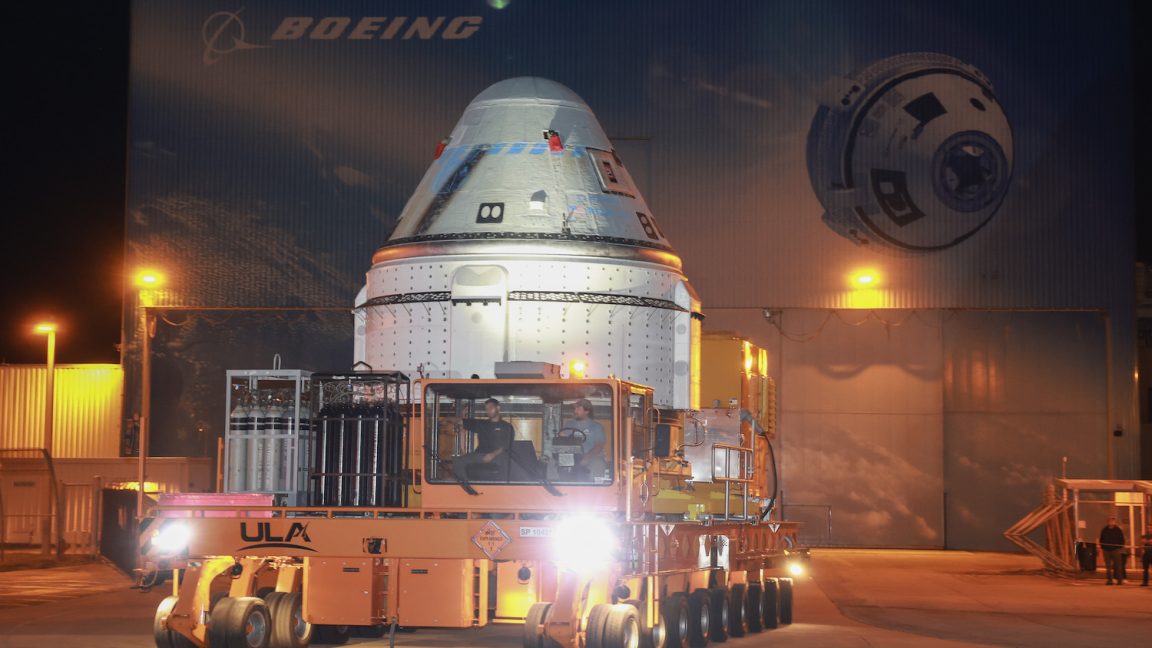
Image: courtesy of Ars Technica
Boeing's Starliner Optimism Collides With The Reality Of A SpaceX Rescue
Despite Boeing CEO Kelly Ortberg's recent optimism about Starliner flying an uncrewed mission in 2026, the spacecraft's journey has been marked by significant setbacks. NASA formally classified its 2024 crewed flight as a "Type A" mishap, the most serious category, and the astronauts from that mission are confirmed to be returning to Earth via a SpaceX Crew Dragon. This decision highlights persistent technical challenges and casts a long shadow over Starliner's future in NASA's commercial crew program, raising questions about Boeing's ability to meet its commitments and compete in a critical space market.
Outlook
Background
Boeing's Starliner program has been a cornerstone of NASA's Commercial Crew Program, intended to provide a second independent vehicle, alongside SpaceX's Crew Dragon, for transporting astronauts to and from the International Space Station. This dual-provider strategy was designed to ensure redundancy and maintain access to space for U.S. astronauts after the Space Shuttle program retired.
The program, however, has been plagued by delays and technical issues. An initial uncrewed orbital flight test (OFT-1) in late 2019 suffered significant software glitches, preventing it from reaching the ISS. Boeing then committed in January 2020 to fly a second uncrewed test, OFT-2, at its own expense to address these problems. Even this re-flight faced its own setbacks, pushing its launch well beyond initial estimates.
The most recent and significant challenge emerged from the Starliner's crewed flight on June 5, 2024. While the mission reached the ISS, NASA formally classified it as a "Type A" mishap in February 2026. This classification signifies a major failure resulting in severe damage, injury, or death, or a total cost exceeding $2 million. It is the most serious designation NASA applies to incidents. The ultimate consequence of this mishap became clear in August 2024, when NASA confirmed that the Starliner astronauts would return to Earth on a SpaceX Crew Dragon. This decision, unprecedented in the commercial crew era, underscores the severity of the issues identified with Starliner during its mission and its unsuitability for a safe return journey at that time.
Against this backdrop of significant operational challenges and public scrutiny, Boeing CEO Kelly Ortberg expressed confidence in July 2026 that Starliner could fly an uncrewed mission "this year." However, the Aerospace Safety Advisory Panel (ASAP) chair Susan Helms noted that while Boeing and NASA are committed to flying the spacecraft again for certification, there is still no formal launch date for the subsequent crewed mission, Starliner-1, describing its timing as "in the next year or so."
See also
Precedents
The history of complex aerospace development, particularly in human spaceflight, is riddled with delays, cost overruns, and unexpected technical hurdles. Boeing's Starliner program is not an isolated incident in this regard. NASA's own Space Shuttle program, for example, faced extensive development challenges and post-launch issues throughout its operational life. Similarly, early commercial space efforts saw multiple failures before achieving consistent success.
What distinguishes Starliner, however, is the context of its development within a fixed-price contract model and in direct competition with SpaceX. While initial delays are common, Starliner's persistent software issues, valve problems, and now the critical "Type A" mishap classification, coupled with the need for a competitor's vehicle to bring its crew home, mark a deviation from typical recovery trajectories. Historically, when a prime contractor faces such profound challenges, it often leads to deep internal reviews, significant management changes, and a re-evaluation of program scope or even viability.
The pattern suggests that technical problems in complex systems rarely resolve quickly or without substantial additional investment and oversight. Boeing's commitment in 2020 to fund OFT-2 itself, after the initial uncrewed flight failure, indicated an early recognition of responsibility and the financial stakes involved. The current situation, where a crewed mission resulted in a "Type A" mishap and required a competitor's rescue, suggests the underlying issues may be more systemic than previously acknowledged, mirroring the challenges seen in other large-scale, high-stakes engineering projects where initial designs or processes prove insufficient.
The Starliner program's ongoing struggles carry significant weight for several key stakeholders, extending far beyond the immediate technical fixes. For NASA, the core issue is the reliability and redundancy of its human spaceflight capabilities. The Commercial Crew Program was designed to ensure the United States could independently transport astronauts to the ISS, ending its reliance on Russian Soyuz capsules. While SpaceX has successfully filled much of this gap, Starliner's consistent delays and recent operational failures mean NASA's desired two-provider model remains incomplete and vulnerable. This places additional pressure on SpaceX and potentially limits NASA's flexibility in mission planning or crew rotation, especially if unforeseen issues arise with the Crew Dragon.
For Boeing, the stakes are both financial and reputational. The company has already absorbed significant costs for Starliner's development and re-flights, well beyond its initial contract value. Each delay and mishap adds to these financial burdens, impacting its aerospace division's profitability. More critically, the program's woes erode Boeing's standing as a premier aerospace contractor. The company is already under intense scrutiny for issues within its commercial aircraft division. Persistent problems with Starliner compound these concerns, raising questions about its engineering rigor, quality control, and ability to execute complex, high-stakes projects on time and budget. The decision to have Starliner astronauts return on a SpaceX vehicle, a direct competitor, is a particularly stinging blow to Boeing's image and its claims of technological leadership. This public reliance on a rival for a critical safety function is likely to be a point of reference for years, potentially affecting future government contracts and investor confidence.
Finally, for the broader commercial space industry, Starliner's trajectory serves as a cautionary tale about the complexities of human spaceflight. While it highlights the immense success of SpaceX's agile development model, it also shows that even established aerospace giants like Boeing face profound challenges when innovating in this demanding sector. The future of Starliner will shape perceptions of commercial partnerships in space and influence how NASA and other agencies structure such contracts moving forward.
Scenarios
AnalysisThe path forward for Boeing's Starliner program remains uncertain, with several distinct outcomes possible:
1. Successful Return to Flight and Eventual Certification: One potential outcome is that Boeing, with NASA's continued oversight, successfully addresses the identified technical issues, completes its uncrewed test flight in 2026, and eventually launches and certifies Starliner for regular crewed missions. This would require substantial engineering and operational improvements, a flawless uncrewed flight, and then a successful crewed certification flight. If achieved, Starliner would finally fulfill its role as a second U.S. commercial crew vehicle, restoring some of Boeing's damaged reputation and providing NASA with valuable redundancy. However, the schedule for this outcome is highly fluid, with the first crewed mission (Starliner-1) still anticipated for late 2026 or early 2027 at the earliest, and likely subject to further delays given the program's history.
2. Limited or Abbreviated Mission Manifest: Even if Starliner achieves certification, its future role could be significantly scaled back. The Aerospace Safety Advisory Panel has already raised questions about whether Starliner can complete its full six-mission manifest, especially if the International Space Station's operational life is not extended beyond 2030. NASA might choose to use Starliner for fewer missions than originally planned, relying primarily on SpaceX's Crew Dragon for the majority of transport needs. This outcome would still see Starliner flying astronauts, but its operational tempo and strategic importance would be diminished, reflecting the program's prolonged development and reliability concerns.
3. Program Restructuring or Cancellation: In a more severe scenario, if Boeing fails to adequately resolve the deep-seated technical issues, or if further significant mishaps occur, NASA could reconsider the long-term viability of the Starliner program. Sustained failures or escalating costs could lead to a restructuring of the contract, a reduction in Boeing's role, or, in an extreme case, the outright cancellation of Starliner as a crew transport vehicle. Such a decision would be a major blow to Boeing and would force NASA to re-evaluate its redundancy strategy, potentially seeking new commercial partners or focusing solely on SpaceX for the foreseeable future. This outcome would underscore the high bar for human spaceflight and the consequences of failing to meet stringent safety and performance requirements.
Timeline
2019-12-20
Initial Uncrewed Orbital Flight Test (OFT-1)
Starliner's first uncrewed test flight suffered software anomalies, preventing it from reaching the International Space Station as planned. This event highlighted early technical challenges.
2020-01-01
Boeing Commits to Second Uncrewed Flight
Following the issues with OFT-1, Boeing announced it would fly a second uncrewed test mission, OFT-2, at its own expense to correct software and communications problems. This signaled Boeing's financial commitment to the program.
2024-06-05
First Crewed Starliner Mission Launches
Starliner launched its first crewed mission to the International Space Station. This flight would later be at the center of a formal mishap investigation.
2024-08-07
Speculation on SpaceX Crew Return
The New York Times reported that NASA was considering the possibility of Starliner astronauts returning to Earth on a SpaceX Crew Dragon, indicating early concerns about Starliner's return capabilities.
2024-08-27
Confirmed SpaceX Crew Return
NASA formally confirmed that the astronauts from the June 2024 Starliner mission would return to Earth on a SpaceX Crew Dragon, a significant decision underscoring Starliner's operational issues.
2026-02-01
2024 Crewed Flight Classified as 'Type A' Mishap
NASA formally classified the June 2024 crewed Starliner flight as a 'Type A' mishap, the most serious category, indicating severe failure or significant cost implications.
2026-07-29
Boeing CEO Expresses Optimism for 2026 Flight
Boeing CEO Kelly Ortberg stated confidence that Starliner could fly an uncrewed mission "this year," referring to 2026, despite the program's history of setbacks.
2026-12-31
Anticipated Uncrewed Return to Space
Boeing's Starliner spacecraft is expected to return to space in early 2026 without astronauts on board, with the CEO suggesting it could happen by the end of this year (2026).
2027-03-01
Anticipated First Crewed Mission (Starliner-1)
The first crewed mission, Starliner-1, is anticipated for late 2026 or early 2027, though no formal launch date has been set and the Aerospace Safety Advisory Panel noted it would be "in the next year or so."
Frequently Asked Questions
A 'Type A' mishap is NASA's most serious classification for an incident. It indicates a failure that resulted in a fatality or permanent total disability, structural damage exceeding $2 million, or the loss of a flight vehicle. It signifies a critical event with major consequences for the mission, personnel, or equipment.
Discussion
Be the first to share your thoughts.