
The 2026 Volkswagen Jetta Sport is a compact sedan that stands out primarily for its accessible price point in a market where new vehicle costs are consistently climbing. It features a conventional physical key that must be inserted into the steering column to start the car, a stark contrast to the prevalent push-button start systems found in most new models. Despite this nod to traditional mechanics, the Jetta Sport integrates contemporary connectivity, including Apple CarPlay and USB-C ports, displayed on an 8-inch infotainment screen. Standard features for the Sport trim include a XDS® Cross Differential System, a front LED light bar, black exterior accents, 17-inch two-tone alloy wheels, and embossed cloth seats. This combination of affordability and a curated feature set signals Volkswagen's intent to target budget-conscious consumers who still desire a new, reliable vehicle from a major manufacturer.
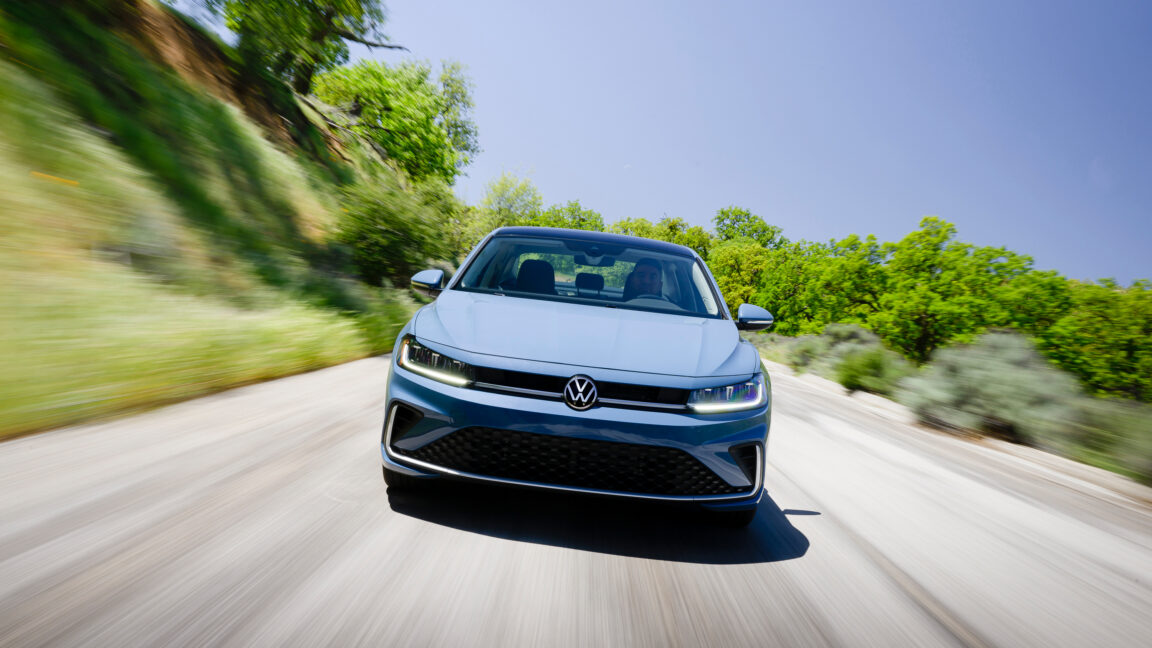
Image: courtesy of Ars Technica
Against the Price Tide: Volkswagen's 2026 Jetta Sport Bets on the Enduring Appeal of the Affordable New Car
Volkswagen has introduced the 2026 Jetta Sport with a starting price of $25,305, positioning it as one of the most affordable new cars on the market. This model notably retains traditional features like a physical key and manual ignition, while still offering modern essentials such as Apple CarPlay and USB-C ports. Its release challenges the prevailing trend of rising new car prices and increasing technological complexity, suggesting a deliberate strategy by Volkswagen to cater to a segment of buyers prioritizing value and simplicity.
Outlook
Background
The automotive market in the mid-2020s has been defined by a relentless ascent in vehicle prices. Factors like supply chain disruptions, increased demand for larger vehicles (SUVs and trucks), and the integration of advanced technology — from sophisticated driver-assistance systems to complex infotainment suites and electrification components — have pushed the average transaction price for a new car well beyond what many consumers can comfortably afford. This trend has created a significant gap in the market for genuinely affordable new vehicles, forcing many buyers into the used car market or to hold onto older models for longer.
Against this backdrop, the 2026 Volkswagen Jetta Sport's starting price of $25,305 is a notable outlier. To put this in perspective, some reports indicate the average new car price has approached or even exceeded $50,000 in recent years, making the Jetta Sport nearly half that cost. Volkswagen's decision to forgo certain modern conveniences, such as a push-button start, is a clear cost-saving measure, allowing the company to keep the sticker price competitive. Yet, the inclusion of features like Apple CarPlay and USB-C ports acknowledges that even budget-minded consumers expect a baseline of digital integration in their daily lives. The Jetta Sport, therefore, represents a strategic balancing act: stripping away premium features to keep costs down, while retaining essential modern amenities to remain relevant.
Precedents
The automotive industry has a long history of segmentation, with manufacturers continually adjusting their offerings to target different income brackets and consumer preferences. Historically, every major automaker maintained a robust lineup of entry-level sedans or hatchbacks designed for affordability and mass appeal. Models like the Honda Civic, Toyota Corolla, and indeed, the Volkswagen Jetta itself, built their reputations on delivering reliable, economical transport.
However, over the last decade, this segment has shrunk considerably in North America. Consumer preference shifted towards larger, higher-margin SUVs and crossovers, prompting many manufacturers to either discontinue their compact sedan lines or move them upmarket with more features and higher prices. Ford, for instance, largely exited the sedan market in North America, while even models like the Civic and Corolla have seen their base prices climb, often accompanied by a significant increase in standard technology.
Volkswagen's current move with the 2026 Jetta Sport echoes a past strategy, particularly from Asian automakers, of offering a 'value play' in the market. Companies like Hyundai and Kia gained significant market share by providing well-equipped, affordable vehicles that often undercut established competitors. The Jetta Sport appears to be an attempt to reclaim some of that lost ground in the budget segment, betting that a substantial number of buyers still exist who prioritize a new car's fundamental utility and price over its luxury features or cutting-edge technology. It's a return to basics for a brand that has also invested heavily in its electric vehicle and premium SUV lines, creating a dual strategy that caters to both ends of the market.
The introduction of the 2026 Volkswagen Jetta Sport at a highly competitive price point carries significant implications for both consumers and the broader automotive industry. For buyers, it offers a rare opportunity to purchase a brand-new vehicle from a reputable manufacturer without stretching their budgets to extreme limits. This is particularly relevant for first-time car owners, young families, or individuals seeking reliable transportation without the added cost and complexity of advanced technological features they may not need or want. It provides a tangible alternative to the increasingly expensive used car market, where prices have also been inflated.
For the automotive industry, the Jetta Sport represents a real-world test of market segmentation. Many analysts have suggested that the 'cheap car' is an endangered species, pushed out by rising manufacturing costs, regulatory requirements, and consumer demand for more features. Volkswagen's strategy with the Jetta Sport challenges this assumption, proposing that a viable market still exists for a simpler, more affordable new car. If the Jetta Sport performs well, it could prompt other manufacturers to re-evaluate their product portfolios and consider re-entering or strengthening their presence in the value-oriented segment. This could lead to a healthy reintroduction of competition in the sub-$30,000 new car category, ultimately benefiting consumers through more choice and potentially greater pricing pressure on other entry-level models. Conversely, if the Jetta Sport struggles to find a significant audience, it might reinforce the industry's existing trajectory towards higher-priced, feature-rich vehicles.
Scenarios
AnalysisThe market reception and long-term viability of the 2026 Volkswagen Jetta Sport could unfold in several ways, each with different consequences for Volkswagen and the broader automotive landscape.
One possible outcome is that the Jetta Sport successfully carves out a significant niche, proving there is substantial latent demand for affordable new cars. This would validate Volkswagen's strategy, potentially encouraging the company to maintain or even expand its focus on value-oriented models in future product cycles. Should this happen, it might also prompt other major automakers to reconsider their current strategies, perhaps leading to a modest resurgence of simpler, more accessible sedans or compact vehicles across the industry. This scenario could see increased competition in the entry-level segment, offering consumers more options for new vehicles under $30,000.
Another scenario suggests the Jetta Sport may achieve moderate success, selling steadily but not fundamentally altering the broader market trend. In this outcome, it would remain a specific, targeted offering within Volkswagen's diverse lineup, rather than a catalyst for industry-wide change. Other manufacturers might observe its performance but largely continue their focus on higher-margin SUVs, trucks, and premium electric vehicles. The Jetta Sport would then serve as a reliable, if not revolutionary, option for a particular segment of buyers, maintaining its position without sparking a wider 'affordable car' revival.
Alternatively, despite its compelling price, the Jetta Sport could face headwinds from continued market shifts towards larger vehicles, advanced technology, or electric powertrains. If sales figures do not meet Volkswagen's internal targets over the next few years, the company might be forced to either slowly increase the Jetta Sport's price to improve margins, add more features to boost its appeal (thus eroding its 'cheap car' identity), or eventually scale back its presence in this segment. This outcome would reinforce the industry narrative that the truly affordable new car is increasingly difficult to sustain in modern manufacturing and consumer environments.
Timeline
Frequently Asked Questions
Discussion
Be the first to share your thoughts.