
Veridact
TechSportsFinanceGaming🎯 PredictionsAbout
Sign InSign Up
Veridact

AI-powered anticipation analysis. We cover tech, sports, finance, and gaming events before they happen — with historical context, scenario modeling, and evolving coverage.

Stay ahead of the story

Analysis delivered before events unfold.

Coverage

  • Tech
  • Sports
  • Finance
  • Gaming

Company

  • About Us
  • Privacy Policy

© 2026 Veridact. AI-assisted analysis platform.

Analysis is AI-generated and not professional financial, legal, or medical advice.

finance
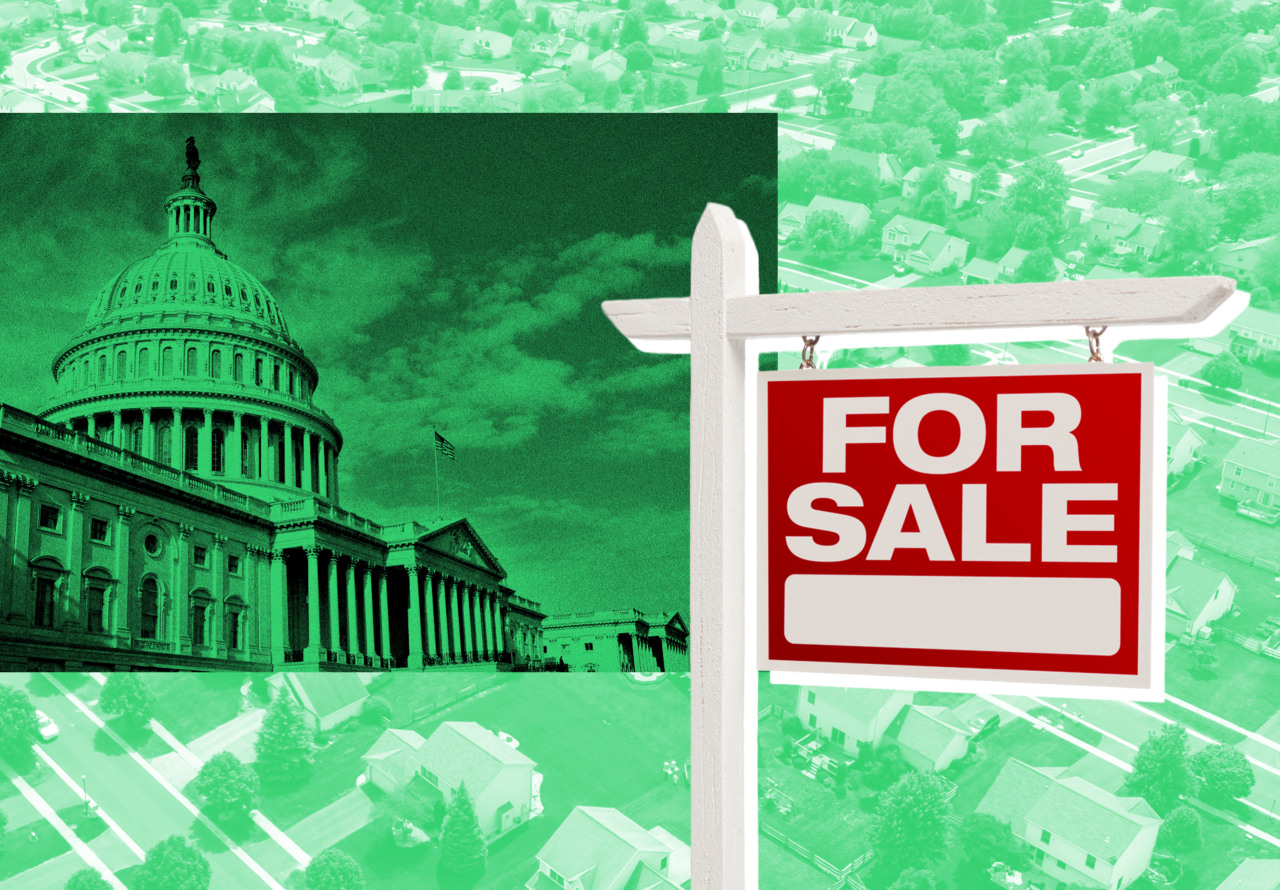
Trump may say he’s banning Wall Street from buying homes. Does the bipartisan housing bill actually do that?

Image: courtesy of Market Watch

financeJune 23, 2026By Veridact EditorialUpdated Jun 23

The Wall Street Housing Ban Is Coming. Why It Won't Fix the Affordability Crisis.

The bipartisan 21st Century ROAD to Housing Act is heading to the White House for an expected presidential signature this week. While political leaders from both parties frame the legislation as a historic victory that will stop large corporations from outbidding families for single-family homes, the real-world impact on housing affordability is likely to be slow and modest. The legislation targets institutional buyers owning more than 1,000 properties, but market data reveals these entities own less than 3% of the single-family rental stock nationwide. Consequently, while the ban addresses a highly visible political target, it fails to resolve the underlying physical shortage of millions of homes that continues to drive up American housing costs.

Implications

The legislation represents a rare moment of bipartisan alignment, combining elements of the House's 21st Century Housing Act and the Senate's ROAD Act. The core mechanism of the bill is a strict cap on future acquisitions of single-family homes by large institutional investors. Specifically, entities that own or manage more than 1,000 single-family residential properties will be barred from purchasing additional single-family homes.

So, who actually qualifies as 'Wall Street' under this new framework? The law targets private equity firms, real estate investment trusts (REITs), and large asset management companies that built massive portfolios of single-family rentals over the last decade. To prevent evasion, the bill includes strict attribution rules designed to pierce complex corporate structures, linking nested limited liability companies (LLCs) back to their parent organizations.

However, the law does not force these large entities to immediately sell off their existing holdings. Instead, it establishes a freeze on new purchases, coupled with tax penalties for those who exceed the limits. This means the transition will be gradual. While the flow of institutional capital into existing residential neighborhoods will dry up, the millions of homes currently owned by these corporations will remain in their portfolios, managed as rental units for the foreseeable future.

We can expect a lengthy and complex rulemaking process. The Department of Housing and Urban Development (HUD) and the Treasury Department will have to define the exact boundaries of the ban, particularly regarding how it treats build-to-rent developments—communities built from scratch specifically to be operated as rentals. The real estate industry is already lobbying heavily to ensure these new-construction projects are exempted from the acquisition limits, arguing that a blanket ban would choke off funding for new housing supply.

Background

To understand why this bill exists, one must look back to the aftermath of the 2008 financial crisis. Between 2009 and 2013, millions of American homes went into foreclosure. With individual buyers locked out of the mortgage market due to tightened credit standards, private equity firms stepped into the vacuum. Armed with billions of dollars in cheap capital, firms like Blackstone, through its then-subsidiary Invitation Homes, bought up tens of thousands of distressed properties at deep discounts.

This birthed a new asset class: the institutional single-family rental. What began as a tactical play to buy cheap assets evolved into a highly profitable, permanent business model. Driven by steady rental income and long-term property appreciation, institutional buyers expanded their reach. By 2021, amid the pandemic-era housing boom, these corporate buyers were responsible for a significant share of purchases in high-growth metropolitan areas.

In cities like Atlanta, Charlotte, and Phoenix, institutional investors accounted for more than 30% of home purchases in certain zip codes during peak quarters. First-time homebuyers, relying on conventional mortgages with financing contingencies, found themselves repeatedly outbid by corporate buyers offering all-cash deals with quick closing times. This dynamic fueled intense public anger, turning corporate landlords into a convenient symbol for the broader housing affordability crisis.

Yet, the nationwide data tells a more complicated story. According to industry estimates, institutional investors own roughly 300,000 to 400,000 single-family homes out of a total U.S. single-family rental stock of approximately 14 million units. The vast majority of rental homes in America—over 70%—are owned by 'mom-and-pop' landlords who own between one and ten properties. By focusing entirely on companies with more than 1,000 homes, the legislation leaves the largest segment of the rental market untouched.

Precedents

Historical attempts to control housing costs by restricting specific classes of buyers have rarely yielded the intended results. When governments attempt to manage housing demand without addressing the underlying physical supply of homes, the market typically finds alternative pathways to maintain high prices.

For example, when major cities in Canada and New Zealand implemented foreign-buyer bans in the late 2010s to cool overheating markets, the initial results were underwhelming. While the bans temporarily slowed luxury home sales, overall housing prices continued to rise. The fundamental driver of those high costs was not foreign capital, but a structural deficit in housing construction caused by restrictive local zoning laws, high labor costs, and slow permitting processes.

Similarly, in the United States, the core issue remains a severe supply-demand imbalance. The United States has underbuilt housing for more than fifteen years following the 2008 crash. Estimates from housing economists suggest the nation is short between 3.2 million and 4.5 million homes. Restricting Wall Street from buying existing homes does not build a single new house. Without addresssing this structural deficit, the competition among individual buyers will remain intense, keeping home prices elevated even in the complete absence of corporate bidding wars.

The Real Stakes

Why would a Republican administration align with progressive Democrats on a policy that restricts private capital? The answer lies in the shifting politics of the American middle class. Homeownership has long been the primary vehicle for wealth accumulation in the United States. As home prices skyrocketed out of reach for younger voters, housing security transformed from a local planning issue into a national populist grievance.

For the Trump administration, backing the ban is a potent political signal to suburban voters that the government is actively protecting them from coastal financial elites. For Democrats, it aligns with a long-standing desire to curb corporate influence in essential human needs. This rare alignment has allowed the bill to glide through a highly polarized Congress.

However, the real stakes of this policy lie in its unintended consequences for the construction industry. Over the past five years, institutional capital has increasingly funded 'build-to-rent' communities. These are master-planned neighborhoods of single-family homes built specifically to be rented out, offering an alternative for families who want a yard and extra space but cannot afford a down payment. If the final regulations of the bill do not clearly protect this sector, institutional investors may pull their capital out of residential construction entirely. This would reduce the overall volume of new homes built each year, ironically worsening the very supply shortage that drove housing costs up in the first place.

Scenarios

Analysis

One possible outcome is that institutional capital will pivot rapidly toward multi-family apartment complexes and build-to-rent developments that fall outside the definition of existing single-family homes. This shift would leave the traditional, existing suburban housing market to individual buyers, but it would concentrate corporate ownership in high-density rentals, potentially driving up apartment rents in major urban centers.

Another likely scenario involves a wave of legal challenges from industry trade groups, such as the National Rental Home Council. These organizations may argue that the federal government is overstepping its constitutional authority by interfering with private property transactions, which have historically been regulated at the state and local levels. A prolonged court battle could delay the implementation of the ban for years, creating regulatory uncertainty that freezes investment.

Alternatively, we could see the rise of mid-sized investment syndicates. Since the law specifically targets entities owning more than 1,000 homes, capital could fragment into hundreds of smaller, decentralized funds, each holding 900 homes to remain just below the regulatory threshold. This fragmentation would allow corporate buying to continue under a different guise, rendering the ban largely ineffective at reducing overall corporate competition in local markets.

Timeline

2026-01-20
White House Policy Statement
The Trump administration issues a formal policy statement calling for limits on institutional investor purchases of single-family homes to protect individual homebuyers.
2026-02-13
House Passes Early Bill
The House of Representatives passes the 'Housing for the 21st Century Act' with a bipartisan 390-9 vote, demonstrating overwhelming support for restricting corporate landlords.
2026-06-15
Bipartisan Compromise Unveiled
The unified '21st Century ROAD to Housing Act' is introduced, reconciling the House and Senate versions to incorporate administration priorities.
2026-06-22
Bill Sent to President
The finalized bipartisan housing package is cleared by Congress and sent to President Trump's desk for an expected signature.
2027-03-31
Expected Rulemaking Deadline
Federal agencies, including HUD and Treasury, are projected to finalize the regulatory definitions and exemptions for the institutional purchase ban.

Frequently Asked Questions

No. The 21st Century ROAD to Housing Act does not force institutional investors to divest their current holdings. It is designed to prevent them from acquiring additional single-family homes once they cross the 1,000-property threshold.

Discussion

0/100
0/1000

Be the first to share your thoughts.

Related Coverage

finance

Alphabet's AI Ambitions Under Scrutiny As Key Researchers Depart, Stock Falls

Jun 23
finance

Ingredion’s $5 Billion Tate & Lyle Buyout Re-Engineers the Global Food Supply Chain

Jun 23
finance

China Strikes Back: New Trade Curbs Hit Dozens of U.S. Firms After Pentagon Blacklist

Jun 22
finance

Crypto's New Divide: How Republicans Came to Lead Democrats in Digital Asset Ownership

Jun 22

Stay ahead of the story

AI analysis delivered before events unfold. No spam.

ⓘ

Disclosure: This article contains AI-assisted analysis based on publicly available information.