
The coming weeks will likely be defined by intense, high-stakes negotiations between U.S. and Chinese delegations. With President Xi Jinping's visit to Washington slated for next month, the immediate focus is on whether a framework for de-escalation, even a temporary one, can be achieved. Expect continued back-channel discussions, public posturing, and a careful watch on market reactions to any further statements from either capital. The success of the visit will hinge on finding common ground amidst deeply entrenched trade disputes and the shadow of potential financial sanctions.
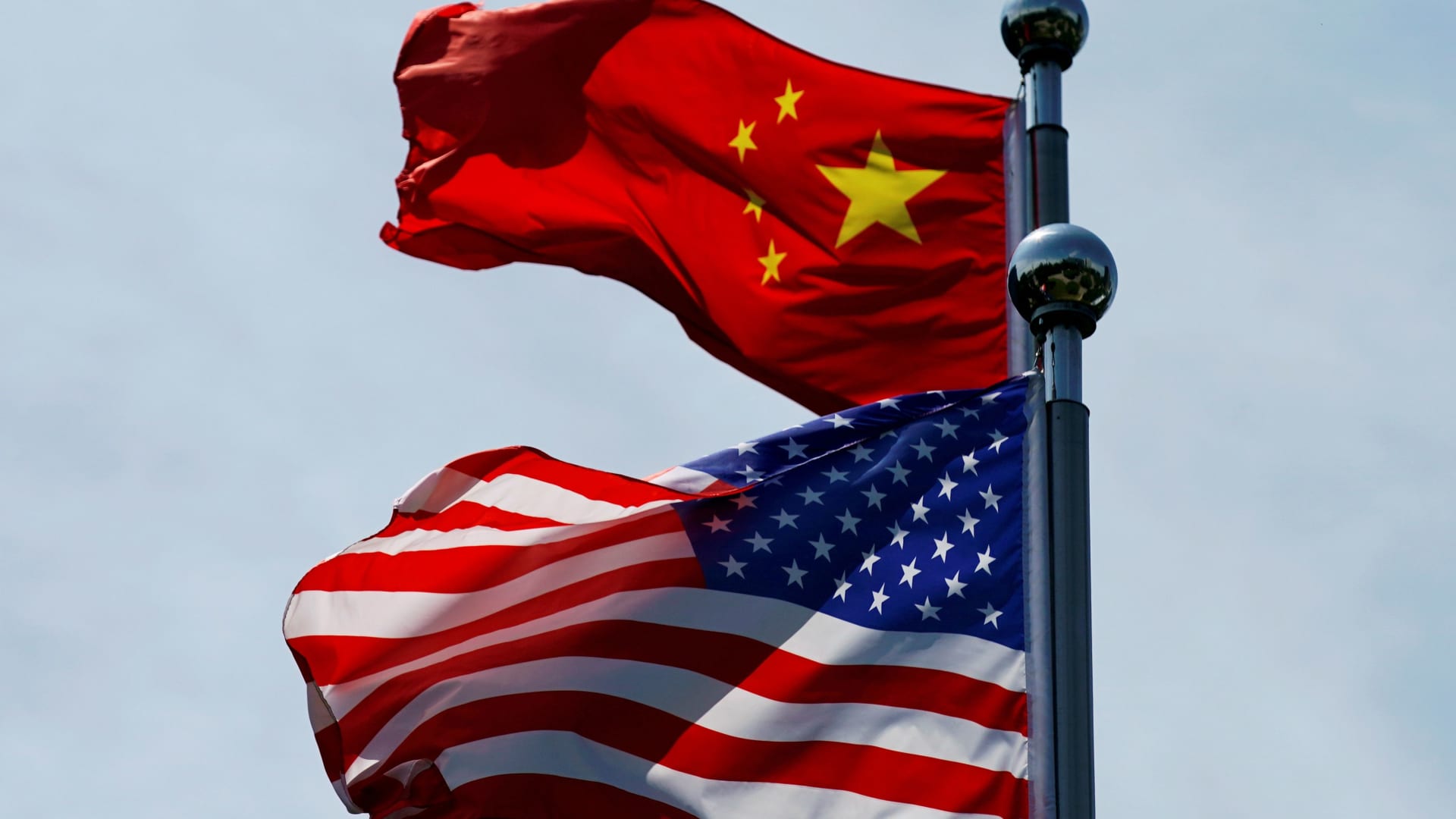
Image: courtesy of CNBC
Trump's Pre-Summit Pressure: How Bank Sanctions Could Reshape Xi's Washington Agenda
U.S. President Donald Trump has escalated his rhetoric against Beijing, threatening to sanction Chinese banks just as officials from both nations meet to prepare for Chinese President Xi Jinping's critical visit to Washington next month. This latest move introduces significant tension into an already strained relationship, raising questions about the true objectives of the visit and its potential outcomes for global trade and finance.
Outlook
Background
On Thursday local time, U.S. President Donald Trump told reporters he was considering sanctioning Chinese banks. This threat emerged while U.S. and Chinese officials were meeting to finalize preparations for Chinese President Xi Jinping's planned visit to Washington, scheduled for next month. The current round of official discussions comes amidst existing trade disputes that have already cast doubt on the success of the upcoming summit.
Sanctioning Chinese banks would be a significant escalation. It would effectively cut these institutions off from the U.S. financial system, potentially impacting their ability to conduct transactions in U.S. dollars and operate globally. Beijing has previously shown a restrained response to U.S. sanctions, such as those related to Iran, but a direct threat to its financial institutions represents a different order of challenge.
This latest move follows a period of complex U.S.-China engagement. Earlier this week, on Monday, Trump stated in an interview with Fox News that he has a 'very good personal relationship' with President Xi, despite the ongoing policy disagreements. This personal dynamic often plays out alongside hard-line negotiating tactics. In May, President Trump visited Beijing for talks with Xi, a meeting that highlighted both cooperation and persistent tensions. More recently, on Sunday, U.S. Treasury Secretary Scott Bessent and Chinese Vice Premier He Lifeng held economic and trade talks in Paris, intended to pave the way for high-level engagements.
Precedents
The use of economic pressure, particularly tariffs and sanctions, has been a consistent feature of President Trump's approach to international trade negotiations, especially with China. His previous administration frequently employed such tactics to extract concessions, often leading to last-minute breakthroughs or breakdowns in talks.
Historically, U.S.-China relations have been characterized by cycles of cooperation and intense competition. Summits between the two nations' leaders are typically preceded by extensive preparatory meetings and often see a heightened level of public rhetoric, which serves various domestic and international audiences. This pre-summit brinkmanship is a common diplomatic tool, designed to establish leverage and set the terms of debate before the leaders meet face-to-face. However, threatening financial sanctions against major banks pushes the boundaries of conventional trade dispute tactics, moving into the realm of broader economic warfare.
The power dynamics between the two nations have shifted over time. While China once sought to appease U.S. demands more readily, it has increasingly asserted its economic and geopolitical strength. This suggests Beijing may be less inclined to yield to pressure without significant reciprocal concessions, making the current negotiations particularly fraught.
The escalating rhetoric and the specific threat of sanctioning Chinese banks carry profound implications, extending far beyond the immediate U.S.-China trade balance. A move to sanction major Chinese financial institutions could severely disrupt global financial markets, given their interconnectedness. Companies worldwide, particularly those reliant on trade with China, would face increased uncertainty and potential operational hurdles. This could trigger capital flight, impact foreign direct investment into China, and create significant execution risk for multinational corporations.
Beyond finance, the stability of U.S.-China relations is a cornerstone of global geopolitical stability. A breakdown in dialogue or a significant escalation could have ripple effects across various international issues, from climate change cooperation to regional security in Asia. For investors, the uncertainty creates volatility, making long-term planning challenging. For consumers, prolonged trade disputes and financial friction can translate into higher prices and disrupted supply chains. This moment represents a critical test of diplomatic fortitude and the ability of the world's two largest economies to manage their competition without descending into broader conflict.
Scenarios
AnalysisThe upcoming visit by President Xi Jinping to Washington next month is poised at a critical juncture, with several paths forward, each carrying distinct risks and opportunities.
One possible outcome is a partial de-escalation and limited agreement. President Trump's threat could be a maximalist opening position, designed to extract concessions. Xi's delegation might agree to specific, smaller trade deals or a framework for future discussions, easing some immediate tensions without resolving the fundamental disputes. This would allow both leaders to claim a diplomatic win and prevent a full-blown financial confrontation, temporarily stabilizing markets.
A second scenario involves a significant breakdown or postponement of the visit. If Beijing perceives the bank sanctions threat as an insurmountable hurdle or a fundamentally hostile act, it could choose to scale back the visit's agenda, or even cancel or postpone the summit. This would signal a severe deterioration in U.S.-China relations, leading to heightened market anxiety and a likely acceleration of decoupling efforts by businesses.
A third possibility is targeted sanctions and continued friction. Even if the visit proceeds, President Trump might follow through with more targeted sanctions, perhaps against specific smaller banks or entities, rather than a sweeping measure against major institutions. This would maintain pressure on Beijing while avoiding the most catastrophic financial fallout, but would keep the U.S.-China relationship in a state of uneasy competition and prolong trade disputes.
Less likely, but still possible, is an unexpected breakthrough. Under intense pressure, both sides might find common ground on a major trade issue or agree to a comprehensive framework for resolving disputes, driven by internal economic pressures or a desire to project global leadership. This would require significant concessions from both Washington and Beijing, a departure from recent patterns.
Timeline
2026-05-14
Trump and Xi Meet in Beijing
U.S. President Donald Trump visits Beijing for talks with Chinese President Xi Jinping, addressing trade and other bilateral issues.
2026-08-23
U.S.-China Trade Talks in Paris
U.S. Treasury Secretary Scott Bessent and Chinese Vice Premier He Lifeng hold economic and trade discussions in Paris, setting the stage for future high-level engagements.
2026-08-24
Trump on Personal Relationship with Xi
In a Fox News interview, President Trump states he has a 'very good personal relationship' with Chinese President Xi Jinping.
2026-08-27
Trump Threatens Chinese Bank Sanctions
U.S. President Donald Trump tells reporters he could be sanctioning Chinese banks, escalating rhetoric against Beijing.
2026-08-28
Officials Prepare for Xi's Visit
U.S. and Chinese officials meet to prepare for Chinese President Xi Jinping's upcoming visit to Washington, amidst rising tensions.
September 2026
Xi Jinping's Planned Washington Visit
Chinese President Xi Jinping is scheduled to visit Washington for talks with U.S. President Donald Trump.
Frequently Asked Questions
The threat appears to be a strategic move to gain leverage ahead of President Xi Jinping's upcoming visit to Washington. It's a high-pressure tactic aimed at securing concessions on trade disputes or other geopolitical issues.
Discussion
Be the first to share your thoughts.