
The immediate consequence of major oil producers breaking away from OPEC's coordinated production cuts would be an influx of crude oil onto the global market. With more supply and potentially stagnant demand, prices would naturally fall. The current market price for Crude Oil sits around $69.82 per barrel as of June 26, 2026, a notable drop from its level a month ago but still significantly above the $50 threshold. However, if countries like Iraq, which is reportedly considering an exit, decide to pursue independent production strategies, the current downward trend could accelerate sharply. This scenario would likely trigger a competitive race for market share among producers, further driving down prices.
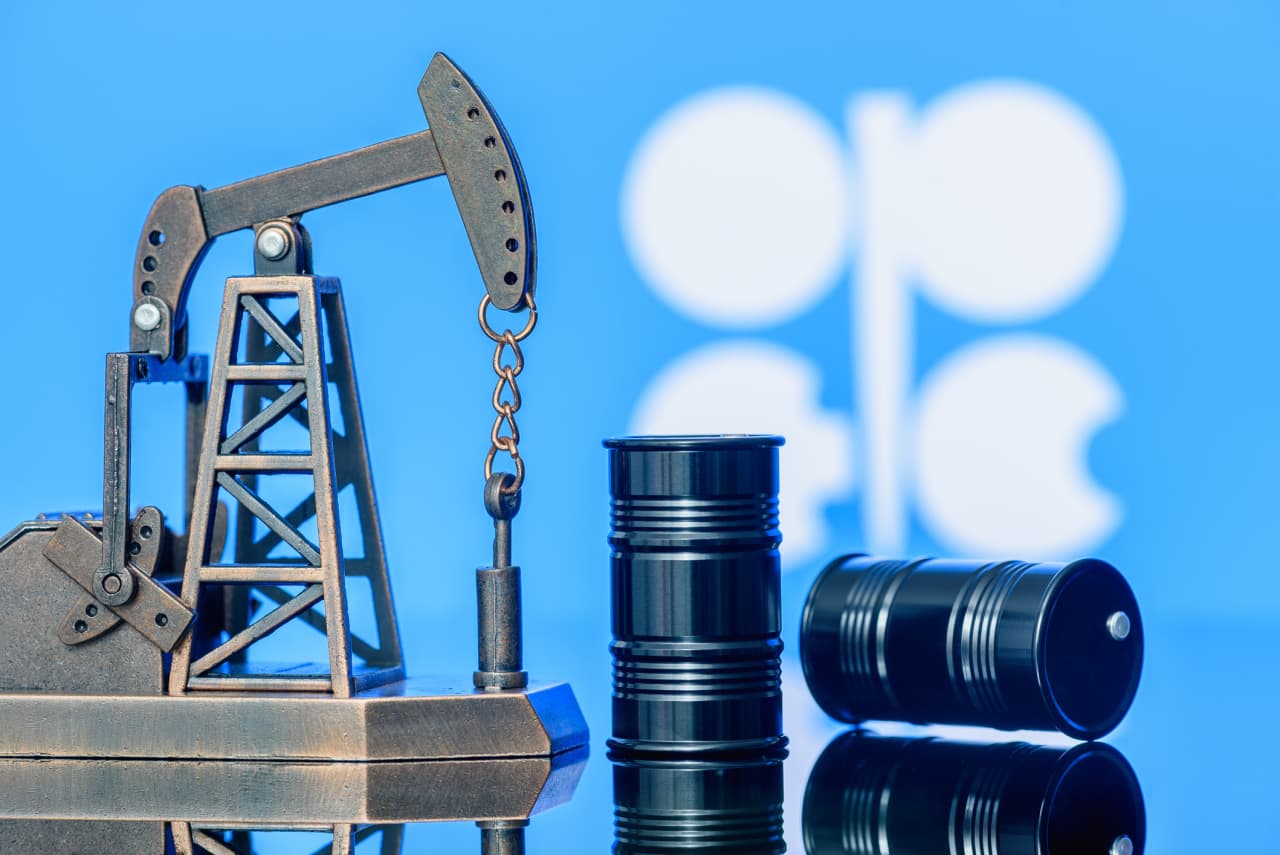
Image: courtesy of Market Watch
OPEC's Crumbling Grip: The Path to Sub-$50 Oil Prices
The stability of global oil prices, long influenced by the Organization of the Petroleum Exporting Countries (OPEC), faces a critical juncture. Analysts suggest that a widespread rejection of OPEC's production controls by major oil-producing nations could send crude oil prices plunging below $50 a barrel. This potential shift signals a significant weakening of the cartel's power, driven by member departures and internal disagreements, with profound implications for both energy markets and global economies.
Outlook
Background
For decades, OPEC, and more recently the expanded OPEC+ alliance, has acted as a central force in global oil markets. This group, which includes Saudi Arabia and Russia, has historically controlled about 45% of the world's oil production. Their primary tool has been setting production targets for member states, often involving coordinated cuts to stabilize or boost prices. A key example was the November 2016 agreement to cut 1.8 million barrels per day, which was later extended and strengthened. This strategy, however, has always relied on the collective discipline of its members.
Recently, this discipline has shown cracks. Ecuador left OPEC in 2020, seeking freedom to increase its own production without quotas. Qatar departed in 2019 to focus on natural gas exports. Now, the prospect of Iraq, a major producer, potentially leaving the cartel adds a new layer of instability. Any such move would signal a serious challenge to OPEC's ability to dictate global supply, fundamentally altering market dynamics.
See also
Precedents
History shows a clear link between OPEC's cohesion and oil price stability. When OPEC has successfully implemented production cuts, oil prices have typically risen. Conversely, internal disagreements or a lack of adherence to quotas have often led to price declines. For instance, in May 2017, an OPEC+ decision to extend production caps, rather than deepen cuts, disappointed traders and contributed to crude oil falling below $50 a barrel at that time. This suggests that the market responds sharply to signals about OPEC's resolve and unity. The all-time high for crude oil, $147.27 in July 2008, occurred during a period of tight supply and strong demand, highlighting the sensitivity of prices to market fundamentals. The current 21.27% drop in crude oil prices over the past month, despite being 6.56% higher than a year ago, indicates market sensitivity to even perceived shifts in supply-demand balances, reinforcing the impact a full rejection of OPEC controls could have.
The potential for sub-$50 oil prices carries significant consequences for a range of stakeholders. For consumers and industries reliant on fuel, lower prices would translate to reduced costs, potentially stimulating economic activity and easing inflationary pressures. Drivers would find cheaper gasoline, and shipping companies would see their operational expenses shrink.
However, for oil-producing nations, particularly those heavily dependent on oil revenues, a sustained drop below $50 would be a severe blow. Their national budgets, social programs, and infrastructure projects would face immense pressure. Energy companies and investors would also feel the pain, as lower prices erode profit margins, reduce investment in new exploration, and potentially lead to job losses in the sector. The shift would also redefine geopolitical power dynamics, diminishing the influence of traditional oil-rich states and potentially empowering major consuming nations.
Scenarios
AnalysisOne clear outcome is a fractured global oil market where individual nations prioritize their own production targets over collective quotas. This scenario would likely lead to an oversupply of oil, driving prices down as producers compete for market share. Consumers would benefit from cheaper fuel, but oil-producing economies would face severe fiscal challenges, potentially leading to social unrest or economic instability in some regions.
Another possibility is that OPEC manages to reassert its authority, perhaps through new agreements or by bringing dissenting members back into the fold. This could involve a period of intense diplomatic efforts or even further, deeper production cuts by the remaining loyal members to offset increased output from defectors. In this case, prices might stabilize or even rebound, preventing a sustained drop below $50. However, the recurring challenges to its unity suggest that such a reassertion of power would become increasingly difficult.
A third, more nuanced outcome could see a partial breakdown, where some smaller producers leave, but the core, larger members of OPEC+ maintain a loose coordination. This would lead to increased price volatility, with prices fluctuating based on individual country decisions rather than a unified strategy. Prices might dip below $50 periodically but struggle to maintain those levels if key players still occasionally cooperate.
Timeline
2008-07
Crude Oil Hits All-Time High
Crude Oil reaches its historical peak price of $147.27 per barrel, reflecting strong demand and tight supply conditions globally.
2016-11
OPEC+ Production Cut Agreement
OPEC nations and key non-OPEC countries, including Russia, agree to cut oil production by 1.8 million barrels per day, effective January 2017, in an effort to stabilize global oil prices.
2017-05-26
OPEC+ Extends Cuts, Traders Disappointed
OPEC and allies extend their production-cap agreement by nine months. This decision, falling short of deeper cuts, leads to crude oil prices dropping below $50 per barrel for a period.
2019
Qatar Exits OPEC
Qatar withdraws from OPEC to focus on its natural gas export business, signaling a shift in its energy strategy away from crude oil production quotas.
2020
Ecuador Leaves OPEC
Ecuador formally leaves OPEC, citing a need to increase domestic oil production to boost state revenues without being constrained by the cartel's quotas.
2026-06-26
Current Oil Price Assessment
Crude Oil trades at $69.82 per barrel, having fallen 2.92% from the previous day and 21.27% over the past month, but remains 6.56% higher than a year ago.
Frequently Asked Questions
OPEC, the Organization of the Petroleum Exporting Countries, is an intergovernmental organization of 13 oil-exporting developing nations. It aims to coordinate and unify the petroleum policies of its member countries and ensure the stabilization of oil markets to secure an efficient, economic, and regular supply of petroleum to consumers, a steady income to producers, and a fair return on capital for those investing in the petroleum industry.
Discussion
Be the first to share your thoughts.