
Expect to see a continued acceleration in the development of sophisticated robots capable of autonomous physical interaction. Nvidia's continued investment and partnerships will likely drive innovation in areas such as industrial automation, logistics, and even household assistance. The emphasis on 'physical AI' suggests a future where robots are not just programmed for specific tasks but can learn, adapt, and operate in complex, unstructured environments. This will require significant advancements in sensor technology, real-time processing, and robust software frameworks. As these technologies mature, their integration into existing manufacturing processes and new industries will expand, creating ripple effects across global supply chains and labor markets.
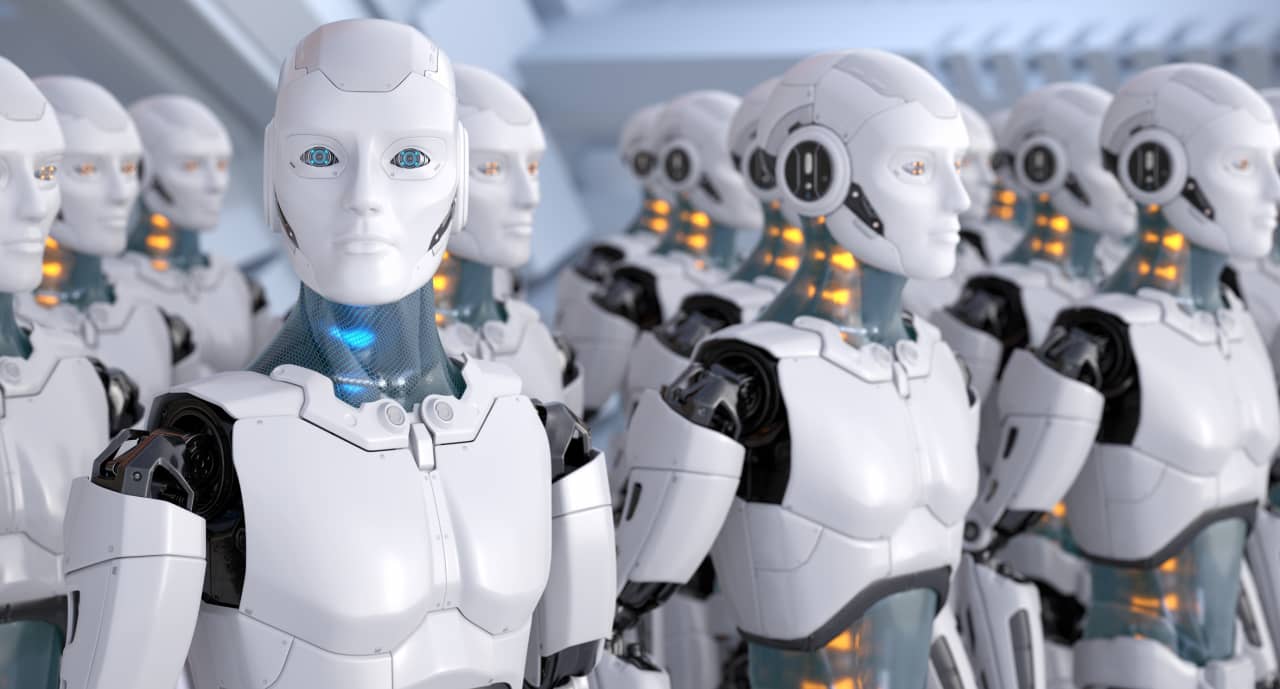
Image: courtesy of Market Watch
Nvidia's Trillion-Dollar Robotics Bet: What Physical AI Means for the Global Economy
Nvidia is making a substantial commitment to the robotics sector, positioning itself at the center of what it projects to be a trillion-dollar market. This vision hinges on 'physical AI' — artificial intelligence that can understand and interact with the real world, moving beyond digital screens to automate labor-intensive tasks. The company is forging strategic alliances with key players like Neura Robotics and Marvell, building the necessary hardware and software infrastructure, and explicitly linking this push to the reindustrialization efforts in the U.S. and broader global manufacturing shifts. This move signals a profound shift in how AI will integrate into daily operations, from factories to homes, and challenges traditional notions of automation.
Outlook
Background
The push into robotics by Nvidia comes at a pivotal moment. Global supply chains have proven fragile, and many industrialised nations face persistent labor shortages, particularly in manufacturing. The idea of 'reindustrialization' — bringing manufacturing capacity back onshore — is gaining traction, and advanced automation is seen as a crucial enabler. Nvidia, primarily known for its graphics processing units (GPUs) that power AI data centers, is now extending its reach into the physical world. This involves not just selling chips but building an entire ecosystem: software platforms like Halos for Robotics, real-time operating systems like QNX (acquired by BlackBerry, but integrated into Nvidia's stack), and partnerships with leading robotics firms. Amazon's head of generative AI innovation and delivery at AWS, Taimur Rashid, has described physical AI as using spatial awareness and intelligence to actuate on physical objects in physical settings. Neura Robotics, a humanoid robotics company backed by both Amazon and Nvidia, exemplifies this trend, with its CEO David Reger stating that 'the future of AI will not only live on screens... It will move, interact, learn and work beside us in the real world.' This shift is supported by research from QNX, which found that 85% of robotics engineers anticipate an increased role for software in their field over the next three to five years. The market for military drones is also growing, indicating a broader application of advanced robotics.
See also
Precedents
The history of automation has been marked by cycles of technological advancement followed by widespread adoption. Early industrial robots were largely fixed-arm machines performing repetitive tasks in controlled environments. The advent of more powerful computing, advanced sensors, and machine learning has steadily expanded their capabilities. From factory floors to warehouses, automation has consistently driven efficiency gains and addressed labor challenges. Nvidia's current strategy echoes previous technology shifts where a core enabling technology — like the internet or mobile computing — created an entirely new ecosystem of hardware, software, and services. Just as personal computers and then smartphones became platforms for countless applications, Nvidia is aiming to make its AI computing platform the foundational layer for physical AI. The company's success in the data center AI boom, driven by the demand for its GPUs, provides a template for how it intends to capture value in robotics. Historically, companies that control the foundational computing layer in a new technological wave often reap significant rewards, as seen with Intel in the PC era or Qualcomm in mobile.
The implications of a trillion-dollar robotics boom extend far beyond Nvidia's balance sheet. For manufacturers, it represents a potential solution to rising labor costs, supply chain vulnerabilities, and the drive for higher precision and efficiency. The ability to automate complex, labor-intensive tasks could reshape industries from automotive to agriculture, creating new categories of jobs focused on robot maintenance, programming, and oversight. For consumers, it could mean more affordable goods, faster delivery, and eventually, more sophisticated assistance in homes. The shift to 'physical AI' also raises fundamental questions about the future of work, ethical considerations of autonomous systems, and the societal impact of widespread automation. National economies, particularly those facing demographic shifts and a desire for reindustrialization, see robotics as a strategic imperative. Nvidia's central role in providing the underlying intelligence for these robots means its technological choices will heavily influence the trajectory and capabilities of this emerging sector, affecting countless businesses and millions of workers globally.
Scenarios
AnalysisOne possible outcome is that Nvidia successfully entrenches itself as the dominant computing platform for physical AI, similar to its position in data center AI. This would involve continued strong partnerships with robotics manufacturers, further development of its software stacks like Halos for Robotics, and a broad adoption of its GPU and AI platforms across industrial and service robotics. This scenario could lead to significant revenue growth for Nvidia, but also for its partners like Marvell, which provides crucial connectivity components for these advanced systems.
Another outcome could see increased competition from other major technology players or even new entrants. Companies like Intel, Google, and Amazon are also investing heavily in AI and robotics, and a fragmented market could emerge where different platforms compete for specific niches. This could slow down the consolidation around a single computing standard and potentially dilute Nvidia's market share, despite its early lead.
A third scenario involves the slower-than-expected adoption of physical AI due to technical challenges, regulatory hurdles, or high implementation costs. While the technology promises significant benefits, the complexity of deploying autonomous robots in real-world, unpredictable environments remains high. Unforeseen safety concerns, public skepticism, or a lack of skilled workers to manage these systems could temper the 'trillion-dollar boom' forecast, leading to a more gradual, rather than explosive, growth trajectory.
Timeline
Frequently Asked Questions
Discussion
Be the first to share your thoughts.